
The Caliphate, Syria and 1924: The Stages of Rule the Prophet Foretold
Quick Answer
Sunan Abu Dawood 2535 has the Prophet place his hand on Ibn Hawala's head: when the caliphate reaches Syria, the Hour is as close as his hand. Musnad Ahmad 18596 maps five stages of rule - prophethood, righteous caliphate, tyranny, rebellion, and a final righteous caliphate - through fratricidal centuries to the abolition of 1924. Every grading caveat is stated openly.
The Hand on Ibn Hawala's Head
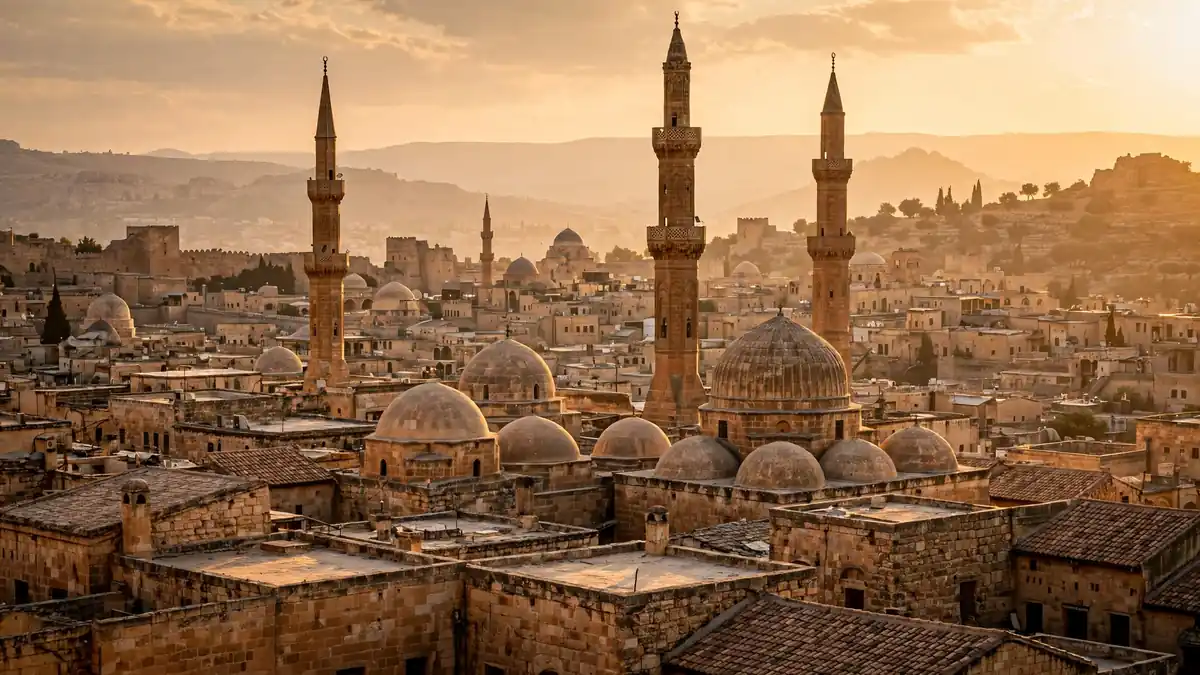
The Prophet once placed his hand on the head of his Companion Ibn Hawala and said: when you see that the caliphate has reached Syria, wait for the onset of great trials and signs - for at that time, the Day of Judgment will be as close as his hand was to Ibn Hawala's head. The narration is Sunan Abu Dawood 2535, already verified in the earlier articles. It ties three things together in one image: a caliphate, a place (Syria), and the nearness of the Hour. Syria is not incidental to the end-time map - the earlier article on the five linked events traced the same geography, and the Kitab al-Fitan narrations on Ghazwa-e-Hind send their army from the direction of Jerusalem. The establishment of the caliphate in Syria is named here as the first sign. Is it time for the great events to begin? The narration does not answer; it only says to wait and watch.
Five Stages of Rule
Hudhayfah narrates a hadith that maps the entire political future of the Ummah in five stages. Honesty requires the caveats first. The narration is Musnad Ahmad 18596 in the Resalah edition's numbering (18430 in other editions), narrated by an-Nu'man ibn Bashir quoting Hudhayfah ibn al-Yaman - the episode names Hudhayfah, but the chain runs through an-Nu'man. Al-Albani graded it Sahih; Shu'aib al-Arna'ut graded it Hasan - and the final segment, the return of the caliphate, comes through a single narrator graded matruk (abandoned) by some researchers. With those caveats stated openly, the stages are: prophethood, remaining as long as Allah wills; then a caliphate upon the prophetic way; then a reign of tyranny; then a reign of rebellion; and after that, once again, a caliphate upon the prophetic way. 'And after saying this much, the Prophet fell silent.' The episode reads Muslim history through these stages - as its own historical reading, stated as such.
- Prophethood - remaining among you as long as Allah wills.
- Then a caliphate upon the prophetic way - as long as Allah wills.
- Then a reign of tyranny - as long as Allah wills.
- Then a reign of rebellion - as long as Allah wills.
- Then, once again, a caliphate upon the prophetic way - and the Prophet fell silent.
Prophethood, Then the Righteous Caliphate
The first two stages are the brightest. Prophethood and mercy, then caliphate and mercy - the age of the Prophet and the Rightly Guided Caliphs, when rule followed the prophetic way. The episode treats this as the opening chapter of the hadith's map, and history needs no argument here: it is the era every later age measured itself against. What follows is the long middle of the map, and the episode does not soften it. From the end of the righteous caliphate until today, the wars among Muslims themselves are no secret to anyone. The hadith's words, as the episode renders the tradition, turn darker: after monarchy and mercy comes a monarchy in which people bite each other like vultures - a monarchy devouring its own.
Monarchy Devouring Its Own
The episode walks through the blood-soaked middle stages. Yazid's forces martyred Husayn, the beloved of the Prophet, with dozens of his family. The Abbasids avenged the blood of Ahl al-Bayt against the Umayyads - and their revenge turned into savagery: As-Saffah invited hundreds of Umayyads to a feast at Damascus and had them all killed. Harun al-Rashid's sons Mamun and Amin fought for years until Mamun had his own brother's head hanged in court. Among the Fatimids, organized bands of assassins struck enemies and kin alike. In Al-Andalus, seven to ten kings each claimed the rightful throne. In the subcontinent, Aurangzeb had his brother Dara Shikoh killed and imprisoned their father Shah Jahan in Agra Fort. And the Ottomans wrote fratricide into law: Mehmed III had nineteen brothers strangled with silk cords in a single night. All of this is the episode's historical account, kept here restrained and factual.
What Greed Did to the Winners
The episode adds one more prophetic warning about the winners of empire - though it must not be presented as a hadith. The Prophet is reported to have asked Abdul Rahman ibn Auf: when Persia and Rome come under your control, what kind of people will you be? Abdul Rahman answered: we will be as Allah commanded - grateful. The reply: along with that, you will compete with each other, envy each other, undervalue and backbite each other, and then hate each other. The episode gives no collection for this narration, so it cannot stand as a hadith here. It is folded into the episode's historical reading instead: the pattern of conquest followed by rivalry, envy, and hatred is exactly what the histories of the previous section show. The point survives without the attribution - empires that began with gratitude ended in fratricide.
When Faith Grows Strange
The stages of rule run alongside another decay: the fading of faith. Sahih Muslim 145 - already verified - says Islam began as something strange and will return to being strange, as it began. Jabir ibn Abdullah's neighbor tells how people entered this religion in groups and will soon leave it in groups - the episode gives no collection, so it stands as reported research. The earlier articles traced the same fading in detail: Sahih al-Bukhari 7116, where the women of Daus circle Dhul-Khalasa, and Sahih Muslim 2907, where Lat and Uzza are worshipped again. Those narrations were verified in the idol-worship articles and are cross-linked here, not re-derived. In such dark times, the episode says, Allah knows what conditions will be in Hind - and asks Allah to keep the believers, their children, and their families firm. The political map and the spiritual map darken together.
1924: The Morning It Was Gone
Then, in 1924, the day came. A bill was introduced in the Turkish assembly: the caliphate is an unnecessary institution; it should be ended permanently. It was the era of Mustafa Kemal Pasha. The decision was made within hours - in the morning there was a caliphate; by evening it had ended, leaving the Ummah like a headless body. The last Ottoman caliph, Abdulmejid II, was exiled with his entire family. This section is kept factual and restrained, because the subject needs no dramatizing. A thirteen-century institution ended in a single day's vote. Whether the stages of the hadith map the centuries between the righteous caliphate and this morning is the episode's reading, stated as such - and the reading is offered as history to be studied, not as a ruling to be issued. No fatwa-style conclusions are drawn here, now or ever.
The Sacred Trusts and the Silenced Recitation
What the episode says hurt most was not the politics but the relics. The caliph held the Sacred Trusts: blessed hairs of the Prophet, his sandals, three swords - Zulfiqar given to Ali, al-Ma'thur inherited from his ancestors, al-Battar from the spoils of war. In Topkapi Palace's most revered chamber were preserved the Prophet's letters to the Roman, Ethiopian, and Persian kings, his seal reading 'Muhammad, the Messenger of Allah,' and the turban he wore at the conquest of Makkah. No one entered without ablution. Sultan Selim I had appointed reciters who recited the Quran there twenty-four hours a day, with salutations sent upon the Prophet from across the Islamic world. For four hundred years, the episode says, that recitation never stopped - until 1924, when the palace became only a museum, and the recitation and blessings were stopped too.
The Chamber Reopened
For twenty years there was neither recitation nor blessings in that chamber. Then Adnan Menderes came to power and, showing leniency, ordered that at least in the blessed rooms holding the holy relics, recitation and blessings should resume. Reciters were appointed once again - though now only at specified times of the day, not round the clock. The episode reports this as the closing of the 1924 chapter: a door shut by decree, then reopened partway. The Sacred Trusts remain in Topkapi to this day, and the chamber still receives its appointed hours of recitation. History, like the hadith's stages, moves in the rhythms the episode describes - lifting, returning, never quite finished.

What the Stages Tell Us Now
Where does the map leave the reader? The five stages end with a promise - the return of the caliphate upon the prophetic way - but the promise is not a date. The series sets no dates for the Hour, and this article sets none for the stages either. The hadith's final segment carries the grading dispute stated in the second section, and the article will not resolve it; that is for the scholars. What the stages offer instead is a way of reading history: prophethood, righteous rule, the long age of kings devouring kings, and a hope that survives the ruins. The caliphate settling in Syria - the sign from Ibn Hawala's narration - stands at the front of the end-time sequence, before the trials and the signs. Watch for it, the narration says. And keep the heart firm while watching.
✅ Guide4U Islam Checklist
- Caliphate in Syria: Sunan Abu Dawood 2535.
- Five stages: Musnad Ahmad 18596, caveats noted.
- Fratricide: an age of kings devouring kings.
- 1924: the caliphate ended in a day.
- Topkapi's recitation stopped, then partly resumed.
- No dates set for the Hour, ever.
Key Takeaways
- The stages map reads Muslim political history as prophecy's unfolding, with the grading disputes stated openly.
- Syria stands at the front of the end-time sequence, before the trials and the signs.
- The final stage is a promise, never a date - hope without date-setting.
Frequently Asked Questions
Did the hadith really name five stages of rule?
The narration in Musnad Ahmad - 18596 in the Resalah numbering, 18430 in other editions - names prophethood, caliphate on the prophetic way, tyranny, rebellion, and a final caliphate on the prophetic way. Al-Albani graded it Sahih and al-Arna'ut Hasan, but the final segment comes through a single narrator graded matruk by some researchers. The article states all of this openly.
Why does the narration single out Syria?
Sunan Abu Dawood 2535 ties the caliphate's arrival in Syria to the nearness of the Hour - as close as the Prophet's hand was to Ibn Hawala's head. Syria and the region around Jerusalem recur across the end-time narrations: the five linked events, the Great Battle, and the Ghazwa-e-Hind narrations all point there. The narration gives no date.
Was there really a caliphate for thirteen centuries?
The episode's historical reading treats the centuries from the righteous caliphs through the Umayyads, Abbasids, and Ottomans as the middle stages of the hadith's map. Historians periodize those centuries in many ways, and that periodization is scholarly discussion. What is not in dispute is the endpoint: the caliphate was abolished in 1924.
Is the final stage - the returning caliphate - authentic?
The grading is disputed, and the article does not hide that. The final segment of the narration is transmitted by a single narrator some researchers grade as abandoned (matruk), while al-Albani authenticated the hadith overall. Belief in the promise remains, but no date is ever set - the series forbids date-setting for the Hour.