
The Ten Major Signs: The Smoke, the Sinking Earth, and the Wind That Hurls Men Into the Sea
Quick Answer
Sahih Muslim 2901 lists ten major signs before the Hour. This article covers three: the smoke of Surah Ad-Dukhan (Quran 44:10), the sinking of the earth in the east, the west, and Arabia, and the violent gale that hurls people into the sea. The episode's five smoke scenarios and its plate-and-wind explanations are clearly labeled as its own.
Ten Signs, One List
Hudhayfah ibn Usayd al-Ghifari narrates that the Companions were discussing the Day of Judgment when the Prophet asked what they were talking about. 'We are discussing the signs of the Day of Judgment,' they said. He replied: before the Day, you will see ten major signs. The narration is Sahih Muslim 2901, and it names them in one breath: the smoke; the Dajjal; the Beast; the rising of the sun from the west; the descent of Jesus, son of Mary; Gog and Magog; land-slides in three places - one in the east, one in the west, and one in Arabia; and at the end, a fire burning forth from Yemen that drives people to the place of their assembly. A variant of the same narration - Muslim 2901b - adds the blowing of a violent gale that drives people to the ocean. Ten signs, named together. This article covers three of them; the rest belong to later episodes.
- The smoke
- The Dajjal
- The Beast from the earth
- The rising of the sun from the west
- The descent of Jesus, son of Mary
- Gog and Magog
- Land-slides in three places - east, west, and Arabia
- A fire burning forth from Yemen, driving people to the assembly
- A violent gale driving people to the ocean (the 2901b variant)
Why This Article Covers Only Three
The episode deliberately leaves four of the ten for later: the Dajjal, the descent of Jesus, Gog and Magog, and the Beast of the Earth. Each of them demands a full episode of its own - how the Dajjal will emerge, where and under what circumstances Jesus will descend, who Gog and Magog are, and what Dabbat al-Ard truly is. This article follows the episode's plan and covers the smoke, the sinking of the earth, and the wind that hurls men into the sea. The remaining two - the sun rising from the west and the fire from Yemen - are named in the list but not explained here; the fire from Yemen, herding people to the plain of gathering, will be treated with the later signs. Nothing is skipped by accident; the order is the episode's own.
The Smoke in the Quran
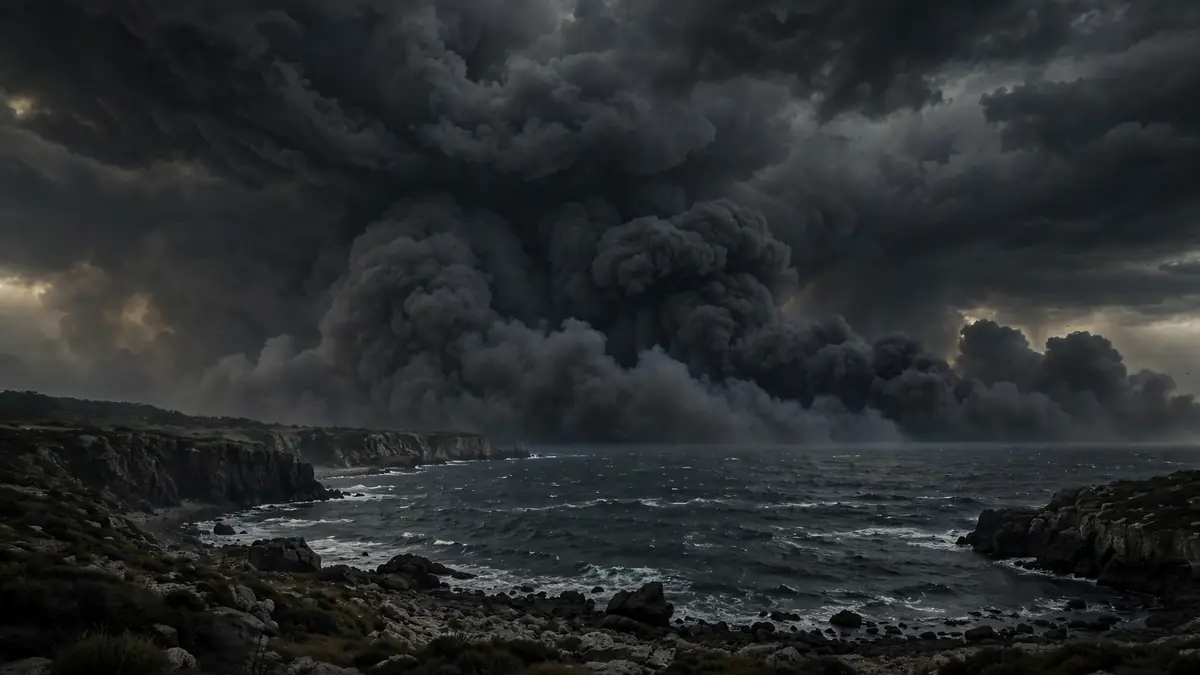
The first of the three is the only one named in the Quran - and an entire surah carries its name. Surah Ad-Dukhan, eighty verses long: Dukhan means smoke. The key verse is 44:10, and the Saheeh International translation reads: 'Then watch for the Day when the sky will bring a visible smoke.' Note two words the episode underlines: a smoke that is visible - clear, obvious, unmistakable - and a sky that brings it forth, as though the smoke originates from the sky itself. The next verse says the smoke will cover all of humanity, and people will cry out that this is a dreadful punishment. It is not a local fog or a city's haze. It is a covering of the whole world, and the Quran describes its arrival as a day to be watched for - a warning, not a surprise.
The Tafsir Report: Forty Days
The early commentators read the verse as an event of the end times. Abdullah ibn Abbas explained that the smoke will appear near the Day of Judgment and envelop the earth for forty days. For the righteous, its effect will be mild - like a cough, or the feeling of a cold. For the disbeliever, it will be no less than a lethal poison. Ali ibn Abi Talib, Ibn Abbas, and Abu Huraira are all reported to have said that it will pierce into the noses and ears of the disbelievers, until a person appears as if intoxicated. The episode reports these tafsir narrations without giving their collections, so they stand here as the episode's report - read them as early commentary on the verse, not as the Prophet's own words. The contrast is the point: the same smoke that chokes one person barely touches another.
The Boy of Medina and the Word 'Dukh'
The episode draws a striking link between the smoke and the figure the Companions suspected of being the Dajjal: Ibn Sayyad, a boy of Medina. The incident is in Sahih Muslim - the episode numbers it 2930, but that number does not resolve on sunnah.com's current numbering; the narration is 2924b. The Prophet stopped the boy and said he had concealed something for him to guess. The boy answered: 'It is Dukh' - he could not pronounce 'Dukhan' fully. The Prophet told him: 'Be off. You cannot get farther than your rank.' The Prophet had been envisioning the verse of Surah Dukhan - the smoke. Whether the smoke has a direct link with the Dajjal is the episode's own reading, stated as such: for the believers, the smoke will serve as a collective warning that the age of deception is about to begin, truth about to be concealed and clouded, reality about to blur.
Five Ways the Sky Could Bring Smoke
How could a smoke cover the entire world? The episode offers five possibilities - and every one of them is labeled as the episode's own, because the sources describe the sign, not its mechanism. Which of the five will prove true, or whether it will be something entirely different in nature - only Allah knows. The wording of the verse still guides the thinking: a clear, visible smoke, brought forth by the sky. That phrasing could imply the smoke originates from the sky itself, which is why the episode weighs the meteor scenario alongside the earthly ones. The possibilities are given so the mind can grasp the scale of the sign - not so anyone can predict its cause.
- A nuclear war - thousands of burning cities raising smoke and radioactive particles into a black atmospheric layer. The episode doubts this: the Great Battle will already have happened, and the age of arrows and swords will have returned.
- Industrial collapse - with the world's population consumed by war, deserted factories, power plants, and nuclear stations pouring out carbon and toxic chemicals unmonitored.
- Mega fires - the forests of Australia, America, Africa, and Russia burning at once, a black carbon cloud darkening the midday sky for weeks.
- Supervolcanoes - Yellowstone, Toba, Campi Flegrei erupting together into a volcanic winter.
- A meteor impact - a great rock from space raising dust and smoke that envelop the world, as happened to the dinosaurs.
The Sinking of the Earth
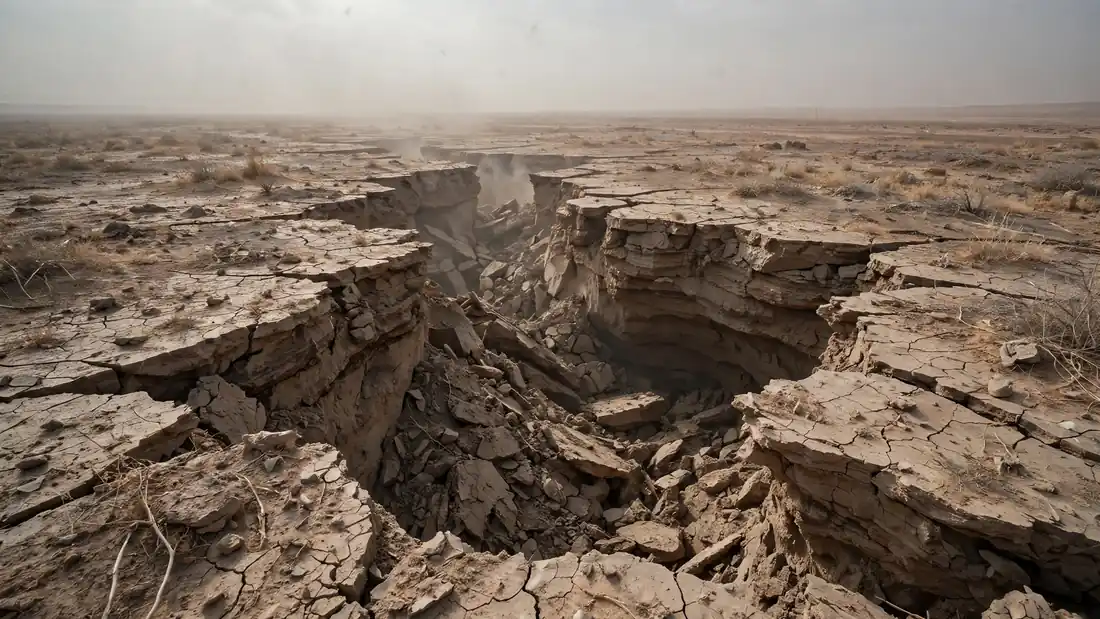
The second sign is Khusuf al-Ard - the sinking of the earth - and it differs from an ordinary earthquake. In an earthquake the ground shakes; in Khusuf the land itself sinks inward, with buildings, districts, or whole cities going underground. A sinkhole is a small, local example. The narration says the sinking will strike three places before the Hour: one in the east, one in the west, and one in the Arabian Peninsula. That threefold pattern is what makes it a major sign - not one pit in one city, but a collapse spanning the world. Human strength, technology, and planning will be powerless against it, because only one thing can sink the earth on that scale: the earth itself. The episode's explanation begins with what holds the ground up in the first place - the great tectonic plates beneath our feet.
Three Places, Not One
The land we live on is not a solid block. It is a surface of seven or eight great and small pieces - tectonic plates - floating slowly over the molten interior, moving only a few centimeters a year. Their movement raises mountains: the Himalayas were formed by the collision of the Indian and Eurasian plates, still ongoing, which is why the range keeps rising and K-2 grows taller each year. These plates hold the earth together - and if the support between two plates fails, everything above can collapse inward across hundreds of kilometers. Beneath large volcanoes sit enormous chambers; when their material escapes, the land above can fold down. This plate explanation is the episode's own, stated openly. The three sinkings then read as a series of events, not one accident - and set beside the smoke, a pattern emerges: the atmosphere and the geography of the world collapsing together before the Hour.
The Wind That Hurls Men Into the Sea
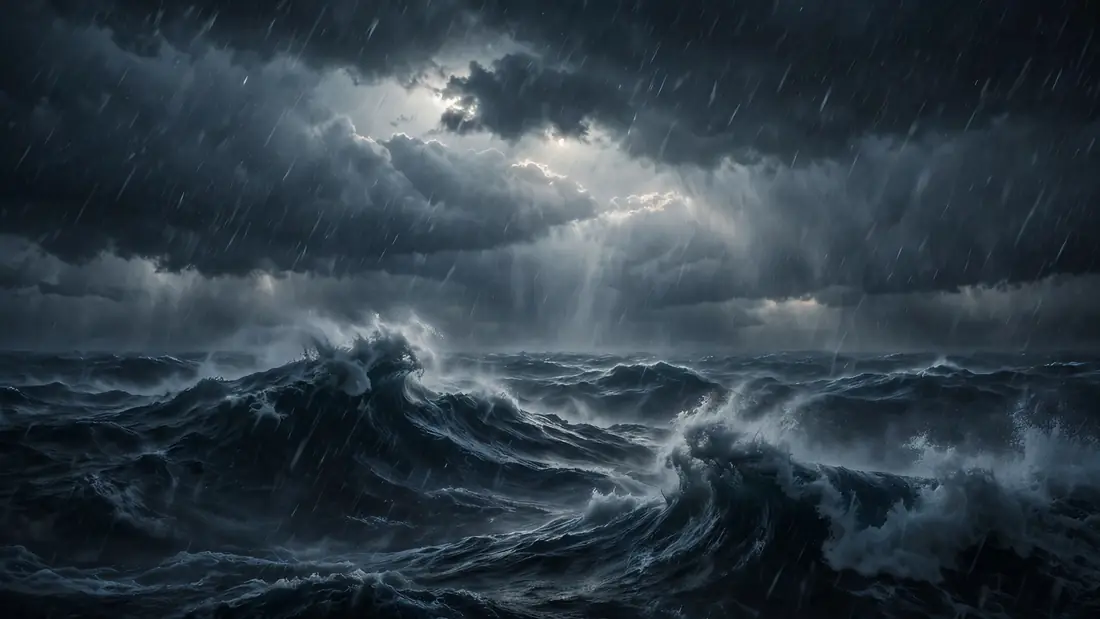
The third sign is a wind strong enough to lift people and throw them into the sea - and the episode asks how it could happen everywhere at once. The answer begins with physics: an average person weighs sixty to ninety kilograms, and wind above three hundred kilometers per hour can lift a body off the ground and propel it like a projectile. The episode cites small-scale proof: in 1935 an American tornado picked up schoolchildren and threw them meters into a pond; in the 2004 Indian Ocean tsunami, storm winds lifted dozens of people and threw them into the sea. The global mechanism it proposes is a disturbance of the sun's rays - by the smoke - triggering a global wind surge. Wind moves from high pressure to low pressure; at night, cool land holds high pressure while the warmer sea holds low - so wherever night falls, winds rush from the land toward the sea.
Collapse Before the Hour
Take the three signs together, as the episode invites, and they describe an environmental collapse: the atmosphere filled with smoke, the ground sinking in three places, the winds turning against the coasts. Qayamat will be the ultimate event after all of this - but even before it, the world will have physically collapsed to a large extent. And the episode adds a warning that the collapse is moral as well as physical: the fading of faith that the earlier articles traced - the strange return of Islam, the circling of Dhul-Khalasa, the worship of Lat and Uzza - runs alongside the physical signs. The physical and the spiritual darken together. No date is ever set for the Hour. The signs are given so that hearts wake up, not so that calendars get marked.
✅ Guide4U Islam Checklist
- Ten major signs in one narration: Sahih Muslim 2901.
- The smoke: Quran 44:10, visible, from the sky.
- Forty days, per the reported tafsir of Ibn Abbas.
- Ibn Sayyad said 'Dukh': Sahih Muslim 2924b.
- Sinking in three places: east, west, Arabia.
- The gale: Muslim 2901b drives people to the sea.
Key Takeaways
- The three signs together describe the world's physical collapse before the Hour - sky, ground, and sea.
- The episode's mechanisms (volcanoes, plates, wind surge) are its own explanations, not the sources' words.
- The Dajjal, Jesus, Gog and Magog, and the Beast are reserved for later episodes.
Frequently Asked Questions
Are these signs meant literally?
The series reads them literally: real smoke, real sinkings, real wind. The episode offers physical mechanisms - tectonic plates, a global wind surge - for how they could happen, clearly labeled as its own explanations. Whether every detail unfolds exactly this way, only Allah knows; the signs themselves are stated in the sources as real events.
Has the smoke of Ad-Dukhan already happened?
This series treats it as one of the ten major signs still ahead, following the narration in Sahih Muslim 2901 and the tafsir reports of forty days. The episode does not fit it to any past event. Like all the major signs, its timing is unknown - and no one sets a date.
Will the smoke harm the believers?
According to the tafsir narrations the episode reports - from Ibn Abbas, Ali, and Abu Huraira - the righteous will feel only a mild effect, like a cough, while for the disbeliever it will be like poison. These reports come without collections in the episode's account, so they are read as early commentary, not as the Prophet's words.
Can wind really lift a person?
Yes, and that is the episode's starting point. Winds above three hundred kilometers per hour can lift a sixty-to-ninety-kilogram body. The episode cites the 1935 American tornado and the 2004 tsunami winds as small-scale proof. The sign's terror is not the physics but the scale: such winds blowing across the whole world at once.