
Constantinople in the End Times: 1453, Greek Fire, and the Prophecy of a Second Conquest
Quick Answer
Constantinople fell to Sultan Mehmed in 1453 after a full battle, but the narrations describe a future conquest with no weapons at all, only the words "La ilaha illallah, Allahu Akbar" said three times. Scholars place that conquest within years of the Dajjal's emergence, and the timing of the Hour is never set.
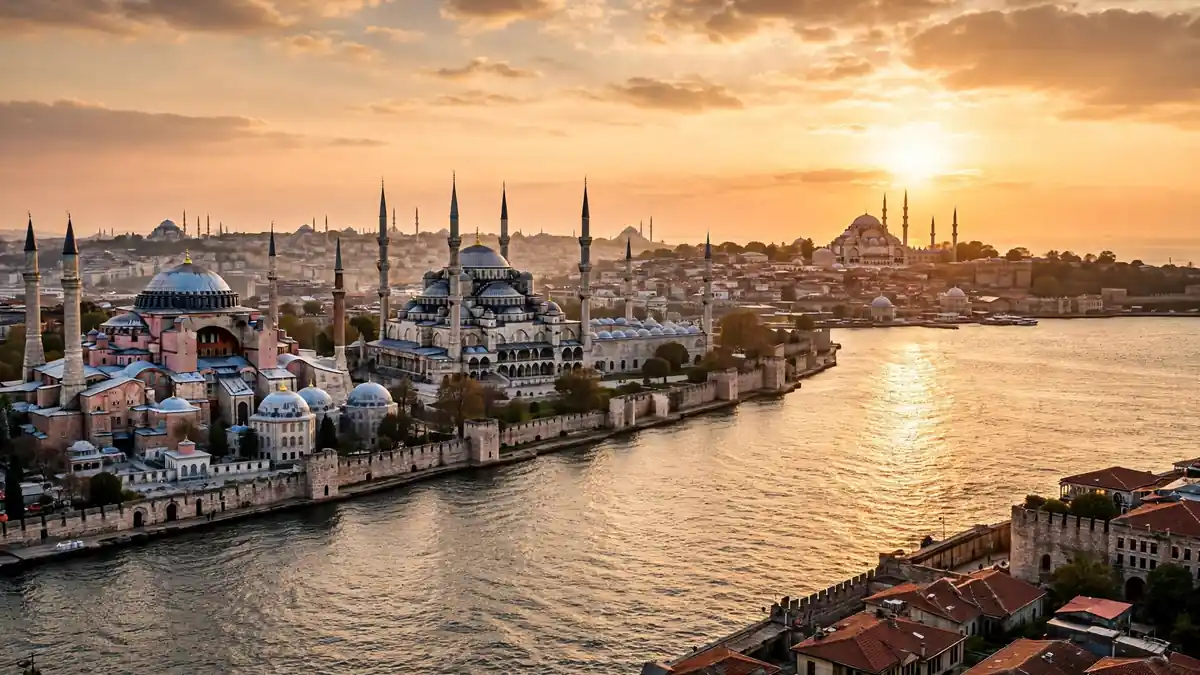
A City With Land on One Side and the Sea on the Other
Abu Huraira reported, in Sahih Muslim, a narration that needs one honest note: the episode's research numbered it 2920 under an older numbering scheme, which does not match current sunnah.com numbering, so I cite it as Sahih Muslim with no number. The Prophet, peace be upon him, asked his Companions about a city with land on one side and the sea on the other. He said the Hour will not come until seventy thousand of the Banu Ishaq besiege it, and will take it without weapons or arrows: they will say "La ilaha illallah, Allahu Akbar" three times, the sea side and the land side will fall, and the gates will open. They will enter and take its spoils, but while dividing them a crier will announce the Dajjal's emergence, and they will abandon everything. The narration never names the city; most scholars, in Mulla Ali al-Qari's discussion, identified it as Constantinople.
Which City First: Constantinople or Rome
Abu Qubail narrates, in Musnad Ahmad 6645, a hadith verified in our research, that Abdullah ibn Amr was once asked which of two cities would be conquered first, Constantinople or Rome. He called for a strapped box, took a book from it, and read aloud that when the same question was asked in the presence of the Prophet, peace be upon him, he answered: "The city of Heraclius will be conquered first," meaning Constantinople. The episode draws a wider argument from this scene, and it should be labeled as the episode's argument: that a written book was produced on the spot shows hadith was being written down in the Prophet's own lifetime, not only memorized. Whatever one makes of that claim, the answer itself orders the conquests plainly. Constantinople comes before Rome in the prophetic timeline, and the second conquest of Rome is its own subject for another article.
Two Conquests That Must Never Be Confused
This is the hinge of the whole article, and the episode insists on it. Constantinople has already been conquered once, in 1453, by Sultan Mehmed the Conqueror in a full and grinding battle, and the narrations describe a second conquest still ahead, won without weapons, only by the testimony and the takbir. They are two different events, and the episode's reasoning, labeled as its own, is sharp: those who treat 1453 as the final conquest are the ones who go on mislabeling events and people as the Dajjal today. Keeping the two separate protects the prophecy and keeps our judgment sound. Hold the difference this way:
- 1453: Sultan Mehmed takes the city by siege, cannon, and assault.
- The future: seventy thousand take the city with the testimony and the takbir alone.
The Excellent Army and Its Commander
There is another narration about this city, and it carries a caveat on its number. The episode gives it from Musnad Ahmad but supplies no number, so I cite it as Musnad Ahmad with an open no-number caveat rather than invent one: "You will surely conquer Constantinople; excellent the army that conquers it, and excellent its leader." The authenticity question must be stated openly, because the graders split: al-Hakim and al-Dhahabi graded the narration sound, while al-Albani and al-Arna'ut graded it weak. That is not a puzzle to settle here; it is a record of how classical and later critics weighed the same chains differently. The praise in the text stands either way, and it helps explain why generation after generation of Muslim armies kept sailing toward those walls.
Seven Years, Then Dajjal
The conquest of Constantinople does not stand alone in the timeline; the narrations tie it to the Dajjal. Ibn Hajar al-Asqalani wrote in Fath al-Bari that the Great Battle, the conquest of Constantinople, and the emergence of the Dajjal all fall within seven years. The episode cites this as its account and claims no authenticity grade for it, and I repeat it on exactly those terms. A clearer chain exists in Sunan Abu Dawud 4296, verified in our research: Abdullah ibn Busr reported that there will be six years between the great war and the conquest of the city, and the Dajjal will emerge in the seventh; Abu Dawud himself remarked that this report is "sounder than the tradition of Isa." The episode grades this hadith's chain as weak, and I report that grading openly rather than hide it. The narrations place the conquest inside a tight window, with the Dajjal's emergence close behind.
The Ten Horsemen of Damascus
The scene after the conquest is vivid. Sahih Muslim 2899a, verified in our research, comes at the tail of the long Ibn Mas'ud narration about a red storm and gives the sequence in detail. After the conquest the Muslims will hang their swords on the olive trees and divide spoils like none they have ever seen, when a loud voice will announce that the Dajjal has appeared among their families. They will abandon everything, wealth and all, and send ten horsemen toward Damascus. The Prophet, peace be upon him, said he knew their names, their fathers' names, and even the colors of their horses, and that they would be the finest riders on earth that day. That first announcement is a deception of Satan, yet when the horsemen reach Damascus the Dajjal truly emerges then. His emergence belongs to the coming Dajjal episodes, and this article will only point forward to it.
The City of Three Empires
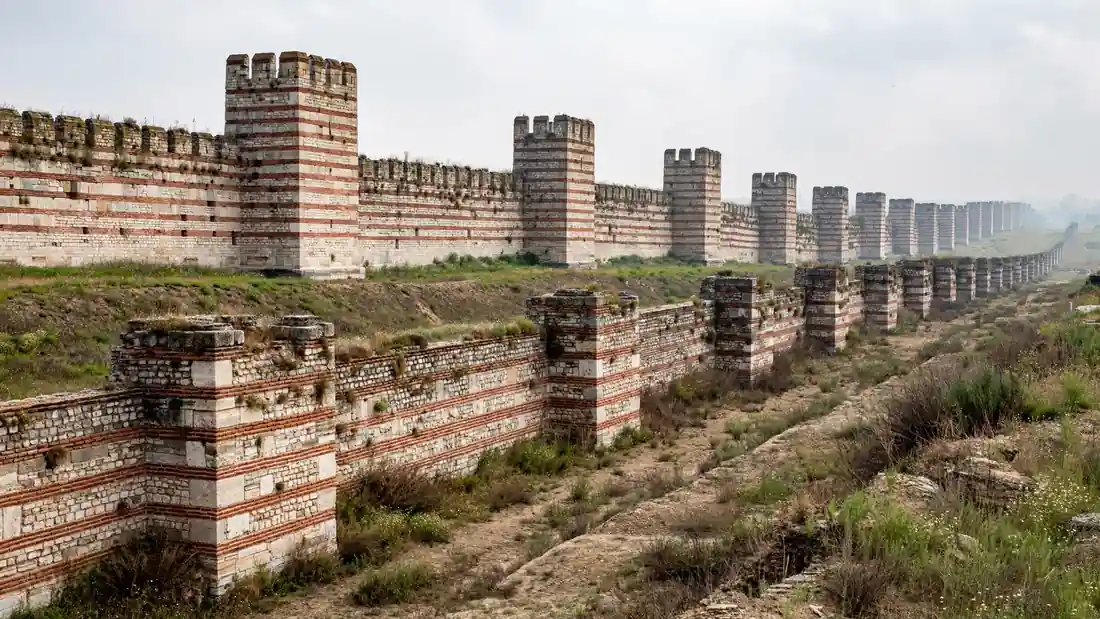
To feel the weight of these prophecies, the episode walks through the city's history, and the account that follows is the episode's. Constantine founded it about three hundred years after Jesus, peace be upon him, and named it for himself; it went on to serve as capital of the Roman, the Byzantine, and the Ottoman empires. It sat as a gateway between the Black Sea and the Marmara, between Europe and Asia, and as a hub of the Silk Road that moved the wealth of continents through its harbors. It was ringed by the Theodosian Walls, which no enemy breached for eleven hundred years. Muslim armies made about eleven attempts on it across the centuries, and the Companion Abu Ayyub al-Ansari was martyred in one of those attacks; his tomb in Istanbul is visited to this day.
Greek Fire: The Weapon Nobody Could Copy
The walls were not the city's only defense. The episode's historical account describes Greek fire, designed by the Greek engineer Kallinikos of Heliopolis: a brass tube that poured out a mixture which ignited on contact, a sticky fire that kept burning even underwater. It could be quenched only with vinegar or sand, or by the total burning of the victim it clung to. In 717 it destroyed a whole Muslim naval fleet and turned the siege away. Only three men knew the formula: the emperor, the chief engineer, and the royal alchemist, and it was never written down. It has never been reverse-engineered. More than twenty modern attempts to recreate it have been tried, and none matched the original. The city's walls were stone, but its sea defense was a secret.
1453: How the Unbreachable Fell
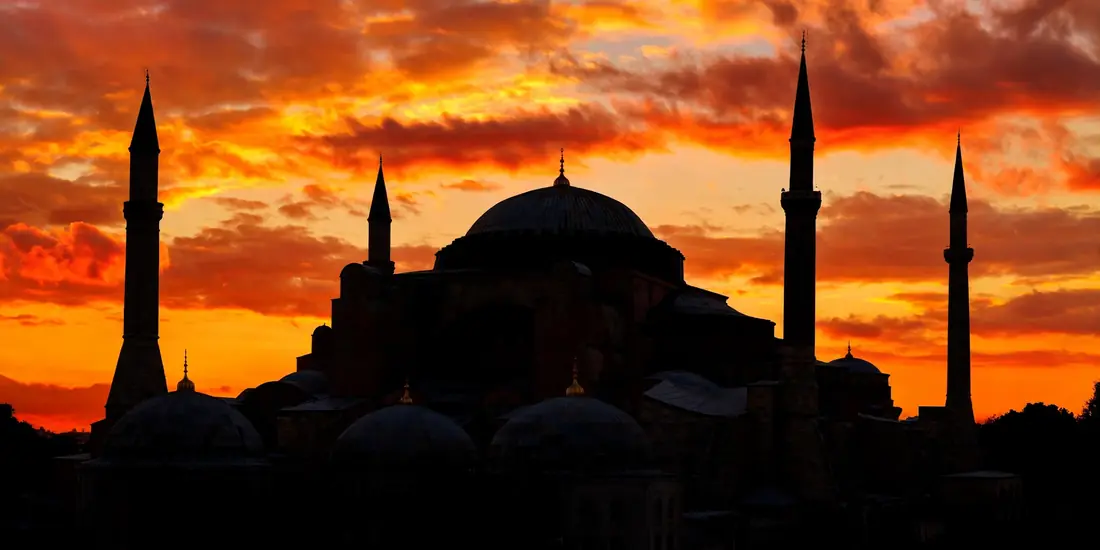
Sultan Mehmed the Conqueror planned the siege with a thoroughness the episode recounts in detail. The Hungarian engineer Orban built him the Basilica cannon, a monster that fired an 800kg shot, weighed more than three hundred tons, and made the ground tremble when it spoke. For six weeks it pounded walls that had stood unbroken for eleven hundred years. The breakthrough came at four in the morning on May 29, 1453. Mehmed, twenty-one years old, rode into the city on a white horse, and the Hagia Sophia became a mosque that same day, with Surah Al-Fath recited inside it. One conquest, won by battle, closed the medieval chapter of the city. The narration's second conquest, without weapons, still waits beyond it.
The Marvels of 1453, Reported as Accounts
Around the fall of the city the chroniclers recorded strange events, and the episode reports them strictly as documented historical accounts, clearly labeled, with no claim that any of them belongs to the signs of the Hour. A solar eclipse darkened the sky in the days before the siege ended. A strange fog settled over the city in the month of May, out of season. A blue light was seen shimmering over the great dome of Hagia Sophia, an account preserved in a 1954 book on Sultan Mehmed. And two very old priests were seen vanishing behind a pillar inside Hagia Sophia, an account found in the Chronicles of Tzouanos and in a 1965 book on the fall of the city. Roman tradition holds that those two priests will reappear the day Constantinople returns to the Romans, and I report that as Roman tradition only, nothing more.
A Conquest That Redrew the Map
The episode closes with a sweep of consequences, and this framing is the episode's own. Losing the Silk Road's key city pushed Europe to seek new routes around the world: Columbus reached America, da Gama reached India, Pizarro pressed into Peru, Cortes into Mexico, Orellana down the Amazon. "That conquest changed the map of the world once, and the coming conquest will change it again," the episode says in its closing line, quoted here as such. The prophecy of the second conquest still stands open, with its testimony, its takbir, and its spoils abandoned at a crier's shout. And one rule governs everything written here: no date is ever set for the Hour, by anyone, at any time.
✅ Guide4U Islam Checklist
- A city with land on one side, sea on the other.
- Seventy thousand of Banu Ishaq will besiege it.
- No weapons, no arrows: only testimony and takbir.
- 1453 was battle; the future conquest differs.
- Spoils abandoned when Dajjal is announced.
- Six years war to conquest; seventh Dajjal.
- Ten horsemen ride to Damascus.
Key Takeaways
- The coming conquest uses no weapons at all, only the testimony and the takbir.
- 1453 and the future conquest are two different events; confusing them misleads.
- The prophecy stays open; the Hour's timing is never set by anyone.
Frequently Asked Questions
Has Constantinople already been conquered, then?
Yes, in 1453, by Sultan Mehmed the Conqueror in a full battle - but the narration in Sahih Muslim describes a future conquest won without weapons, only by the testimony and the takbir. The episode treats them as two different events: the battle conquest is history, and the weaponless conquest is still ahead.
Why do you not give a hadith number for the conquest without weapons?
Because honesty requires it. The episode's research numbered that narration 2920 under an older numbering scheme, but the number does not match current sunnah.com numbering. Rather than guess a number, I cite it as Sahih Muslim from the report of Abu Huraira, with the correction stated openly.
How does the conquest fit into the timeline of the Dajjal?
Sunan Abu Dawud 4296 reports six years between the great war and the conquest of the city, with the Dajjal emerging in the seventh; the episode grades its chain as weak. Ibn Hajar al-Asqalani wrote in Fath al-Bari that the Great Battle, the conquest, and the Dajjal's emergence all fall within seven years, cited by the episode without an authenticity grade.
Were the ten horsemen chasing a false alarm?
The loud voice at the conquest announcing the Dajjal was a deception of Satan, but the ten horsemen still ride to Damascus (Sahih Muslim 2899a), and when they reach it the Dajjal truly emerges then. The Prophet, peace be upon him, said he knew their names, their fathers' names, and the colors of their horses.