
Five Linked Events: The Prophet's Map of the End Times, From Jerusalem to the Dajjal
Quick Answer
The episode traces a chain of five linked end-times events from Sunan Abu Dawud 4294: Jerusalem's flourishing, Medina's desolation, a great war, the conquest of Constantinople, and the coming of the Dajjal. It reads them as a sequence of triggers - each one setting off the next - and explores how Medina could empty and how armies could return to pre-modern weapons. The hadith gives order, not dates, and no one may set a date.
A Single Hadith That Maps the Future
Most end-times narrations describe single signs. This one draws a map. Mu'adh ibn Jabal narrates that the Prophet described the last days as a chain of five linked events, each one setting off the next. The text comes from Sunan Abu Dawud, hadith 4294, graded Hasan: "The flourishing state of Jerusalem will be when Yathrib is in ruins, the ruined state of Yathrib will be when the great war comes, the outbreak of the great war will be at the conquest of Constantinople and the conquest of Constantinople when the Dajjal (Antichrist) comes forth. He (the Prophet) struck his thigh or his shoulder with his hand and said: This is as true as you are here or as you are sitting (meaning Mu'adh ibn Jabal)." That closing gesture is doing real work. He was not offering a vague guess; he was speaking with the certainty of a man sitting beside his listener. This episode follows the chain event by event.
Event One: The Flourishing of Jerusalem
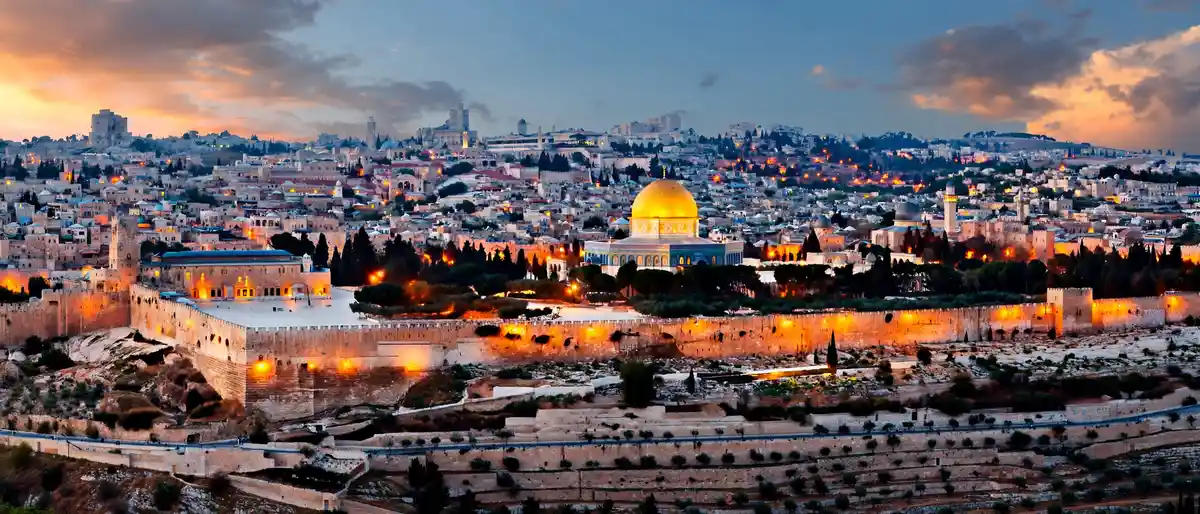
The first link is the flourishing, or repopulation, of Jerusalem. According to the episode's account, this process began after 1948 with the arrival of Jewish settlers in Palestine, and it gathered pace with the Law of Return of 1950, which gave every Jew in the world the right to acquire nationality and settle there. Three institutions keep the process running: the Diaspora Immigration Service Ministry, the Ministry of Immigrant Absorption, and the Jewish Agency for Israel. The episode reports that millions have now settled near Jerusalem and the inflow has not stopped. That is the episode's reading of events, stated factually and without comment. Whether the reading convinces you or not, notice that the first link is the only one tied to a population movement you can watch in the open. The episode's point is that this is not rumor or speculation: it is a demographic process, recorded and running for decades, plain to anyone who looks.
Event Two: The Desolation of Medina
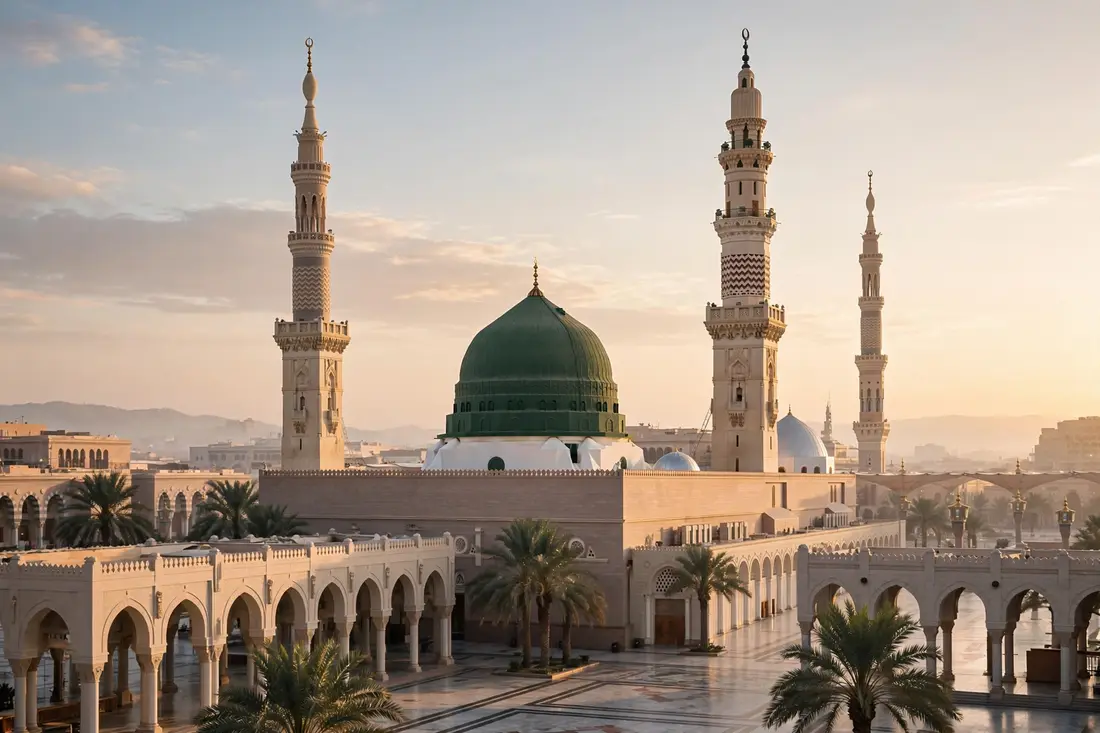
The second link lands on Medina itself. The narration in Sahih Muslim, hadith 1389, is blunt: "Its inhabitants will abandon it, whereas it is good for them and it will become the haunt of beasts and birds." Note the phrasing. The city is not destroyed or conquered; it stays good, even fine, and its people simply leave it behind until animals roam its streets. In the narration's tradition, two shepherds from Muzaynah later wander through the emptied city - a detail reported in the surrounding accounts rather than in a separately numbered hadith, so read it as context, not as an independent report. The image is strange precisely because it refuses drama: no siege, no fire, no wreckage. Just a prosperous city quietly emptied of the people who once filled it.
Why Not the Pandemic?
The episode is explicit about what this does not mean. It rejects fitting Medina's desolation to the Corona lockdown, when fewer worshippers came to the mosque during the restrictions. A thinner crowd at prayer, the episode argues, is not desolation. The hadiths describe something far more literal: residents packing up and leaving a city whose fruits still hang on its trees - a lived-in place, abundant and green, emptied of the people who lived there. A pandemic kept people indoors for a season and released them; the narration describes a departure that does not reverse. Whatever you make of the episode's wider timeline, its reading here holds together: the text speaks of inhabitants, not visitors, and of leaving, not lockdown. The episode insists on reading the text plainly - inhabited, fruitful, and then empty - a sequence no lockdown has ever produced.
What Will Make Medina Desolate?
Fath al-Bari records that one of Abu Huraira's students asked him what would make Medina desolate, and he answered: a wicked person. The episode repeats this as stated, without claiming a grade for the exchange. Then there is the furnace narration - "Medina is like a furnace; just as a furnace expels impurities from iron, Medina expels every impure thing from itself" - reported in Sahih al-Bukhari, though the episode gives no hadith number, so the reference stands as the collection alone and that limit travels with it. Imam Malik's Muwatta, in Kitab al-Jami', reports a dog or wolf urinating on the pillars of the mosque. And the "fox sleeping between the pillars"? That is the episode's own wording - the episode reports it without naming a collection, so take it as the episode's telling, not as a sourced hadith.
Who Are the Romans?
The great war in the chain is fought against the Romans, so the identity of the Romans matters. Sahih Muslim, hadith 2898, preserves the exchange: al-Mustawrid al-Qurashi told 'Amr ibn al-'As, "I heard Allah's Messenger say: The Last Hour would come (when) the Romans would form a majority amongst people." 'Amr challenged him - "See what you are saying?" - and Mustawrid answered, "I say what I heard." 'Amr then described what he knew of them: patience in trial, quick recovery after trouble, attacking again after flight, goodness to the destitute, orphans and the weak, and resistance against the oppression of kings. Take those six qualities seriously. They describe a people who absorb defeats and come back fighting - a definition built to still fit long after the Byzantine Empire itself was gone.
The Roman Model Across the Modern World
From there the episode makes its boldest move. In the Prophet's time, "Romans" meant the people of the empire - Egypt, Turkey, Palestine, and Libya all sat under Roman governors - but the episode reads the word as a model rather than an ethnicity. Label this clearly: it is the episode's interpretation, a piece of scholarly discussion, not a claim the hadith itself makes. On this reading, the "Roman model" - Roman law, the senate and the republic, citizenship, and an Orthodox Christian heritage - now stretches across Europe, Russia, the Americas, and Australia. The episode even raises the possibility that these nations could one day form a grand alliance. Whether that reading convinces you or not, notice what it solves: it lets the narration's Romans outlive the Byzantine Empire and still be recognizable in our century.
Will the Age of Arrows and Swords Return?
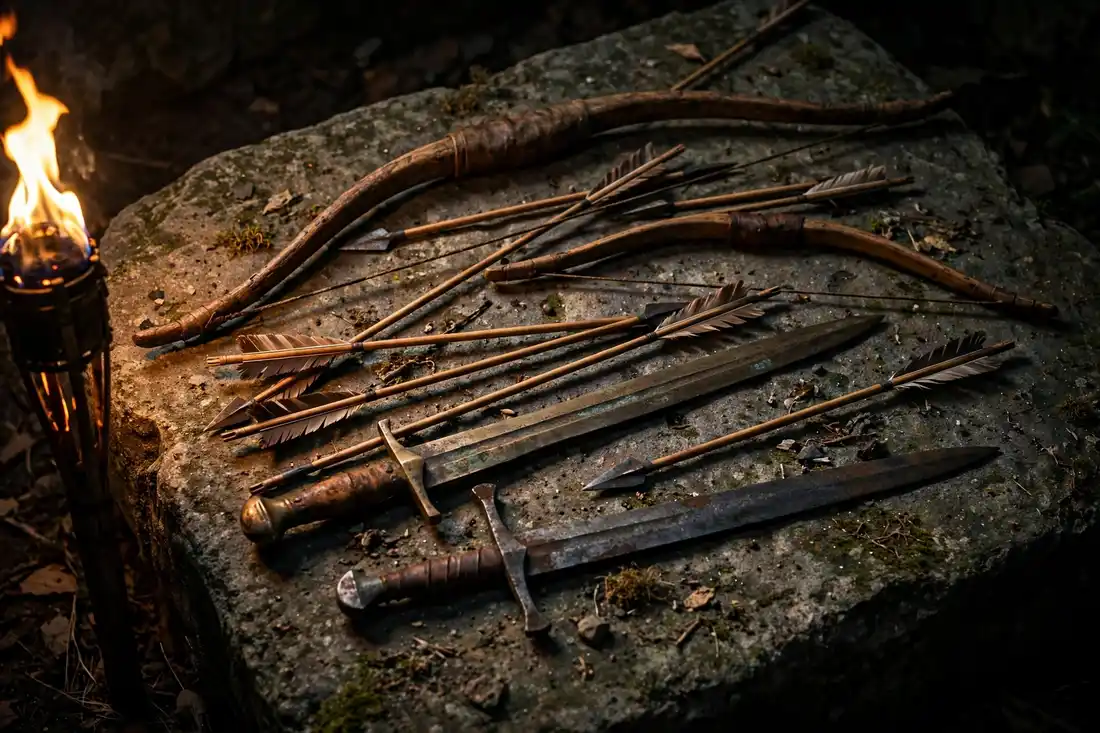
Other end-times hadiths mention bows, arrows, swords, stones, and axes - weapons of a much older world. How could armies ever return to them? The episode offers three possibilities and labels them as such. The first is a solar flare. It points to ESA Swarm data showing a weakened patch in Earth's magnetic field over the Atlantic in 2014, and reaches back to the Carrington Event of 1859, when a massive solar storm set telegraph lines on fire. A storm on that scale today would strike power grids, satellites, and the electronics modern weapons depend on. If the machines die, armies would be left with whatever still works by hand. That, the episode argues, is how arrows and swords come back: not by choice, but by the failure of everything newer. The hadiths do not say people will prefer the bow to the rifle; they say the rifle will simply stop working.
Cyber Attacks and Civilizational Resets
The second possibility is man-made rather than cosmic: cyber warfare. The episode names the precedents - Stuxnet crippling Iran's Natanz facility in 2010, Shamoon wiping 30,000 Aramco computers in 2012, the Sandworm strike that cut power to 250,000 Ukrainians in 2015, and the NotPetya and WannaCry outbreaks of 2017 - as evidence that modern infrastructure can be broken by code alone. The third possibility is simpler: a pandemic or a war that wipes out industrial capacity faster than it can be rebuilt. For the historical precedent of a great reset, the episode reaches back to the Late Bronze Age collapse around 1200 to 1150 BCE, when the Hittites vanished, Egypt weakened, and the cities of Canaan burned. All of this is the episode's account - a case that civilizational resets have happened before, so another one is not fantasy. A collapse need not be total. It only has to take away the things modern armies cannot fight without.
Reading the Chain in Order
So read the chain the way the hadith presents it: Jerusalem flourishes, Medina empties, the great war breaks out, Constantinople falls, and then the Dajjal appears - five links, each the trigger of the next. The narration gives you order, not dates, and that distinction is the whole point of this kind of study. It tells the believer to watch the sequence, not to circle a year on the calendar. Faith in the Prophet's words means taking the chain seriously without inventing dates he never gave. Everything else in this episode - the solar flares, the cyber attacks, the reading of "Romans" - belongs to scholarly discussion: useful for thinking with, never binding. What is binding is the chain itself, five events in order, as true as the man sitting beside you. That is the posture the episode leaves you with: watch, don't calculate.
✅ Guide4U Islam Checklist
- Jerusalem flourishes while Yathrib empties (Abu Dawud 4294).
- Medina's people leave it while it prospers (Muslim 1389).
- Desolation means departure, not a pandemic lockdown.
- Romans means a model, not just an empire (Muslim 2898).
- Old weapons may return after technology fails.
- The hadith gives order - never dates.
Key Takeaways
- Five events form one chain: Jerusalem, Medina, the great war, Constantinople, the Dajjal.
- The narration fixes the sequence; no one may fix the date.
- Interpretation is discussion; the hadith's wording is the anchor.
Frequently Asked Questions
Is the flourishing of Jerusalem already happening?
The episode argues yes - it reads the repopulation that began after 1948, accelerated by the Law of Return of 1950 and the millions who have settled since, as the first link of the chain. That is the episode's interpretation of the Abu Dawud 4294 narration, not a unanimous scholarly verdict. What is certain from the text itself is the shape of the event: a flourishing of Jerusalem tied to Yathrib's ruin. Whether the current population movement matches it is left for the reader to weigh.
Will Medina really be abandoned while it is prosperous?
That is what Sahih Muslim 1389 says: "Its inhabitants will abandon it, whereas it is good for them and it will become the haunt of beasts and birds." The narration stresses that the city is abandoned while it is still good - no destruction, no conquest, just departure. The episode reads this literally: residents leaving a fruitful, lived-in city, with animals eventually roaming its streets. The surrounding tradition even pictures two shepherds from Muzaynah finding it empty.
Who exactly are the Romans in this hadith?
In the Prophet's time they were the people of the Byzantine Empire. The episode goes further and reads "Romans" as a civilizational model - Roman law, republican institutions, citizenship, and Orthodox Christian heritage - now covering much of Europe, Russia, the Americas, and Australia. That is scholarly interpretation, not hadith text. The narration itself (Sahih Muslim 2898) only fixes the name and their qualities: patient, resilient, and kind to the weak.
When will these events happen?
No one knows, and no one may set a date. The hadith gives a sequence - Jerusalem, then Medina, then the great war, then Constantinople, then the Dajjal - not a calendar. Anyone who attaches a year to these events is guessing. The honest response is to watch the order, take the narration seriously, and leave the timing to God.