
The Four Things Made Permissible: A Sign Before the Hour
Quick Answer
Sahih al-Bukhari (no. 5590) records the Prophet saying that among his ummah there will be people who regard four things as permissible: unlawful sexual relations, silk, intoxicants, and musical instruments. A second narration (Sunan Ibn Majah, no. 4020) adds that intoxicants will be drunk under renamed labels. The sign is not open rebellion but quiet relabeling — treating clear prohibitions as though they were never forbidden.
A Hadith That Names Four Things
In Sahih al-Bukhari, narration no. 5590, the Prophet said that among his ummah there will come people who will regard four things as permissible: unlawful sexual relations, silk, intoxicants, and musical instruments. These four are striking because each one had already been made clearly forbidden. The narration does not describe people who commit sins while admitting they are sins. It describes people who do the opposite: they declare the forbidden to be allowed. That is what makes it a sign. When the line between forbidden and permitted starts to blur in people's speech — when something that once had a clear name gets a new name — that is exactly the moment this hadith is pointing at.
What "Making Permissible" Really Means
There is a real difference between a person who sins while knowing it is wrong, and a person who denies the prohibition altogether. The first is weakness; the second is a rejection of the law itself. Classical scholarship has always treated the two differently: failing to comply is a human fault, while declaring a prohibition invalid is a claim about the religion. The hadith is describing the second attitude — people who treat these four as though no prohibition ever existed. That is why the sign is not measured in crime statistics or moral decline charts. It is measured in language. When a forbidden thing is renamed, rebranded, and spoken of as though it were never forbidden, the line has not just been crossed. It has been erased.

The First: Unlawful Relations Made Normal
The hadith lists unlawful relations first. Around the world, what was once treated as a grave moral wrong in many societies is now discussed openly, celebrated in entertainment, and in some places legally protected. The research behind this episode notes how hard it has become to escape exposure to it — in media, in public life, in everyday conversation. This is not a judgment on any single country; it is an observation about the direction of travel. The sign is not that such things happen — they have happened in every age — but that they are made permissible: treated as though there were never anything to permit or forbid in the first place.
The Second: Silk — and Why It Surprises People
Silk surprises modern readers because it sounds like a fabric, not a moral issue. But the prohibition of silk clothing for men is a long-established part of the tradition, and its presence in this hadith is deliberate. It is the least dramatic of the four — and that is the point. If even silk, a quiet luxury, can be declared permissible without a second thought, then the attitude has spread everywhere. The hadith does not need shocking vices to make its case. It uses silk to show how deep the relabeling goes: once people stop asking whether something is allowed, even the smallest prohibitions quietly disappear.
Four Layers Behind the Silk Prohibition
The research behind this episode works through four layers of meaning in the silk prohibition. First, the plain layer: silk was, and largely remains, an expensive fabric tied to kings and the wealthy, and wearing it can feed arrogance, while Islam teaches humility and simplicity. Second, silk symbolizes softness and delicacy, while the tradition expects dignity, simplicity and a sterner character from men. Third, the Quran names fine silk as the clothing of Paradise — "They will wear [garments of] fine silk and brocade, facing each other" (44:53), "green garments of fine silk and brocade" (76:21), "and their garments therein will be silk" (22:23) — so silk is a reward kept for the next world. Fourth, a quieter reason the research highlights: compassion. The silkworm spins its cocoon like a protective home, yet humans boil thousands of cocoons to unwind the thread — innocent creatures killed in their own shelter for one luxurious garment, not from need but for luxury.
The Third: Intoxicants Under New Names
For intoxicants, the hadith is sharpened by a second narration in Sunan Ibn Majah, no. 4020: some people of the ummah will drink intoxicants while calling them by other names. The sin does not arrive openly; it arrives with a new label — a remedy, a lifestyle drink, a social accessory. The research notes how openly intoxicants sit on shelves in parts of Lebanon, Egypt, Morocco and Tunisia — bought and sold with little question, sometimes with full legal freedom — while other societies still treat them as a vice. The sign is not about one country's laws. It is about the renaming: once a thing no longer carries the name the prohibition used, people consume it without feeling they have crossed any line at all.
The Fourth: Musical Instruments
The fourth item is musical instruments. The hadith places them alongside unlawful relations, silk and intoxicants, which tells us the speaker's point was never a ranking of large and small sins. The point is the attitude: treating a clear prohibition as though it were no prohibition at all. There is scholarly discussion about the details of this topic, and it is not the job of a guide like this to settle those details for any reader. What belongs to the sign is the pattern: a culture of entertainment built on instruments growing so normal that the very idea of a prohibition sounds strange to people's ears. When a society reaches the point where the prohibition itself is the surprise, the hadith's description has arrived.
Linen — The Alternative the Tradition Kept
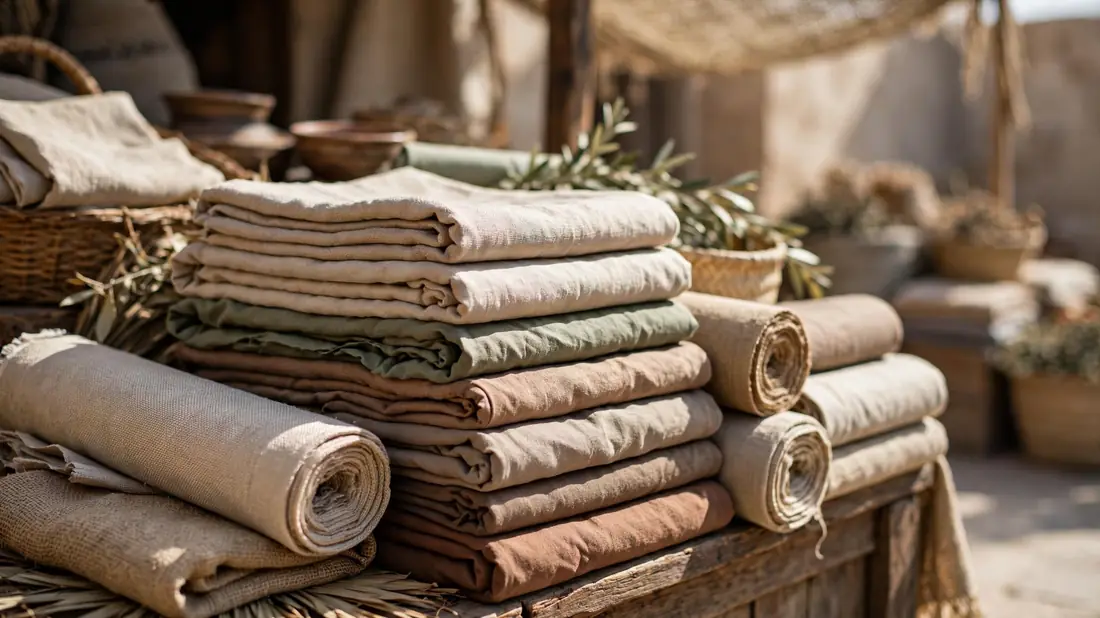
The research closes the silk discussion with a detail worth keeping: linen. In the era of the Pharaohs, Egyptians wore white linen — a fabric that breathes, stays cool, and grows softer with age instead of wearing out. Arab traders carried linen from Egypt, Syria and Iraq into the Hijaz, and the Prophet himself owned linen garments; when Utbah asked him for something to wear, he was given linen, and Utbah felt he had the finest clothes among the Companions. Linen was relatively expensive — yet it was used without concern. The lesson is gentle: the tradition did not leave people with nothing. It pointed to a beautiful, honest alternative. Refusing silk was never about refusing beauty; it was about refusing what silk cost — in pride, and in the lives of the small creatures it was woven from.
Why These Four Together
What binds the four is not their subject matter but their trajectory. Each began as a clear, named prohibition. Each gets approached not by argument but by renaming: relations become lifestyle, silk becomes fashion, intoxicants become recreation, instruments become culture. Nobody stands up and announces the law is wrong — that would take a different kind of courage. Instead the words change, the packaging changes, and one day people speak of the thing as though it was never forbidden. That is the precise meaning of "making permissible" in this hadith. It is not a rebellion. It is an edit — quiet, gradual, and almost invisible while it is happening.
Reading the Sign Without Setting Dates
One caution belongs at the end. The Prophet described these as signs before the Hour, and people in every generation have looked around and seen them. That is allowed — recognizing a sign is not the same as setting a date. No one can say when the Hour will come; that knowledge rests with Allah alone, and the narrations describe conditions, not calendars. The purpose of such a hadith is not prediction but protection: it warns the reader to watch his own heart and his own speech. When you hear a forbidden thing praised under a new name, the sign is not happening "out there" in the world. It is happening in the sentence you just accepted. That is the level at which this hadith asks to be read — personally, honestly, and without fear of what any calendar says.
✅ Guide4U Islam Checklist
- Say the narration's four items by heart: Bukhari 5590
- Know the renamed-drinks hadith: Ibn Majah 4020
- Recall silk's three Quranic mentions: 44:53, 76:21, 22:23
- Remember linen as the tradition's honest alternative
- Distinguish denying a prohibition from weak compliance
- Watch for renaming, not just open sin
Key Takeaways
- The four things in Bukhari 5590: unlawful relations, silk, intoxicants, musical instruments.
- 'Making permissible' means denying the prohibition, not merely failing to follow it.
- A visible minor sign is never a date for the Hour — that knowledge rests with Allah alone.
Frequently Asked Questions
Where does the "four things" hadith appear?
It is recorded in Sahih al-Bukhari, no. 5590, stating that among the ummah there will be people who regard unlawful sexual relations, silk, intoxicants and musical instruments as permissible. Its place in al-Bukhari's Sahih gives it the highest grade of authenticity in the Sunni tradition.
Does the silk prohibition apply to women?
The research behind this episode discusses silk in the context of men's clothing, which is where the classical discussion centers. It does not address the ruling for women's silk, and this guide does not issue rulings — for personal questions of practice, ask a qualified scholar you trust.
If someone drinks something without realizing it is an intoxicant, does the "renamed" hadith apply to them?
The hadith in Sunan Ibn Majah (no. 4020) describes people who knowingly drink while giving the drink another name — the sign is in the deliberate relabeling, not in honest ignorance. Questions of individual accountability belong to scholars, not to the fulfillment of a sign.
These four things look normal in the modern world — does that mean the Hour is close?
A minor sign being visible is not a date. The narrations describe conditions, not calendars, and the knowledge of the Hour's timing rests with Allah alone. The hadith's purpose is protective: it asks each reader to guard his own speech and choices, not to predict the future.