
The Return of Idol Worship: What the Prophet Said Must Happen Before the Hour
Quick Answer
The Prophet foretold that before the Hour, tribes of his Ummah would unite with the idolaters, the women of Daws would circle Dhu'l-Khalasa again, and the worship of Lat and Uzza would return. This article examines the verified narrations and reconciles them with the Quran's promise in Surah As-Saff 61:9 that Islam would prevail over all religions.
A Promise That Islam Would Prevail
The Quran makes a promise about the future of Islam that every reader of the end times must keep in mind. In Surah As-Saff, Allah says: 'It is He who sent His Messenger with guidance and the religion of truth to make it prevail over all religions, even though the polytheists dislike it.' (61:9). This is the translation's plain meaning: Islam was sent to rise above every other way of life, and the early generations watched that promise unfold as the message spread from Arabia across continents. Any prophecy that speaks of a later return to idol worship must be read against this promise. The triumph comes first; what follows belongs to the very end of the story, after the victory has been complete.
Then a Prophecy of Return
Against that promise stands a prophecy that has unsettled readers for centuries. In Jami at-Tirmidhi, number 2219, narrated by Thawban - a narration al-Tirmidhi himself graded hasan sahih - the Prophet said: 'The Hour shall not be established until tribes of my Ummah unite with the idolaters, and until they worship idols.' The words are plain and startling: people from within the Muslim community will one day join the idol worshippers and take up idols again. This is the only Tirmidhi narration on this subject that we use in this article, because it is the one whose reference we have verified. It sets the theme for everything that follows: a return to idol worship, from inside the Ummah, before the Hour.
The Women of Daws and Dhu'l-Khalasa
A second prophecy gives the return a vivid and specific image. In Sahih al-Bukhari, number 7116, narrated by Abu Huraira, the Prophet said: 'The Hour will not begin until the backsides of the women of Daws wobble (as they go) around Dhu'l-Khalasa.' Sahih Muslim, number 2906, also narrated by Abu Huraira, explains the scene: the women of Daws would go round Dhu al-Khalasa for worship, a place at Tabala where the tribe of Daws used to worship the idol in the days before Islam. Dhu'l-Khalasa was the idol-house of the Daws, and the prophecy says its worship will return. The image is deliberately striking: women circling an idol-shrine as their ancestors did, a full return to the practices Islam had removed.
Lat and 'Uzza: The Idols by Name
A third narration names the idols. In Sahih Muslim, number 2907, Aisha narrated that the Prophet said: 'The (system) of night and day would not end until the people have taken to the worship of Lat and Uzza.' Lat and Uzza were two of the chief idols of pre-Islamic Arabia, worshipped at Taif and near Mecca, and their names would have been known to every listener. For the Prophet to name them is to say that the return will not be to some new or vague idolatry, but to the very gods Islam defeated. The narration fixes the end of the story: the system of night and day itself - the orderly world we know - will not end until this reversal has happened.
The Sweet Fragrant Wind
The same narration from Aisha carries the explanation of how the reversal happens. The Prophet told her that after the victory of Islam, Allah would send a sweet, fragrant wind that would take the life of everyone in whose heart there was faith even equal to a mustard grain. Only those with no faith at all would remain, and they would revert to the religion of their forefathers. This is the key that explains the sequence: the return to idols does not happen while true believers still walk the earth. It happens after they have been gathered to their Lord by this gentle wind, leaving behind a world with no one left to hold the line. The worship of Lat and Uzza returns because there is no one left to refuse it.
Reconciling Triumph and Return
The promise of Surah As-Saff and the prophecies of return fit together once the sequence is understood. First comes the triumph: Islam prevails over all religions, exactly as 61:9 promises, and the early generations witnessed this with their own eyes. Then, at the very end of time, comes the gentle wind that takes every believer, even the weakest in faith. Only then does the reversal happen: the remaining people, with no faith left among them, return to Lat and Uzza and to the idol-shrines of their ancestors. There is no contradiction between the two. The triumph is real and complete in its time; the return belongs to a later time, after the believers are gone. The Quran's promise stands unbroken.
What the Episode Notes About Dhu'l-Khalasa
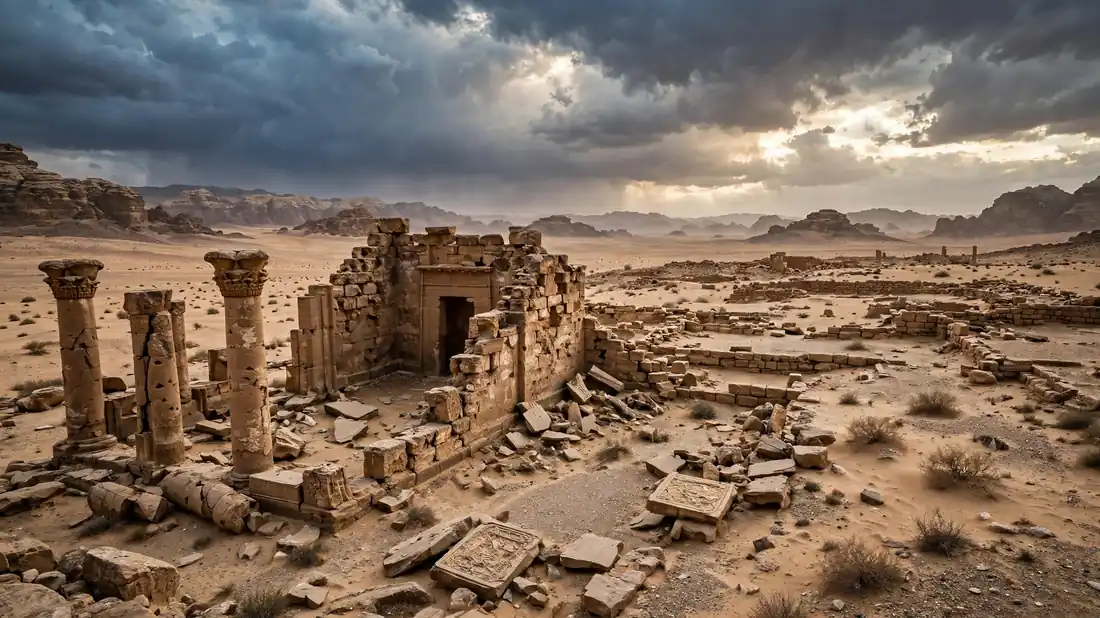
Our episode adds a historical note that deepens the picture. Dhu'l-Khalasa was not a distant ruin in the Prophet's lifetime; it was an active idol-shrine, and the Prophet sent companions to destroy it, which they did. The prophecy therefore speaks of a place that Islam had already cleansed, returning to its old use. This detail matters because it shows the pattern of the end times as the narrations present it: not the survival of old ignorance, but its return after it had been defeated. What was torn down in the light of revelation will be rebuilt in the darkness of the end, when there is no one left to tear it down again.
What 'Tribes of My Ummah' Means
The words of Tirmidhi 2219 deserve close attention: 'tribes of my Ummah' will unite with the idolaters. The prophecy does not say that outsiders will conquer the Muslims and force idols upon them; it says that groups from within the community will join the idol worshippers by choice. This is what makes the narration so searching. The danger it describes is not invasion but drift: Muslims themselves turning toward the practices Islam came to remove. Classical commentators read this as a warning to the community to guard its own heart, because the return to idols begins not with an army at the gates but with small compromises inside. The narration names the end of a road that starts with neglect.
The Mustard Grain and the Mercy in the Wind
There is mercy hidden in the narration of the wind. The Prophet said it would take everyone with faith even equal to a mustard grain, which means that no believer, however weak, will be left to witness the return of the idols. The weakest faith still counts; the smallest seed of belief is still enough to be gathered with the believers. This is a comfort for every Muslim who fears their faith is too small: the measure is not strength but presence. If there is even a mustard grain of true faith in the heart, the wind will carry its owner away before the darkness falls. The narration is a warning about the end, but it is also a promise about the mercy that comes just before it.
Scholars on the Sequence of Events
Scholars who study these narrations generally agree on the order of events, and we present their agreement as scholarly discussion, not as a matter of creed. The order is: the triumph of Islam over all religions, the long centuries of the Muslim community, then the sweet wind that removes every believer, then the return of idol worship among those who remain, and only then the Hour. No one can place dates on this sequence, and the narrations themselves give none. What the scholars stress is the direction of the story: it moves from light to darkness at the very end, which is why the believer's task is to hold to the light while it lasts. The sequence is a map, not a timetable.

Hold Firm While the Door Is Open
The lesson of these narrations is not despair but urgency. The return of idol worship belongs to a time after the believers are gone; the believer's time is now, while the door of faith is still open. The narrations ask nothing complicated: hold to the worship of Allah alone, guard the heart against drift, and do not wait for a better season to set things right. The wind that gathers the believers will come for the strong and the weak alike, and the only question that matters is whether there is faith in the heart when it comes. These prophecies were given so that the community would stay awake, not so that it would lose hope. The door is open today; the wise walk through it.
✅ Guide4U Islam Checklist
- Read Jami at-Tirmidhi 2219 with its grading
- Read Sahih al-Bukhari 7116 and Muslim 2906
- Read Sahih Muslim 2907 on Lat and Uzza
- Keep Surah As-Saff 61:9 beside the narrations
- Place the triumph before the return
- Remember the wind takes every believer first
- Guard your own heart against drift
Key Takeaways
- Tirmidhi 2219, Bukhari 7116, and Muslim 2906-2907 all point to a return of idol worship.
- Islam's triumph comes first; the return follows only after the wind takes the believers.
- The lesson is urgency: hold firm while the door of faith is open.
Frequently Asked Questions
Which narrations speak of idol worship returning before the Hour?
Three are used in this article: Jami at-Tirmidhi 2219, where the Prophet says tribes of his Ummah will unite with the idolaters and worship idols; Sahih al-Bukhari 7116 and Sahih Muslim 2906 about the women of Daws circling Dhu'l-Khalasa; and Sahih Muslim 2907 about the return of the worship of Lat and Uzza.
Does this contradict the Quran's promise that Islam will prevail?
No. Surah As-Saff 61:9 promises that Islam will prevail over all religions, and that triumph came first. Sahih Muslim 2907 explains the sequence: after the victory, a sweet wind takes every believer, and only then do those who remain revert to the religion of their forefathers. The triumph and the return belong to different times.
What is the sweet fragrant wind?
In the narration of Aisha in Sahih Muslim 2907, the Prophet said Allah would send a sweet, fragrant wind that would take the life of everyone with faith even equal to a mustard grain. No believer, however weak, is left to witness the return of the idols.
What should a Muslim take from these narrations?
Urgency, not despair. The return of idol worship belongs to a time after the believers are gone. The believer's task now is to hold to the worship of Allah alone, guard the heart against drift, and keep even a mustard grain of faith alive while the door is still open.