
From Shepherds to Skyscrapers: The Signs in the Hadith of Jibreel
Quick Answer
In the Hadith of Jibreel (Sahih Muslim 8), the Prophet named two signs of the Hour: barefoot, destitute shepherds taking pride in building tall buildings, and the slave woman giving birth to her master. From the Gulf's 1934 poverty to the Burj Khalifa, from Abbasid caliphs born of slave mothers to boasting over mosques (Abu Dawud 449), the signs read like history itself.
The Stranger Who Asked About the End
The most famous hadith about the signs begins with a stranger. A man in white garments, with no marks of travel, walked into the Prophet's gathering, sat with his knees against the Prophet's knees, and asked about Islam, then about faith, then about excellence. Then he asked the question no one dared to ask: "Tell me about the Hour." The Prophet answered that the one being asked knows no more about it than the one asking. "Then tell me about its signs," the man said — and the Prophet gave them. The man turned out to be the angel Jibreel, come to teach the religion. The hadith is recorded in Sahih Muslim, number 8. Notice what it establishes: the signs may be described, but the Hour itself may not be dated — and that distinction governs everything that follows.
Barefoot Shepherds, Tall Towers
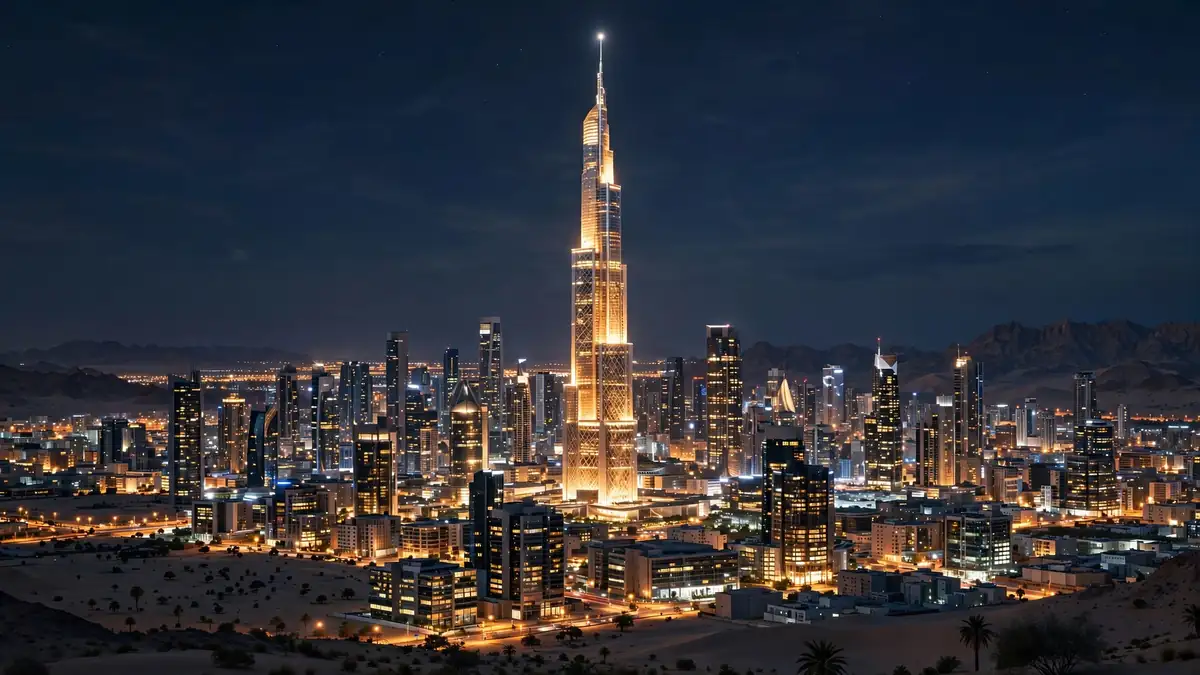
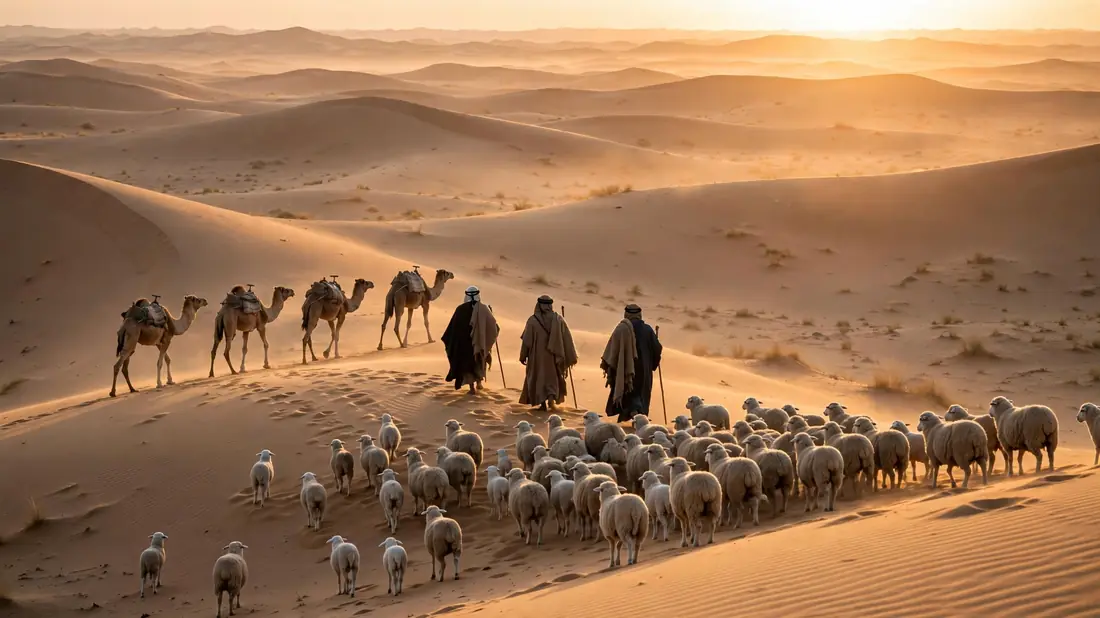
One of the signs the Prophet named that day could not be more precise: barefoot, scantily-clad, destitute shepherds will take pride in building tall buildings. Every word carries weight. Not merely builders — shepherds, people of the simplest life. Not merely the wealthy — the barefoot, those who once had nothing. And not merely building — taking pride in it, competing over it. The sign began manifesting soon after the Prophet's era, the episode's research notes, but about a hundred and fifty years ago it reached its peak. Today the world's tallest buildings stand in China and, after China, in the UAE — and the histories of both lands show people who were once poor and destitute. The prophecy did not name the cities. It named the people who would build them, and the pride with which they would do it.
From Pearl Diving to Skyscrapers
The story of the Gulf reads like a commentary on the hadith. Until the nineteenth century, most of China's population lived in extreme poverty and hunger — millions died of hunger, disease, and war. The UAE's story is no different: before the nineteenth century, pearl diving was the people's only income — thousands diving deep into Gulf waters for low profit at high risk of death, with famine widespread from lack of rain. In 1934, the British government released a report stating that the people of the Gulf countries were among the poorest in the world. After World War II, Japan's artificial pearl industry ended even that trade. The 1940s and 1950s were decades of debt, hunger, and famine, and people began leaving the country. Then in 1958, oil reserves were discovered near Abu Dhabi. Within four years, oil exports turned sand dunes into paved roads, fishermen's huts into skyscrapers, and leisurely camels into Land Cruisers racing on desert safaris. The competition in tall buildings began — every new tower a statement of power: we are tall, we are modern, we will influence the world.
The Race for the Sky
When the Burj Khalifa rose in 2010, Dubai announced it was not building structures but landmarks. Immediately after, Saudi Arabia announced the Jeddah Tower, to stand even taller than the Burj Khalifa. China wages the same war of height, every city competing for the most prominent tower. The race that began with the Empire State and Chrysler Buildings has shifted to Asia and the Middle East — and the histories of both regions show the once-destitute people the hadith described. But the sign is not only about skyscrapers. It is about boasting: taking pride in height, in modernity, in the statement a tower makes. A building is concrete. The pride is the sign. And that pride, the narration suggests, is the exact attitude the barefoot shepherds were never supposed to develop — the thing that turns achievement into a marker of the end.
- Burj Khalifa, Dubai — 2010
- Jeddah Tower, Saudi Arabia — announced to stand even taller
- The Empire State and Chrysler era — the race's old centre
- China's cities — the race's new centre
Boasting Over Mosques
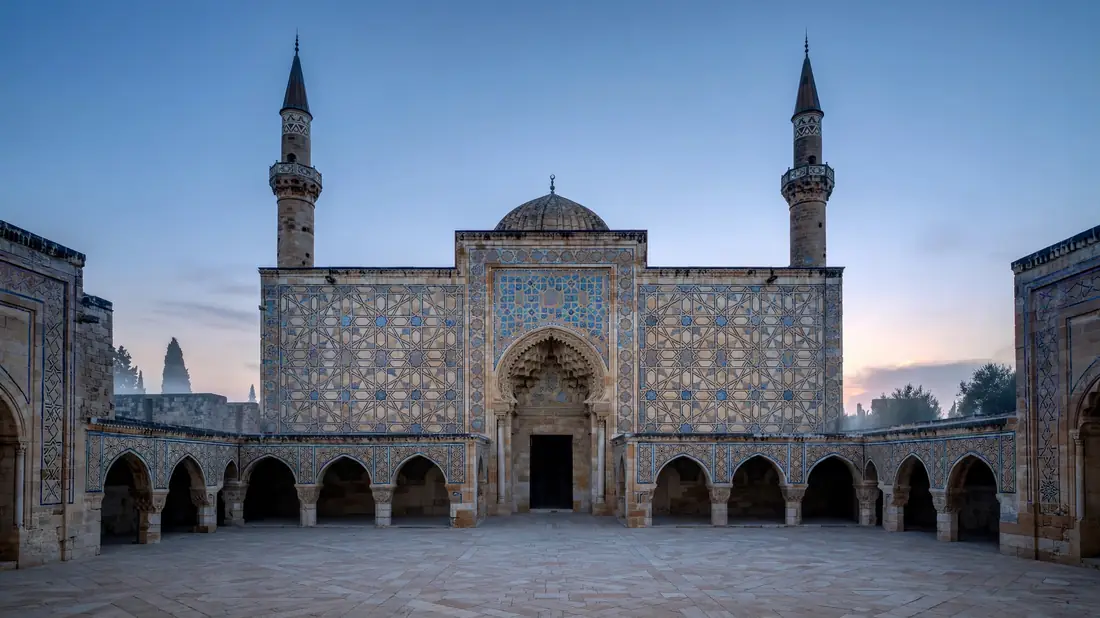
The Prophet named another sign in the same family, and this one strikes closer to home. In Sunan Abu Dawud, number 449, narrated from Anas and graded sahih, he said the Hour would not come until people boast to one another about mosques. Look at what that means today: the talk is of mosque design and architecture instead of worshippers and piety, of size instead of devotion — all across the world. The house of Allah becomes a project to be admired rather than a place to be filled. This is the same disease as the towers, wearing different clothes: pride in the building replacing devotion in the builder. A mosque is meant to empty the heart of pride. When it becomes the pride itself, the narration says, the Hour has drawn one step nearer.
The Slave Woman Gives Birth to Her Master
The Hadith of Jibreel named another sign in the same breath: the slave woman will give birth to her master. Scholars have offered several interpretations, and the episode's research walks through them honestly. Some say children will grow so disobedient that they will command their mothers like masters — the parent serving the child. Others see surrogacy: infertile couples travelling to countries like Ukraine or India to hire surrogate mothers, whose children then become, in legal terms, the owners of the women who bore them. But it may also be a historical fact fulfilled long ago: in Islamic history, sons of slave women rose to become sultans. The sign stands whatever the reading — while true knowledge of it rests with Allah alone.
History's Answer: Sultans Born of Slave Mothers
The history is striking. The mother of the Abbasid caliph al-Ma'mun was a Persian slave woman named Marajil. Al-Mu'tasim Billah was the son of a Turkish slave woman; al-Wathiq Billah's mother was a Roman slave woman — three famous Abbasid caliphs. The pattern continued into the Ottoman Empire: Suleiman the Magnificent's mother Hafeeza Sultana was a slave woman, and Selim II's mother Roxelana was a slave girl who later became queen. Their children reached the very top of the palace as sultans. The Mamluk Sultanate of the fifteenth century was founded entirely on the descendants of slaves: when Salahuddin Ayyubi's line weakened, his military slaves — the Mamluks — established a new government, the Sultanate of the Slaves. And when Hulagu Khan descended on the Muslims like a wrath, sweeping through Baghdad, Aleppo, and Damascus, it was a Mamluk sultan, Saifuddin Qutuz, who raised the cry "Forward, soldiers of Islam" and shattered the ranks of the Mongol superpower. The episode stresses that none of this diminishes those rulers. The Quran's principle is absolute: "Indeed, the most noble of you in the sight of Allah is the most righteous of you" (Surah Al-Hujurat 49:13). Status never came from the cradle. It came from character.
Reading the Fulfilled Signs Honestly
Some of these signs have already been fulfilled, and the scholars who read them do so with discipline. A sign is not a puzzle to be solved or a countdown to be decoded. It is a reminder with a purpose: to shake the comfortable, to humble the proud, and to remind the believer that history moves toward an end. The classical commentators read these narrations as warnings and reminders, not as schedules. The barefoot shepherds built their towers. The slave women's sons sat on thrones. The mosques became boasts. What remains is not another prediction — it is the question each of these signs asks of the reader: where do you stand in a world the Prophet described fourteen centuries ago? And this is where the discipline of the early scholars shows itself. They did not use the signs to win arguments or to frighten crowds. They used them the way a mirror is used — to check the state of their own hearts. The person who reads about boasting over towers and feels no stirring of humility has read the hadith the wrong way. The texts were given to a community that would one day live inside them, and their first question is always personal: not what year, not which city, but what conduct.
What the Reader Does Next
The answer the tradition gives is always the same: prepare, and refuse to set a date. No one knows when the Hour will come — "Indeed, Allah [alone] has knowledge of the Hour" (Surah Luqman 31:34) — and no calculation, no sign, and no teacher can override that. Anyone who claims the end will arrive in a specific year is claiming knowledge the Quran reserves for Allah alone. The signs were given to change conduct, not calendars: to loosen the grip of pride, to honour parents, to fill the mosques with worshippers rather than admiration, and to remember that every tower, every palace, and every boast is dust on a timeline that ends at the Hour. The stranger who asked about the end came to teach the religion — and the first lesson of that teaching is humility.
✅ Guide4U Islam Checklist
- Learn the Hadith of Jibreel: Muslim 8
- Know the tower sign's words: barefoot, destitute, competing
- Recall Abu Dawud 449: boasting over mosques
- Remember the slave-woman interpretations
- Read Surah Al-Hujurat 49:13 on true honour
- Fill mosques with worship, not admiration
- Set no dates for the Hour
Key Takeaways
- The tower sign names people and pride, not cities: once-destitute builders competing in height.
- The slave-woman sign has historical and modern readings; the narrations give no final verdict.
- Fulfilled signs are reminders that humble the reader — never dates for the Hour.
Frequently Asked Questions
Where is the Hadith of Jibreel recorded?
In Sahih Muslim, no. 8 — the narration in which the angel Jibreel, in the form of a man, questioned the Prophet about Islam, faith, excellence, the Hour, and its signs. Its place in Muslim's Sahih gives it the highest grade of authenticity.
Has the 'slave woman' sign already been fulfilled?
Scholars differ. Some point to Islamic history — Abbasid caliphs and Ottoman sultans born of slave mothers, the Mamluk sultanate founded by the descendants of slaves — as a fulfilled reading. Others read it in modern terms like surrogacy or the breakdown of parent-child authority. The narrations give no verdict on which reading is correct, and this guide presents them as the scholars have discussed them.
Is building tall buildings itself forbidden in Islam?
The hadith describes a sign — barefoot shepherds taking pride in competing over tall buildings — not a building code. This guide issues no ruling on construction; the sign is about the pride and the competition, not the concrete.
Do these fulfilled signs mean the Hour is close?
A fulfilled minor sign is not a date. The narrations describe conditions, not calendars, and the knowledge of the Hour's timing rests with Allah alone (Quran 31:34). The classical reading of these signs is that they should humble the reader and sharpen his conduct — not feed predictions.