
Arabia Will Return to Meadows and Rivers: The Greening Prophecy Explained
Quick Answer
This article explains the Sahih Muslim 157 prophecy that Arabia will revert to meadows and rivers: the key word 'reverts,' today's deserts, the episode's account of Arabia's green past and how it was lost, and today's greening projects. The Salman Canal warning and the episode's mechanism are stated plainly, with speculation always labeled.
The Prophecy, Stated Exactly
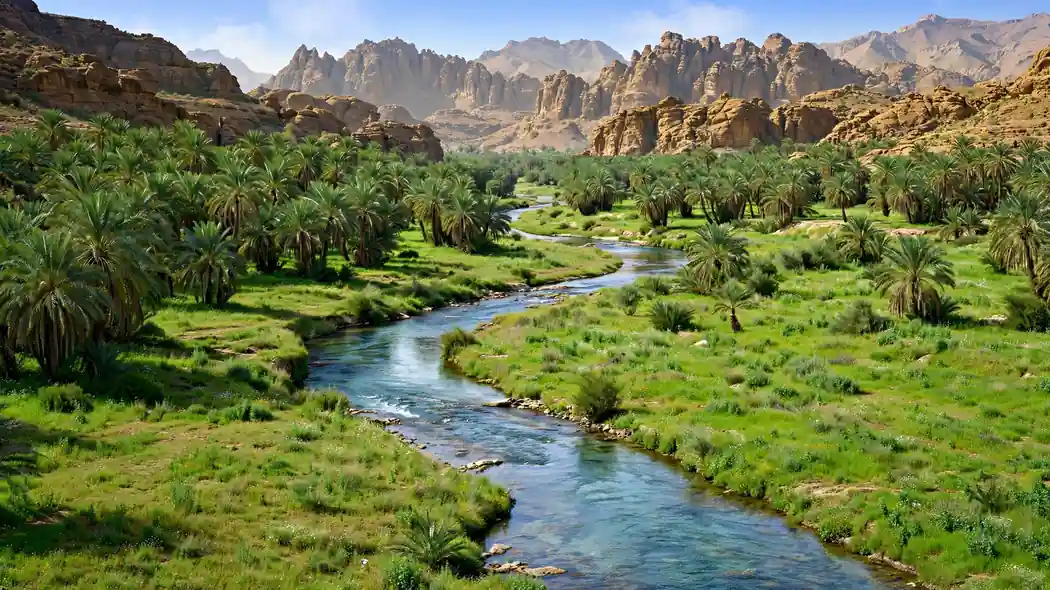
In Sahih Muslim, number 157 - listed as 157c in the current numbering on sunnah.com - Abu Huraira reported that the Prophet (peace be upon him) said: "The Last Hour will not come before wealth becomes abundant and overflowing, so much so that a man takes Zakat out of his property and cannot find anyone to accept it from him and till the land of Arabia reverts to meadows and rivers." Two signs sit inside one sentence: an economy so full that charity finds no taker, and a land so transformed that deserts become pasture. The second is the one this article follows. It is quoted here word for word, so every reader can weigh exactly what the narration promises and what it does not. It is the greening, not the wealth, that this article will follow to its end.
The Key Word: 'Reverts'
The hinge of the whole prophecy is a single word: reverts - returns, comes back. Arabia is not promised something it never had; it is promised the return of something it lost. That one word quietly tells a history: there was a time when Arabia was meadows and rivers, and the prophecy says that time will come again. A promise of return is also a promise about the past. The episode builds its entire case on this reading: before we ask how Arabia could become green, we should ask when Arabia was green, and the episode's answer is that the land itself still remembers. A promise of return is also a promise about the past, and promises about the past can be checked.
What 'Meadows and Rivers' Meant to Its First Hearers
The words the narration uses - muruj, meadows or pastures, and anhar, rivers - were not poetry to the Companions who first heard them. Traders from Arabia had walked the green valleys of Syria and Yemen and had seen what pastures looked like; they knew rivers from the Euphrates and the Nile. When the Prophet (peace be upon him) said Arabia would revert to meadows and rivers, his hearers pictured something concrete: grazing land for their flocks and running water for their fields. The promise was not an abstraction about prosperity but a picture of their own homeland transformed into the kind of country they had only visited. That concreteness is what gives the prophecy its weight - and what makes its fulfillment a physical question, not a symbolic one.
How Deserted Arabia Is Today
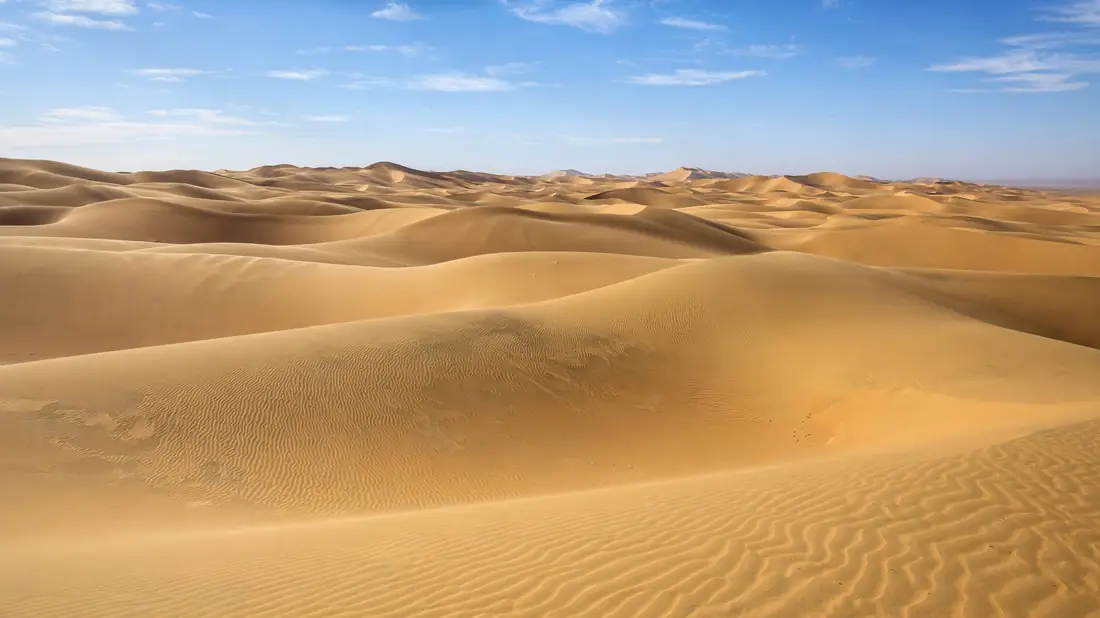
Set beside the prophecy, the Arabian Peninsula of today makes the promise sound impossible. The region is among the driest on earth, and the episode gathers the figures: vast stretches where nothing grows and the sand rules everything. Oman is about 82 percent desert. The Rub al Khali, the Empty Quarter, is a sand sea almost as large as Pakistan. The United Arab Emirates is about 80 percent desert, and Egypt is about 96 percent stones and sand. Read the numbers once and the scale of the promised change becomes clear - this is not a greening of gardens but a greening of deserts. The episode does not soften these figures; it lets them stand as the measure of what the prophecy must overturn.
- Oman: about 82 percent desert
- The Rub al Khali: a sand sea almost as large as Pakistan
- The United Arab Emirates: about 80 percent desert
- Egypt: about 96 percent stones and sand
When Arabia Was Green
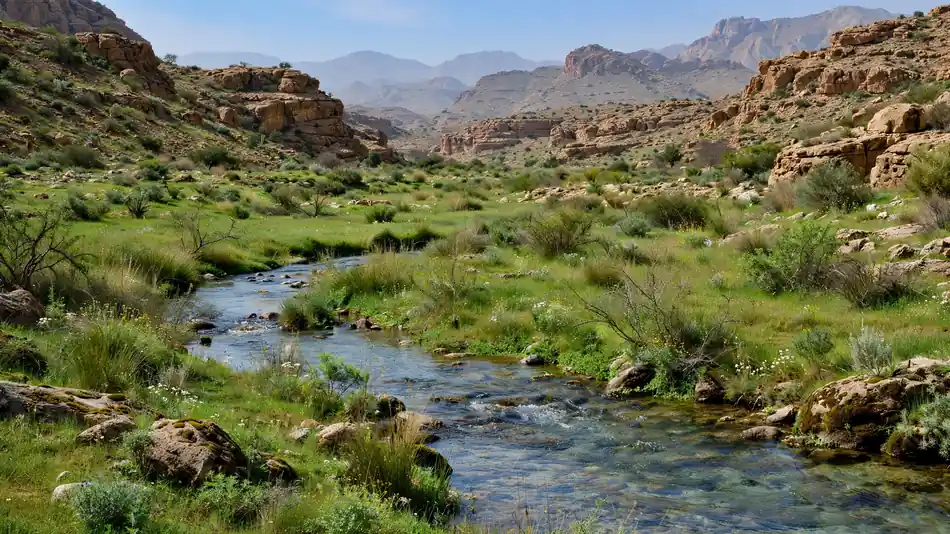
Yet the land keeps its own record, and the episode reads it with care. Some eleven thousand years ago, the episode says, Arabia was lush: pastures spread where dunes now stand, rivers ran, and lakes gathered in the hollows. The evidence it cites comes from cave stalagmites, which hold the signature of a wetter climate, and from the bones of the animals that lived there - elephants, lions, and deer, with human communities among them. A desert of sand cannot grow such bones; the land must once have fed them. The episode presents this as Arabia's remembered past, and the "reverts" of the narration suddenly reads less like poetry and more like history. The episode treats these traces as a verdict, not a guess: Arabia was green, and the sand is the newcomer.
How the Green Was Lost
The greening did not last, and the episode gives its account of why. Around eight thousand years ago, it says, a slight tilt in the earth's axis and orbit shifted the rain-bearing monsoon winds away from Arabia and toward Pakistan and India. The pastures thinned, the rivers failed, the lakes dried, and the sand sea closed over what the water had built. We present this as the episode's explanation, not as our own claim and not as settled science quoted from a journal. The narration itself names no mechanism - it promises only the return. The episode supplies the history to make the promise intelligible, and we keep the supply line labeled. On the episode's timeline, the desert we know is younger than the green it replaced.
The Greening Projects of Today
Across the peninsula today, the episode notes, greening is already a project, not just a promise. Saudi Arabia's Green Initiative aims to green forty million hectares of land. In Jeddah, the MARAFY project by the developer Roshn is building an eleven-kilometer waterway. And in 2018, Gulf News reported a concept for the Salman Canal, a channel of some nine hundred and fifty kilometers. That last one needs a plain warning: it was a reported concept, not a completed project, and it must not be confused with MARAFY's eleven kilometers. We pass the projects on as the episode gives them - one of them real and rising, the other only ever a reported plan. The episode notes them as signs of intent - a civilization deciding, before the prophecy's time, to push the sand back.
The Episode's Reading: Why Return Matters
Because Arabia was green once, the episode argues, its greening is not a fantasy but a return. That is the force of "reverts": the land has done this before, the climate has allowed it before, and the bones in the ground prove it. The episode's position is that the prophecy describes a real, physical change that history has already previewed - not a symbol, not a metaphor for prosperity, but meadows you could walk and rivers you could drink from. We label this as the episode's reading. The narration promises the outcome; the episode supplies the confidence that the outcome is physically possible. Whether that confidence is well placed is a question the reader can now judge with the evidence in front of him. The desert, on this reading, is the exception; the green is the rule returning.
How Might the Green Return?
The episode discusses two routes, and both must stay labeled as the episode's explanation. One is human work: the great projects of today - the Saudi Green Initiative, MARAFY - keep growing until the desert answers with green. The other is natural: a renewed shift in the earth's orbit and climate, the reverse of the tilt that took the green away eight thousand years ago, bringing the rains back to Arabia on their own. The narration names neither route; it promises the meadows and the rivers and leaves the how with Allah. Presenting both routes with the label attached keeps speculation where it belongs - discussed, not decreed. Neither route is promised by the text; both are discussed by the episode, and the label stays on both.
- The human route: today's greening projects growing until the desert answers
- The natural route: a renewed climate shift returning the rains to Arabia
What the Sign Asks of Us Now
A prophecy about overflowing wealth and returning rivers is a mirror for the present. The one who gives zakat while takers still exist should give with gratitude, knowing a day is foretold when the giving hand will search and find no receiver. The one who walks a green land should remember that green is a loan, not a possession - Arabia lost it once and was promised it back, and every garden on earth sits under the same law. And the one who can plant, dig, or protect water today does part of the work the sign describes. The prophecy does not cancel present duty; it gives present duty its meaning. The wealth half of the narration carries its own question: are we giving now, while the giving still counts?
Knowledge With Humility
No date can be set and none is attempted. The narration ties the greening of Arabia to the approach of the Hour, and the Hour belongs to the knowledge of Allah alone - the Quran is explicit that no soul knows when it will come, and no soul knows in what land it will die. The wealth may overflow in our children's time or a thousand years hence; the meadows may return by human hands or by a turning of the climate that no project could plan. Belief holds the promise; humility leaves the timetable. May Allah make us among those who give while giving is accepted, and who prepare with faith rather than predict with noise. The believer watches the desert and the rain alike, and waits on the knowledge of Allah.
✅ Guide4U Islam Checklist
- Read Sahih Muslim 157 in its exact wording
- Weigh the word 'reverts' carefully
- Recall today's deserts: Oman, UAE, Egypt figures
- Separate MARAFY from the Salman Canal concept
- Keep the episode's mechanism labeled
- Set no dates for the Hour
Key Takeaways
- Sahih Muslim 157 foretells that the land of Arabia will revert to meadows and rivers; 'reverts' means a return, not a first.
- Today's Arabia is among the driest lands on earth, yet the episode's account says it was lush some 11,000 years ago.
- The Salman Canal was a 2018 reported concept, never completed; the episode's greening mechanism stays labeled as its own explanation.
Frequently Asked Questions
Is Arabia already turning green?
Projects are rising - the Saudi Green Initiative, MARAFY - and recent rains have greened parts of the desert. But the full sign joins two things: wealth so abundant that zakat finds no taker, and Arabia reverted to meadows and rivers. That combination has not arrived, and no one may set a date for when it will.
Is the Salman Canal being built?
No. Gulf News reported the concept in 2018; it was never completed. Do not confuse it with MARAFY, the separate eleven-kilometer waterway by Roshn in Jeddah. We pass this on exactly as the episode distinguishes them: one of these is real and rising, the other was only ever a reported plan.
How do scientists know Arabia was once green?
The episode cites cave stalagmites, which record a wetter climate, fossil lakes, and the remains of elephants, lions, and deer that could never have lived on sand alone. We present this as the episode's research, cited as given, not as our own verification. The bones and the water stains are the witnesses the episode calls.
Is this prophecy about climate change?
The episode frames modern warming and climate shifts as a possible route to the greening, but that framing is the episode's interpretation, not the narration's claim. The narration promises the outcome - meadows and rivers - without naming the mechanism and without setting a date. Keeping the two separate is the honest way to read it.