
When Beasts Speak to Humans: The Sign the Prophet Said Will Come Before the Hour

Quick Answer
This article explains the sign of beasts speaking to humans: the verified Tirmidhi 2181 and Bukhari 2324 narrations quoted in full, and the longer shepherd-and-wolf story reported with an open caveat about its missing hadith number. The episode's literal reading, its five reasons, and its bioengineering suggestion are all labeled as the episode's own.
The Prophecy, Stated Exactly
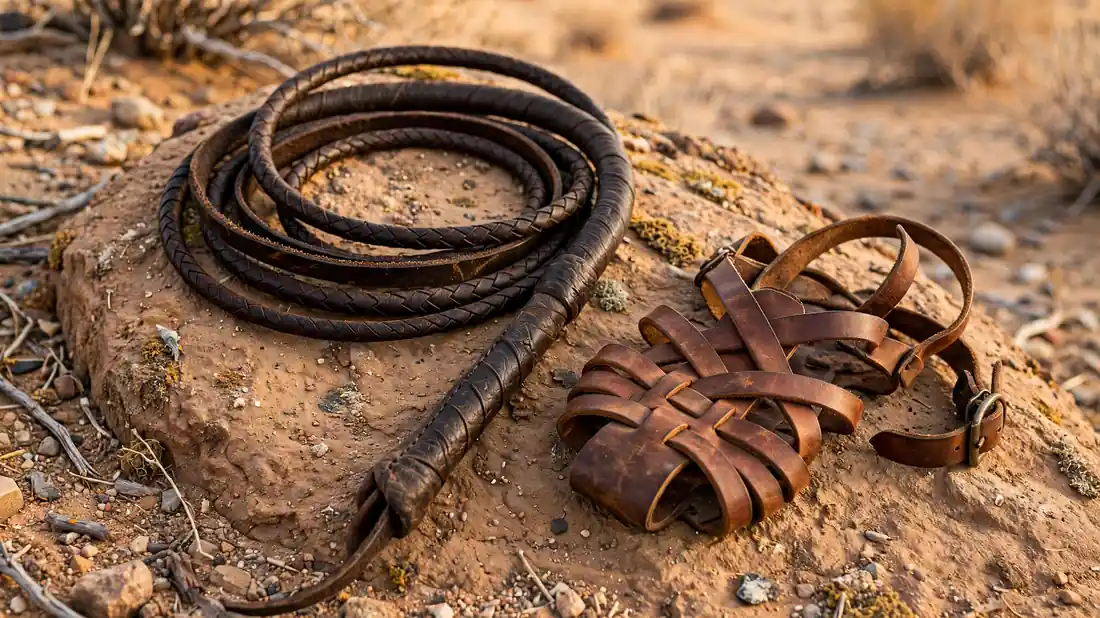
Some signs of the Hour describe the sky; this one describes the ground under our feet. In Jami' at-Tirmidhi, number 2181, Abu Sa'id al-Khudri reported that the Prophet (peace be upon him) said: "By the One in Whose Hand is my soul! The Hour will not be established until predators speak to people and until the tip of a man's whip and the straps on his sandal speak to him, and his thigh informs him of what occurred with his family after him." The narration was graded Sahih by Darussalam. Four speakers are named - predators, the whip's tip, the sandal's straps, the thigh - and each one is worth a section of its own. The sign is listed among the minor signs, and its details repay slow reading.
'Sibaa': Predators, Not Just Animals
The Arabic word the Prophet (peace be upon him) used is sibaa, and its meaning is precise: predators, carnivores - the hunters, not birds or cattle. That precision matters. The narration does not say that animals in general will talk; it names the very creatures no one would expect to reason - the wolf, the lion, the beasts that hunt. The episode builds its case on this word: because the text is this specific, it argues, the reading should be this literal. A metaphor about humans turning beast-like would not need the word predators; it could have said "men." The text says sibaa, and the episode takes the text at its word. Precision of wording is the episode's whole argument for taking the prophecy at face value.
The Cow and the Wolf
The Prophet (peace be upon him) did not only foretell it; he reported that it had already happened in miniature. In Sahih al-Bukhari, number 2324, Abu Huraira reported that a man was riding a cow, and the cow turned to him and said, "I have not been created for this purpose (carrying); I have been created for ploughing." In the same narration, a wolf caught a sheep, and when the shepherd chased it the wolf said, "Who will be its guard on the day of wild beasts, when there will be no shepherd for it except me?" The Prophet (peace be upon him) added: "I, Abu Bakr and Umar believe it." The narration is quoted in full so the reader can see: in the tradition, animal speech is not a fable but a reported event. The Companions heard both reports and believed; the Prophet's (peace be upon him) closing words made belief the response of the faithful.
The Longer Story, With an Open Caveat
The episode tells a longer version of the shepherd-and-wolf encounter: the wolf speaking like a human, asking, "Do you not fear Allah? You have taken away the sustenance Allah provided for me," and the shaken shepherd going to Medina, where the Prophet (peace be upon him) gathered the people. The episode cites Musnad Ahmad - from Abu Sa'id al-Khudri - and Mishkat al-Masabih for this version, but its research gives no verified hadith number, so we quote the story as the episode tells it, with the caveat written plainly. We invent no number and guess none. The line "when only predators remain, who will herd the goats except me" belongs to this longer telling, and we attribute it exactly that way. The caveat is not a footnote; it is the honest frame of the whole section. We give the story the space the episode gives it, and the doubt the evidence requires.
The Episode's Position: Read It Literally
Could "predators speaking" be a metaphor - people turning beast-like, the strong devouring the weak? The episode rejects that reading outright. Its position is that the wording is too concrete to be symbolic: predators speaking to people, a whip's tip speaking, a sandal's straps speaking, a thigh informing - these are objects and body parts, not symbols of moral decline. We label this as the episode's position, not as a ruling and not as consensus. The literal reading has force because the Bukhari narration treats animal speech as a real event with real witnesses. But a reading is still a reading; the text is what it is, and the believer holds the text without adding to it. The episode treats the metaphorical reading as an escape from the text, not an explanation of it.
The Whip, the Sandal, the Thigh
The inanimate speakers are the strangest part of the prophecy: the tip of a man's whip and the straps on his sandal will speak to him, and his thigh will inform him of what occurred with his family after him. Some people suggest the thigh is the mobile phone carried in the pocket - a device pressed against the leg that tells a man everything about his household while he is away. We report that suggestion exactly as what it is: some people's suggestion, which may or may not be the meaning. The narration's wording stands on its own and needs no device to complete it. What the thigh will say, and how, belongs to the unseen; the believer's task is to hold the words as reported, not to update them with technology. Technology may illustrate the prophecy or be irrelevant to it; the believer is not asked to decide.
Why Predators? The Episode's Five Reasons
If beasts are to speak, why predators? The episode offers five reasons, presented here as the episode's reasoning, not as our claim. Each one points at the hunters as the animals closest to the threshold of speech: the structure of the wolf's brain, the genes it shares with other hunters, the social life of the pack, the signaling systems of the hunt, and the depth of predator behavior. Whether one finds these reasons persuasive is a separate question; what matters for this article is the label. The five reasons belong to the episode, the word sibaa belongs to the narration, and the two are never allowed to merge into a single statement of fact. The episode's list is an argument for plausibility, not a proof of fulfillment; we keep it in that lane.
- Neurological: the wolf's neocortex is structured like the human one
- Genetic: the FOX-P2 gene is shared with tigers, and oxytocin works the same in wolves and humans
- Socio-biological: pack decisions and group hunting show organized social minds
- Communication: predators run complex signaling systems among themselves
- Behavioral: their complexity of behavior approaches the edge of the speakable

Our Attempts to Understand Animal Speech
Humanity has already tried, in its own small way, to cross the gap the prophecy describes. The episode cites Project CETI, the effort to decode the language of whales, and Kanzi the bonobo, whose handlers taught him to communicate with symbols. We present these as the episode's account of primitive attempts - the word primitive is the episode's own. They show how far we are, not how close: decoding clicks in the ocean and teaching signs to an ape are the first fumbling steps toward something the narration says will arrive fully formed. The episode's point is modest and we keep it labeled: if humans can barely begin this work, the sign's fulfillment will not be human work at all. The gap between our beginnings and the prophecy's completion is the episode's measure of how great the sign will be.
The Two-Headed Dog and Bioengineering
The episode's account grows stranger here, and the label grows more important. It cites Vladimir Demikhov's 1959 experiment in Soviet Russia, in which a second dog's head was grafted onto another dog - the famous two-headed dog - and suggests bioengineering as a possible mechanism for the sign: modified animals, altered brains, speech made possible by human hands. All of this is presented as the episode's account and the episode's suggestion. We label the bioengineering mechanism as speculation, plainly. The narration names no mechanism at all - neither divine permission described, nor human science invoked - and we add none. What the episode wonders about, we report; what the narration says, we quote; the two never blur. The episode's wonder is reported; the narration's silence is respected.
Knowledge With Humility
The believer's response to this sign is the response to every sign: belief without invention. The verified narrations stand quoted in full; the unverified story stands with its caveat; the episode's explanations stand with their labels; and the date stands where it always stood - with Allah alone, who knows when the Hour will come and no soul knows in what land it will die. No commentator can say which predator will speak first, or whether the thigh's informing will come by a device or by a direct opening from Allah. Silence about the how is part of the narration's own restraint, and we keep to it. May Allah make us among those who prepare with faith rather than those who predict with noise. What was reported is enough; what was withheld is wisdom. The sign will arrive on its appointed day, and until then the task is the same as ever: faith, obedience, and good company.
✅ Guide4U Islam Checklist
- Read Tirmidhi 2181 in its exact wording
- Learn the meaning of sibaa: predators
- Read the Bukhari cow-and-wolf report fully
- Hold the longer story with its open caveat
- Treat the phone theory as a suggestion only
- Set no dates for the Hour
Key Takeaways
- Jami' at-Tirmidhi 2181 (Sahih) foretells predators speaking to people, and a man's whip-tip, sandal straps, and thigh speaking to him.
- Sahih al-Bukhari 2324 reports the cow and the wolf as real events; the longer wolf story is quoted with an open caveat about its missing number.
- The episode's literal reading, five reasons, and bioengineering idea are labeled as its own; the narration sets no date and names no mechanism.
Frequently Asked Questions
Is the longer shepherd-and-wolf story authentic?
We are open about this: the episode's research cites it from Musnad Ahmad and Mishkat al-Masabih but gives no verified hadith number, so we report the story with that caveat and invent no number. Jami' at-Tirmidhi 2181 and Sahih al-Bukhari 2324, by contrast, are fully verified and quoted in full. Presenting both with their proper standing is the honest way to handle them.
Will animals literally talk?
The episode's position is yes: it rejects metaphorical readings and takes the wording literally, pointing to the concrete objects named - the whip's tip, the sandal's straps, the thigh - and to the Bukhari narration's report of real speech. We label that as the episode's position. The narrations' wording is quoted in full so every reader can judge the text for himself.
Does the thigh mean the mobile phone?
That is some people's suggestion: a phone in the pocket tells a man what happened with his family while he was away. It may or may not be the meaning, and we present it only as a suggestion. The narration says his thigh will inform him of what occurred with his family after him; the wording stands on its own and needs no device to complete it.
Have animals spoken to people before?
The tradition reports it: Sahih al-Bukhari 2324 tells of the cow that spoke of its purpose and the wolf that spoke of the day of wild beasts, with the Prophet (peace be upon him) saying, 'I, Abu Bakr and Umar believe it.' Beyond what is reported, we hold only what the texts say, and no one may set a date for when the sign will come.