
The Ark of the Covenant in Islam: What the Quran Says and the End-Times Prophecies
Quick Answer
The Quran mentions the Ark of the Covenant in Surah Al-Baqarah 2:247-248 as the sign of Talut's kingship, containing assurance from Allah and relics of Moses and Aaron. The episode reports four prophecies of its return before the Day of Judgment - from Kitab al-Fitan, the tafsirs of Ibn Abbas, and 2 Maccabees 2:7-8 - each presented with its source caveats stated openly.
The Most Famous Missing Object on Earth
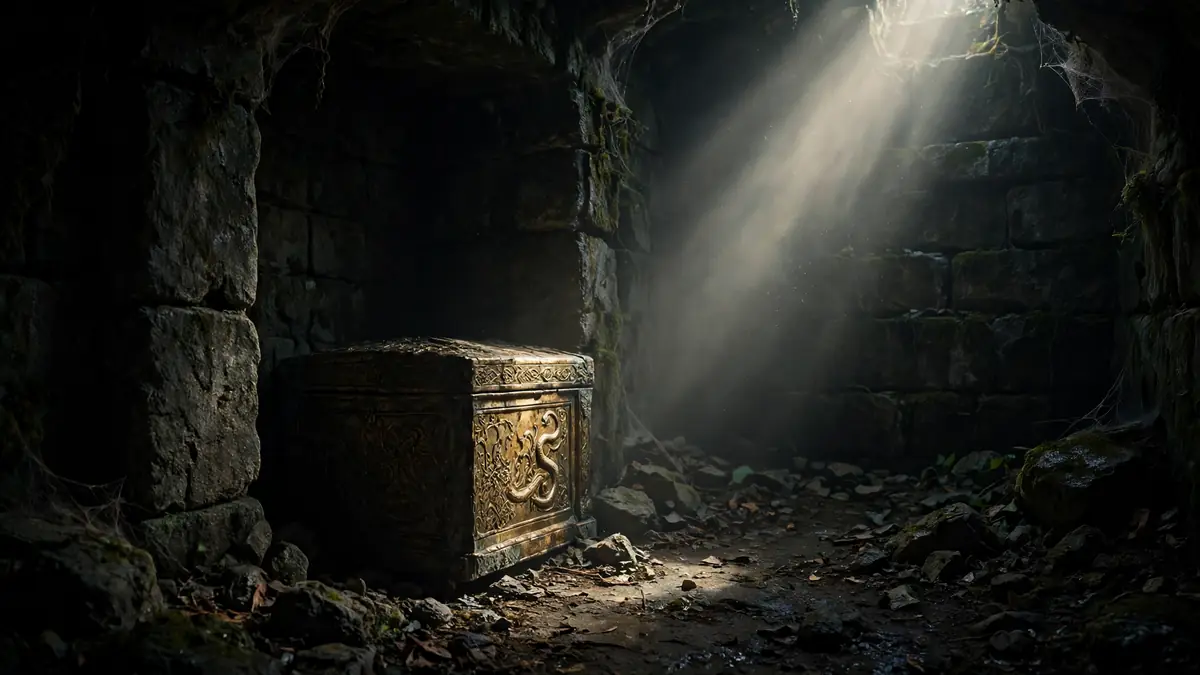
For twenty-five hundred years, three religions have agreed on one thing they cannot find. The Ark of the Covenant - the sacred chest of the Israelites - is counted among the holiest objects in Judaism, Christianity, and Islam, and yet no living person knows where it is. In Islamic sources it carries a second name: the Ark of Sakina, the Chest of Tranquility, named for the divine calm the Quran says it held inside. This is not a side story in end-times literature. Four separate prophecies, found in Islamic and older sources, say the Ark will resurface once before the Day of Judgment - and that its reappearance will itself be among the signs of the Hour. This article gathers what the Quran actually says about the Ark and the four prophecies of its return, in the episode's account, with every source caveat stated openly. For three faiths, the chest is a bridge between scripture and history.
The Quran's Own Mention: Talut's Kingship
The Ark appears in the Quran in Surah Al-Baqarah, in the story of how Talut (Saul) became king. When the Israelites objected to his appointment, their prophet told them: 'And their prophet said to them, "Indeed, Allah has sent to you Saul as a king." They said, "How can he have kingship over us while we are more worthy of kingship than him and he has not been given any measure of wealth?" He said, "Indeed, Allah has chosen him over you and has increased him abundantly in knowledge and stature. And Allah gives His sovereignty to whom He wills. And Allah is all-Encompassing [in favor] and Knowing."' (Quran 2:247, Saheeh International). The people wanted a sign that Talut's kingship was truly from Allah. The sign given was the return of something they had already lost once: the Ark. The objection was worldly; the answer was divine: Allah's choice rests on knowledge and strength, not riches.
A Chest Named After Tranquility
The sign is described in the very next verse: 'And their prophet said to them, "Indeed, a sign of his kingship is that the chest will come to you in which is assurance from your Lord and a remnant of what the family of Moses and the family of Aaron had left, carried by the angels. Indeed in that is a sign for you, if you are believers."' (Quran 2:248, Saheeh International). Two details in this verse carry everything that follows. First, the chest contains 'assurance from your Lord' - the episode renders this as 'tranquility from your Lord' - and because of that presence the whole chest became known as the Ark of Sakina. Second, it also holds 'a remnant' of the families of Moses and Aaron: relics, examined one by one in the next article of this series.
The First Prophecy: Five Items With the Mahdi
The episode reports that a well-known book on the End Times, Kitab al-Fitan, mentions that Imam Mahdi will come to Jerusalem with five items: the jewels of Jerusalem, the covenant revealed to the Israelites, the staff of Moses, the clothing of Adam, and the Ark of the Covenant. The episode gives no hadith number for this report, and we state that openly - no number is guessed. According to the episode's account of that report, when the Ark is presented before the Jewish people, all but a few will enter Islam in great numbers. Whether one accepts this report depends on its chain, which the episode does not supply. What matters here is the shape of the claim: the Ark's return is tied, in this prophecy, to the Mahdi - the figure whose arrival this series examined in an earlier episode.
The Second Prophecy: Emerging From Lake Tiberias
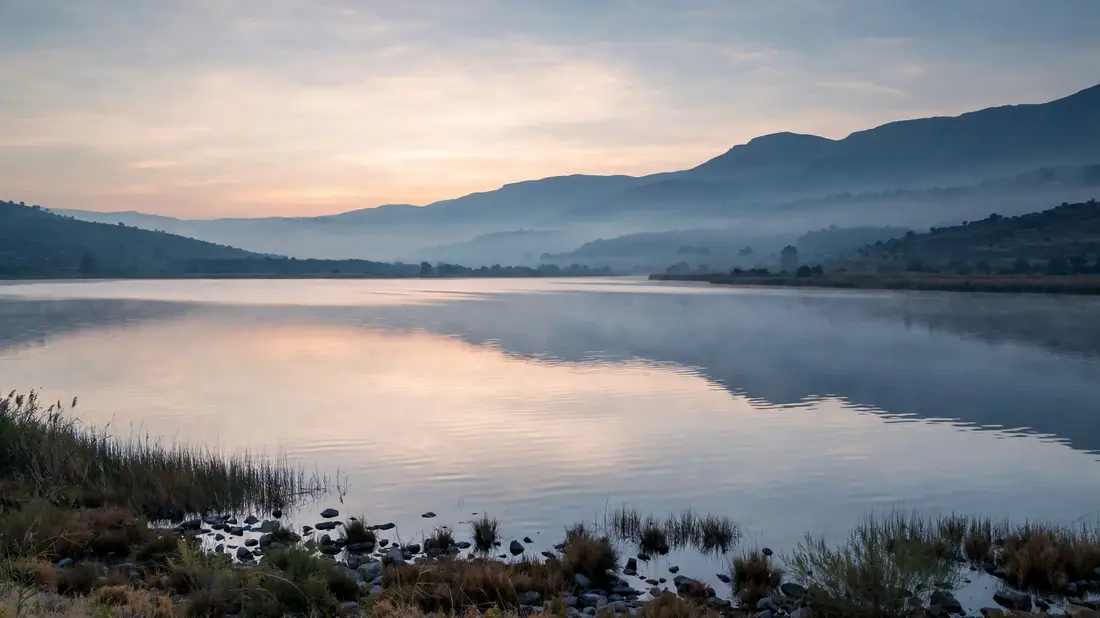
The episode then reports narrations attributed to Ibn Abbas, found in Tafsir Mazhari and Tafsir al-Baghawi, saying that the Ark of the Covenant will emerge from Lake Tiberias once again before the Day of Judgment. Again, the episode states no collection number, and again we report the claim exactly as given, with no number invented. Lake Tiberias has appeared in this series before: in the narration of Tamim ad-Dari (Sahih Muslim 2942), the Dajjal asks about the lake's water. The episode's own reading - labeled as its own - wonders whether the Dajjal watches that lake for a reason. It is a small detail with a long shadow.
The Third Prophecy: A Promise in an Old Text
The remaining prophecies come from a text outside the Islamic tradition: the Second Book of Maccabees, a historical work the episode describes as not part of the Bible but respected as history. In its account, the prophet Jeremiah hid the Ark in a cave on a mountain at the time of Nebuchadnezzar's attack. Some people tried to follow Jeremiah to mark the place, but lost their way - and then, the episode reports, Jeremiah spoke the sentence recorded in 2 Maccabees 2:7-8: the Ark will not reappear until the command of Allah is given. We present this as the episode's rendering of that text. Four prophecies, four very different sources - all pointing one way.
Why a Lost Chest Matters Before the Hour
It is worth asking why a wooden chest should matter at all in the signs of the Hour. The answer the episode offers - and we label it as interpretation, not as the sources' wording - is that the Ark has always functioned as a sign, never as an object of worship. In the Quran it was a sign of Talut's kingship. In the end-times prophecies it is a sign that the Hour has drawn near: something the whole world thought was gone forever, returning at a moment when the old certainties are collapsing. Prophecy in Islam often works this way - not by giving dates, which the Quran forbids anyone to claim, but by giving signs, so that when they appear, believers recognize the season they are in and turn back to Allah. Signs do not compel belief; they invite it. The Quran gives them as markers on the road, so that travelers recognize where they are.
The First Loss: How the Ark Vanished and Returned
The episode holds that the Ark was lost twice. The first time, it was found again - and the episode attributes this account to the tafsir of Ibn Kathir, reported as the episode gives it. The Israelites, the account says, had begun treating the Ark as a magical weapon, certain that no power could defeat them while it was with them. As a small punishment, they were defeated in battle and their enemies carried the Ark away to Jericho, where, the account continues, it was placed beneath an idol - until plagues and calamities struck the place, and the frightened captors loaded the chest onto a cart drawn by oxen and sent it out of their land. By Allah's command the cart carried it back to the Israelites, and its return became the sign of Talut's kingship in 2:248. The second loss has no such return - yet.
How the Sources Are Handled in This Article
A word on method, because the subject invites exaggeration. The two Quranic verses quoted here are verified against a published translation, the Saheeh International, word for word. Everything else in this article is the episode's research, reported exactly as the episode states it: the Kitab al-Fitan report without a number, the Ibn Abbas narrations without numbers, the 2 Maccabees rendering, and the Ibn Kathir-attributed Jericho account. Where the episode interprets, we say so. Where it gives no chain, we say that too. Nothing here is dated, and nothing here is a ruling - it is a gathering of what the sources are said to say, and any claim that cannot be sourced is labeled or left out. The next articles in this series follow the same rule - the relics inside the chest, then the theories about its hiding place. Every label is a promise kept.
Where This Series Goes Next
The next article opens the chest. Five relics are named in the commentaries as having been inside the Ark: the tablets of Moses, the staff of Moses, the staff of Aaron, a vessel of manna, and Sakina itself - the living presence that gave the chest its name. Each has its own story and its own verified references, and each will be examined in detail. After that, the series takes up the five theories about where the Ark is hidden now - from Ethiopia to the caves beneath the Temple Mount. Readers meeting this series for the first time can start at the beginning, with the minor signs; those following in order will find each article's end carries a box linking to the next. The Ark's story is only one thread in a much larger tapestry.
✅ Guide4U Islam Checklist
- The Ark is mentioned in the Quran: Surah Al-Baqarah 2:247-248.
- 2:248 names 'assurance from your Lord' inside the chest.
- Called the Ark of Sakina after the tranquility it held.
- Mahdi's five items: Kitab al-Fitan report, no number given.
- Ibn Abbas Tiberias narrations: tafsirs named, no numbers given.
- 2 Maccabees 2:7-8: the Ark reappears by Allah's command.
Key Takeaways
- The Quran's Ark is a sign of kingship, not an object of worship - and the end-times prophecies keep that same function.
- The Kitab al-Fitan Mahdi report and the Ibn Abbas Tiberias narrations are given without numbers; the article never guesses them.
- The 'command of Allah' sentence from 2 Maccabees 2:7-8 is the episode's rendering of an old historical text, reported as such.
Frequently Asked Questions
What is the Ark of the Covenant in Islam?
The Ark of the Covenant - called the Ark of Sakina (the Chest of Tranquility) in Islamic sources - was the most sacred object of the Israelites, a wooden chest overlaid with gold. The Quran mentions it in Surah Al-Baqarah 2:247-248 as the sign of Talut's kingship, noting that it contained tranquility from Allah and relics of the families of Moses and Aaron.
What are the four prophecies of the Ark's return?
The episode reports four prophecies of its return: (1) a report in Kitab al-Fitan that the Mahdi will bring it with four other items - cited without a narration number, so we state that openly; (2) narrations of Ibn Abbas in Tafsir Mazhari and Tafsir al-Baghawi that it will emerge from Lake Tiberias - also without numbers; (3) the sentence in 2 Maccabees 2:7-8 that it will not reappear until the command of Allah is given. Each is reported exactly as the episode presents it.
Why is it called the Ark of Sakina?
The Quran names the chest as 'assurance from your Lord' in the Saheeh International translation of 2:248 - the episode renders this as 'tranquility from your Lord.' Because the verse says Sakina (tranquility) was inside it, the whole chest came to be known among commentators as the Chest of Sakina.
Why does a lost chest matter for the End Times?
The Quran presents the Ark's return as 'a sign' for the Israelites of Talut's kingship, not as an object of worship. The end-times prophecies treat its reappearance the same way: as a sign that the Hour is near, so that people take the warnings of the Quran and the Prophet seriously. No date is given for any of it.