
Clothed Yet Naked: What the Prophet Said About the Disappearance of Modesty
Quick Answer
This article explains the prophecy in Sahih Muslim 2128 about women who would be 'dressed but naked,' one of the minor signs of the Hour. It walks through Imam al-Nawawi's three interpretations, the camel-hump detail, and the Quranic foundation in Surah Al-A'raf. The tone is calm and explanatory: a warning to reflect on, not a verdict on anyone.
A Prophecy About Two Kinds of People
The Prophet ﷺ once described two kinds of people he had not seen in his own time, and his words were recorded by Abu Huraira in Sahih Muslim 2128. The first kind carried whips like the tails of oxen and beat people with them, a picture of cruelty and the abuse of power that he mentioned only briefly. The second kind is the focus of this article: women who would be dressed yet appear naked, whose heads would resemble the humps of a camel inclined to one side. Both descriptions were warnings about a future the Prophet ﷺ could not see but described with calm precision. This article walks through the narration word by word, the scholarly discussion around it, and the Quranic roots of the idea that modesty is a gift, not a burden. The aim is understanding, not accusation. The sign is meant to be read slowly, and reflected on honestly.
The Narration in Full
Abu Huraira reported that the Prophet ﷺ said: "Two are the types of the denizens of Hell whom I did not see: people having flogs like the tails of the ox with them and they would be beating people, and the women who would be dressed but appear to be naked, who would be inclined (to evil) and make their husbands incline towards it. Their heads would be like the humps of the bukht camel inclined to one side. They will not enter Paradise and they would not smell its odour whereas its odour would be smelt from such and such distance." The narration is recorded in Sahih Muslim 2128. Scholars note that the Prophet ﷺ described people and practices he never saw in his lifetime, and that his description was not vague poetry but carried concrete, visible details.
What 'Clothed Yet Naked' Really Means
The phrase at the heart of this sign is kasiyat ariyat in the Arabic, often rendered as 'dressed but naked'. The great scholar Imam al-Nawawi offered three well-known readings of the phrase in his commentary, and scholarly discussion has continued along these lines ever since. Each reading points to a different way that clothing can fail to do what clothing is meant to do. As always with such commentary, these are scholarly interpretations of a prophetic phrase, not the text of revelation itself. Scholars also note the deeper point: the phrase warns against a style of dressing that draws attention to the body rather than dignifying it. Whether the fabric is too little, too thin, or the heart behind it is ungrateful, the result named by the hadith is the same - a person who is technically clothed but has lost what clothing is for.
- Semi-nude dress: part of the body covered and part deliberately left exposed, so the garment is called clothing while the effect is exposure.
- Thin or transparent fabric: clothing so fine that the color of the skin shows through, so the wearer is covered in name and bare in effect.
- Ingratitude amid blessing: a person blessed with Allah's bounties - clothing, wealth, beauty - who shows no gratitude, and is therefore spiritually 'naked' of thankfulness.
Heads Like the Humps of a Camel
The narration adds a striking visual detail: 'Their heads would be like the humps of the bukht camel inclined to one side.' The bukht is a large Central Asian camel breed with a high, rounded hump, and the image suggests hair piled up high and tilted, styled for display. Classical commentators have generally understood this as a reference to elaborate hairstyles built up over the head, a fashion choice meant to draw the eye. Scholarly discussion treats this as another reading of the same theme: attention deliberately drawn to the body through style. The words mumilat ma'ilat complete the picture - commonly explained as women who incline toward display and cause others to incline with them, whether by dress, movement, or manner. Again, these are interpretations offered by scholars, not certainties we can assign to any person we meet.
The Quran's First Clothing Story
To understand why the Prophet ﷺ warned about the loss of modesty, the Quran takes us back to the very first human story. When Adam and Hawwa tasted the forbidden tree, the Quran says their private parts became apparent to them, and their first instinct was to cover themselves with leaves from Paradise. Allah says in Surah Al-A'raf: "So he made them fall, through deception. And when they tasted of the tree, their private parts became apparent to them, and they began to fasten together over themselves from the leaves of Paradise. And their Lord called to them, 'Did I not forbid you from that tree and tell you that Satan is to you a clear enemy?'" The episode's reflection is that sin struck modesty first: the moment of disobedience was immediately followed by the loss of cover, and the instinct to be covered came before anything else.
The Clothing of Righteousness
Two verses later, the Quran widens the idea of clothing beyond fabric. Allah says in Surah Al-A'raf: "O children of Adam, We have bestowed upon you clothing to conceal your private parts and as adornment. But the clothing of righteousness - that is best. That is from the signs of Allah that perhaps they will remember." Here the Quran gives clothing two jobs: to conceal and to adorn, and then points higher, to libas al-taqwa, the garment of God-consciousness. The episode's point is gentle but firm: outer covering and inner character belong together. A person may be fully covered and still far from taqwa, just as another may dress carelessly while the heart is heedless. Modesty, in this Quranic frame, is a state of the soul first, and only then a matter of cloth.
A Short History of How Dress Changed
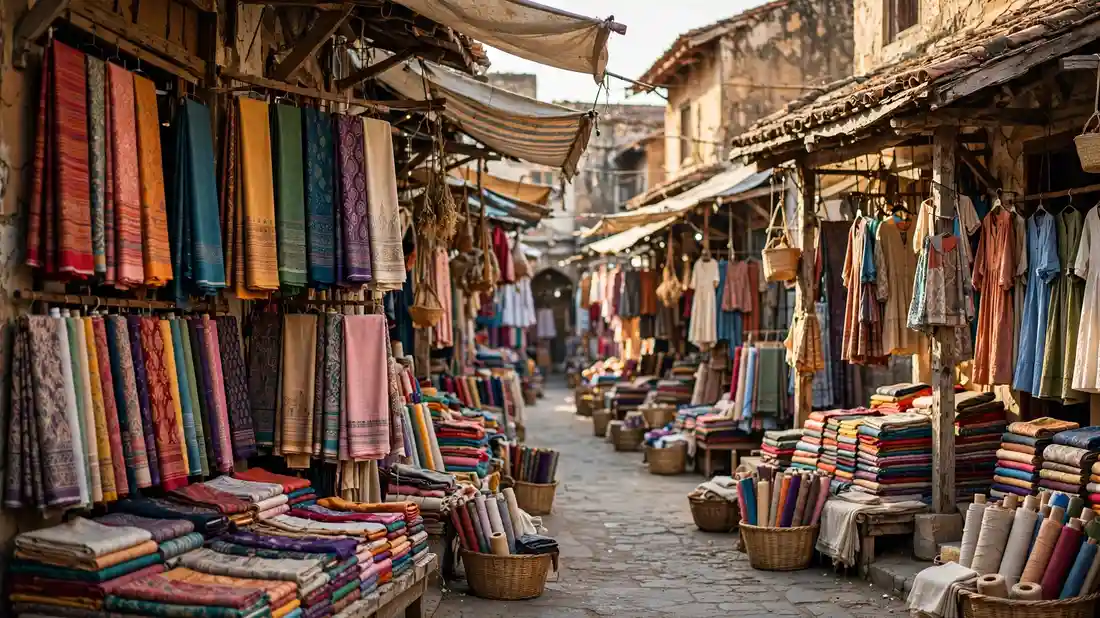
The episode traces a long arc of how human dress has changed, presenting it as its own historical account rather than a scholarly verdict. Across centuries, clothing carried meaning: status, occasion, community, and belief. What follows is the episode's walk through that history, offered here in its own terms as a backdrop to the prophetic warning. Each era dressed the body differently, but the modern shift the episode highlights is toward less fabric and more display, which is exactly the direction the hadith describes. Notice the direction of the change: earlier eras, for all their differences, treated the covered body as normal and dignified, while the modern turn treats exposure as freedom and progress. The episode does not claim that every older fashion was Islamic or ideal; it observes the arc. When a fourteen-century-old narration describes women 'dressed but naked', and streets and screens are full of that, the description feels less like a riddle and more like a headline.
- Mesopotamia and Babylon: long, heavy robes that covered the body fully and signaled rank and dignity.
- Ancient Egypt: simple white linen garments, light for the climate yet modest by the standards of the time.
- Ancient Greece: loose white draped garments that flowed around the body without clinging to it.
- The Muslim world: the abaya, shawl, jilbab, and niqab - each covering the body in loose, flowing layers.
- Europe: from the structured corsets of earlier centuries to the fashion revolution of the 1960s, when hemlines rose and dress codes loosened quickly.
Why Sin Strikes Modesty First
The episode makes a striking claim: when sin enters a life, modesty is the first casualty. This is presented as an interpretive reflection rather than a proven fact, but it draws on the Adam and Hawwa story, where the first consequence of the forbidden bite was the exposure of the body. In scholarly discussion, the idea is that disobedience loosens the inner restraint first - the awareness of being seen by Allah - and the outer restraint of dress follows. The hadith fits this pattern: the women described are not simply breaking a dress code, but displaying a state of heedlessness. Readers should hold this gently: it is an invitation to think about the link between the heart and the wardrobe, not a ruling against any individual or culture. Nothing in this discussion licenses one person to label another; the hadith describes a pattern, and patterns are for reflection, not for verdicts.
A Warning, Not a Weapon
The closing lines of the narration are severe: 'They will not enter Paradise and they would not smell its odour whereas its odour would be smelt from such and such distance.' Scholars have discussed what this severity means, and one common scholarly view is that it expresses the gravity of the sin rather than a final judgment on named individuals - for no one knows the end of another's story, and Allah's mercy is vast. This article is not a fatwa and issues no rulings; it simply presents the text and its commentary. The right response to a prophetic warning is self-reflection, not surveillance of others. Read the sign, check your own conduct, make dua, and leave the judging of people to the One who sees hearts.
What This Sign Asks of Us
Minor signs of the Hour are not puzzles to solve or dates to predict; they are mirrors. This one asks a quiet question about how we present ourselves to the world and whether our dress reflects dignity or the hunger for attention. Modesty in Islam was never only about women, nor only about fabric - it is an ethic of the eyes, the speech, and the heart that belongs to everyone. The Prophet ﷺ described a future where clothing would stop covering, and we live in a time when that description no longer sounds strange. Whatever our own choices, the sign invites honesty rather than fear: to dress with intention, to guard the gaze, and to remember that the finest garment, as the Quran says, is the clothing of righteousness. That is the real lesson of this minor sign - not panic about the world, but care about the self.
✅ Guide4U Islam Checklist
- Read the full narration in Sahih Muslim 2128.
- Study Imam al-Nawawi's three readings of the phrase.
- Reflect on Al-A'raf 7:26, the clothing of righteousness.
- Check your own dress and intentions, not others'.
- Remember modesty also covers the eyes and speech.
- Meet warnings with self-reflection, never with judgment.
Key Takeaways
- Sahih Muslim 2128 describes women dressed yet naked as a sign of the Hour, alongside the camel-hump detail.
- Imam al-Nawawi offered three readings: partial exposure, transparent clothing, and ingratitude amid blessing.
- The Quran roots modesty in the Adam and Hawwa story and calls the clothing of righteousness the best garment.
Frequently Asked Questions
What does 'clothed yet naked' actually mean?
Imam al-Nawawi recorded three readings in his commentary on Sahih Muslim: dress that covers part of the body while leaving part exposed; thin or transparent fabric through which the skin's color shows; and a state of ingratitude, where a person is blessed with Allah's bounties yet spiritually 'naked' of thankfulness. These are scholarly interpretations, and readers may hold any of them as an explanation of the prophetic phrase.
What are the 'camel humps' a reference to?
The narration says the women's heads would be 'like the humps of the bukht camel inclined to one side.' Classical commentators have generally understood this as a reference to hair piled high and tilted for display, a style meant to draw the eye. As with the rest of the narration, this is scholarly discussion of the text, not a ruling on any specific hairstyle.
Does this hadith allow us to judge specific people?
No. The narration describes a category and a pattern, and scholars warn against applying prophetic warnings to named individuals. Only Allah knows the state of a heart and the end of a story, and His mercy is vast. The right response is to check one's own conduct and make dua, not to label or shame others.
How can this sign guide my own choices?
Start with reflection rather than fear: does my dress reflect dignity, or the hunger for attention? The Quran teaches that the clothing of righteousness is the best garment, so modesty begins with the heart - the eyes, the speech, the intention - and then shows in the wardrobe. Small, honest steps matter more than anxious perfection.