
Dhul-Khalasa: The Kaaba of Yemen the Prophet Ordered Destroyed
Quick Answer
The Prophet called it a rival to the Kaaba and sent Jarir ibn Abdullah al-Bajali to destroy it. With one hundred and fifty horsemen of the tribe of Ahmas, Jarir burned Dhul-Khalasa - the Kaaba of Yemen - until it looked like a scabby camel. This article tells the mission from Sahih al-Bukhari 4356 and Sahih Muslim 2476, and sets it beside the prophecy in Bukhari 7116 that the shrine will be worshipped again at the very end of time.
A Rival Kaaba
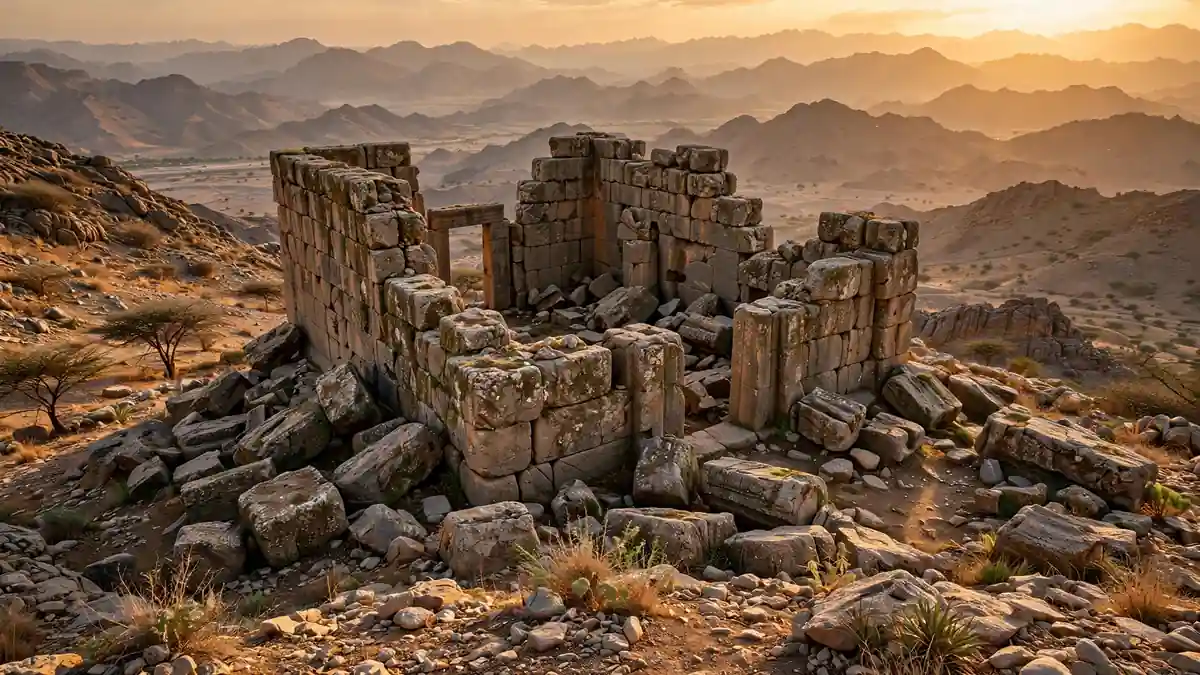
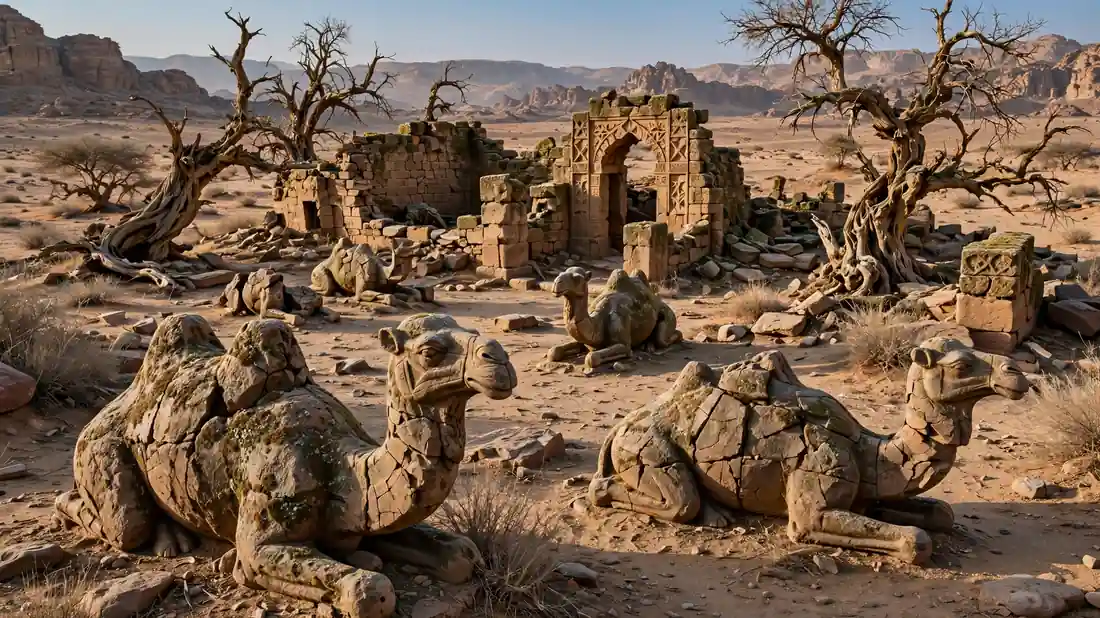
Before Islam, the Arabs of Yemen had a house of worship they called by a name no Muslim could hear without alarm: al-Ka'bah al-Yamaniyyah, the Kaaba of Yemen. Its real name was Dhul-Khalasa, and it was the idol-house of the tribe of Khath'am, a center where the opponents of Islam gathered. As our episode describes it, on top of the structure sat something like a crown, and around it were shapes of camels and other animals, with trees around them. The site still exists today, and the episode notes that modern excavations are still studying the temple's remains. This was not a ruin in the Prophet's lifetime; it was an active shrine, a living rival to the House of Allah.
The Prophet's Order
The Prophet could not leave it standing, and the report is preserved in the two most authentic collections. In Sahih al-Bukhari 4356 and Sahih Muslim 2476, narrated from Jarir ibn Abdullah al-Bajali, the Prophet said to him: 'Will you not relieve me from Dhul-Khalasa?' - the idol-house of Khath'am, called the Yamanite Kaaba. The wording is striking: 'relieve me' - as if the shrine were a weight on the Prophet's heart that only its destruction could lift. The choice of Jarir was deliberate. He was a chief of his people, and the idol-house stood in his region; the man who knew the land would be the man to cleanse it.
The Bajilah and the Ahmas
The mission's human side is worth pausing over. Jarir belonged to the tribe of Bajilah, and he was a chief among his people - which is exactly why the Prophet chose him: the idol-house stood in his region, and a leader carries his own people with him. The one hundred and fifty horsemen came from the tribe of Ahmas, allies of the Bajilah, described in the narrations as excellent knights. The classical commentators draw out the wisdom in the choice: when a people must be turned from their old ways, the call lands hardest from one of their own. Jarir was not an outsider sent to punish strangers; he was their chief, sent to cleanse his own land. That is why, when the work was done, the Prophet's blessings fell on the horses and men of the Ahmas - the very people who had taken up arms against their own kin for the sake of Islam.
The Horseman Who Could Not Ride
Jarir set out with one hundred and fifty horsemen from the tribe of Ahmas, all of them skilled riders - and Jarir himself could not sit firm on a horse. He told the Prophet of his weakness, and the Prophet struck his hand on Jarir's chest until the marks of his fingers could be seen, and prayed: 'O Allah, grant him steadfastness and make him the guide of righteousness and the rightly-guided one.' From that moment, the narrations say, Jarir rode like the best of them. It is a small, human detail inside a great mission: the commander chosen for the hardest task was the one who could barely ride, and the Prophet's prayer made him equal to it.
Burned and Dismantled
Jarir went to the temple, burned it with fire, and dismantled it. Then he sent a man of the Ahmas, known as Abu Arta, to carry the good news to the Prophet. When the messenger arrived, he swore by the One who sent the Prophet with the truth: 'I did not leave it until it was like a scabby camel' - blackened, ruined, stripped of everything that had made it a shrine. The Prophet's response shows what the mission meant to him: he blessed the horses of the Ahmas and their men five times over. Five blessings, for one demolished idol-house. The episode's researchers and the hadith commentators alike read this as the measure of how seriously the Prophet took the cleansing of the land from idols.
Five Blessings for One Mission
When Abu Arta's report reached the Prophet - 'I did not leave it until it was like a scabby camel' - the response was extraordinary: the Prophet blessed the horses of the Ahmas and their men five times. The commentators linger on that number. The Prophet's habit was to supplicate three times; here he went beyond it, twice over. They read it as emphasis: these men had done what few would dare, turning their weapons against the shrine of their own region, and the extra blessings marked the weight of the deed. The detail also tells us how the mission was seen in Medina: not as routine warfare, but as a spiritual victory worth celebrating five times over. A temple that had stood as a rival to the Kaaba was blackened rubble, and heaven's blessings were pronounced on the men who made it so.
The Diviner of Yemen
The mission carried one more scene, preserved in Sahih al-Bukhari 4357. While Jarir was in Yemen, he found a man who used to foretell the future by casting arrows of divination - a practice the Quran had forbidden, yet still at its peak in Yemen. Jarir stood over him and said: 'Break them, and testify that none has the right to be worshipped except Allah, or else I will chop off your neck.' The man broke his arrows and spoke the testimony of faith. It is a harsh scene, but it belongs to the same logic as the burning of the temple: the mission was not only against stone and timber, but against the whole system of false worship that the stone and timber served.
The Prophecy of Its Return
And here the story turns toward the end times. In Sahih al-Bukhari 7116, narrated from Abu Huraira, the Prophet said: 'The Hour will not begin until the backsides of the women of Daws wobble as they go around Dhu'l-Khalasa.' Sahih Muslim 2906 explains the scene: the women of Daws would go round Dhu al-Khalasa for worship, a place at Tabala where the tribe of Daws used to worship the idol in the days before Islam. The prophecy says the very shrine Jarir destroyed will be worshipped again. We covered this prophecy in detail in an earlier article of this series; here it is the shadow over the story. What was torn down in the light of revelation will be raised again in the darkness of the end.
The Pattern of the End Times
This is the pattern the narrations draw again and again: not the survival of old ignorance, but its return after it had been defeated. Dhul-Khalasa was cleansed in the Prophet's lifetime; its worship will return only at the very end, when, as Sahih Muslim 2907 explains, a sweet wind has taken every believer and no one is left to refuse the idols. The destruction and the return belong to opposite ends of the same story. The first shows what Islam does to idols while the believers are strong; the second shows what happens to a world from which the believers have been taken. Between the two lies the whole history of the Ummah.
A Mission of Authority, Not of Mobs
One point of history deserves care. Jarir did not act on his own; he was sent by the Prophet, who was the leader of the community, and the destruction was an act of that authority. The classical commentators draw the line clearly: the order belonged to its time and its authority, and it does not hand a license to anyone who feels like demolishing what he dislikes. We state this as the scholars' position, not as our own ruling. The lesson of the mission is not about buildings at all. It is about the completeness of the cleansing: when false worship was removed, it was removed root and branch, without compromise and without apology.
What the Ruins Teach
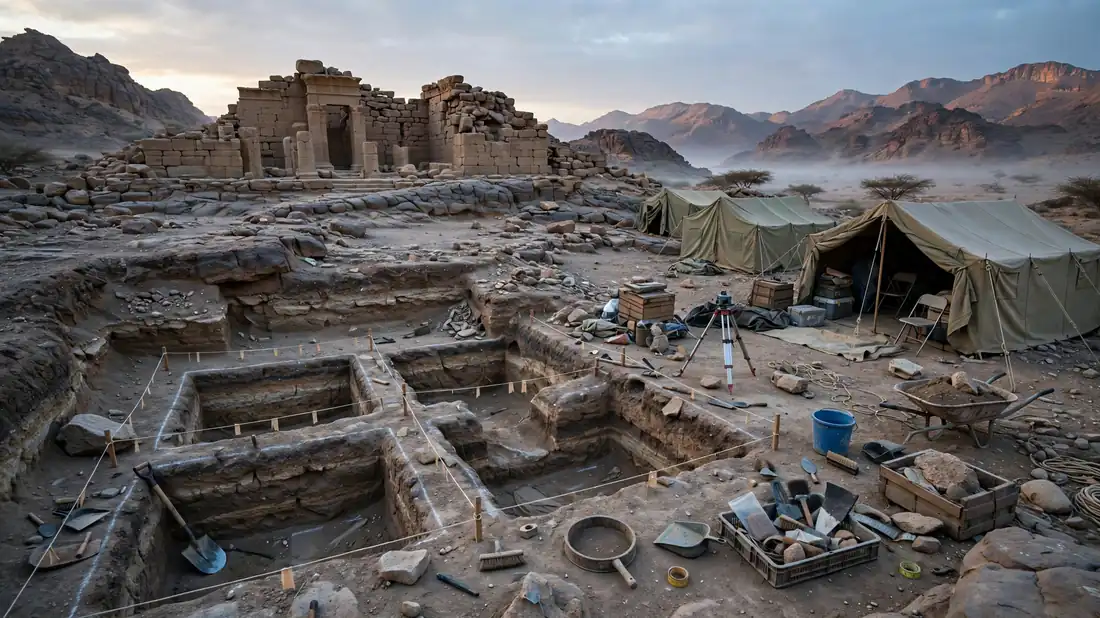
The ruins of Dhul-Khalasa still stand in Yemen, and excavations still study them. A visitor today can walk where the crown-topped structure stood, where the carved camels stood among the trees, and where Jarir's horsemen set the fire. The stones are a sermon in themselves: this is what becomes of every rival raised against the worship of Allah alone. The shrine that called itself a Kaaba is a ruin; the Kaaba it rivaled still stands, circled by millions. The ruins preach the verse the episode holds beside the prophecy: Allah sent His Messenger with guidance and the religion of truth, to make it prevail over all religions. The stones of Dhul-Khalasa are the evidence.
Hold Firm While the Door Is Open
The prophecy says the women of Daws will circle the shrine again, but it also says when: after the wind has gathered every believer, even the weakest. The return of Dhul-Khalasa belongs to a time when there is no Jarir left to ride against it and no community left to refuse it. That is why the narrations were given to the living, not to the dead of the end times. The believer's task is now, while the door is still open: to keep even a mustard grain of faith alive, to refuse every small idol of the heart, and to remember what the ruins of Yemen teach. Every shrine of falsehood becomes a ruin in the end. The only question is whether we are on the side that tears them down or the side that rebuilds them.
✅ Guide4U Islam Checklist
- Read Sahih al-Bukhari 4356 and Sahih Muslim 2476
- Note the 150 horsemen of the tribe of Ahmas
- Remember Jarir could not ride - the Prophet prayed for him
- Keep the 'scabby camel' report beside the prophecy
- Read Bukhari 7116 on the shrine's return
- Place the destruction before the return in time
- Hold firm while the door of faith is open
Key Takeaways
- The Prophet ordered Dhul-Khalasa destroyed; Jarir burned and dismantled it (Bukhari 4356, Muslim 2476).
- Bukhari 7116 prophesies the shrine's worship will return - but only after the believers are taken.
- The pattern of the end times: what was torn down in the light returns in the darkness.
Frequently Asked Questions
Who was Jarir ibn Abdullah al-Bajali?
Jarir ibn Abdullah al-Bajali was a Companion and a chief of the tribe of Bajilah. The Prophet chose him for the mission to Dhul-Khalasa because the idol-house stood in his region and he was the chief of his people. He went with one hundred and fifty horsemen of the tribe of Ahmas, and he is the narrator of the report in Sahih al-Bukhari 4356 and Sahih Muslim 2476.
Why was Dhul-Khalasa called the Kaaba of Yemen?
Because it was built as a rival house of worship: the idol-house of the tribe of Khath'am in Yemen, called al-Ka'bah al-Yamaniyyah, the Yamanite Kaaba. Sahih Muslim 2476 records the name directly in the Prophet's own words to Jarir.
What happened to the temple?
Jarir and his men burned it and dismantled it until it looked, in the reporter's words, like a scabby camel. Abu Arta carried the news to the Prophet, who blessed the horses and the men of the tribe of Ahmas five times. The reports are Sahih al-Bukhari 4356 and Sahih Muslim 2476.
Does any prophecy say it will return?
Yes. Sahih al-Bukhari 7116 narrates that the Prophet said the Hour would not begin until the women of Daws circled Dhul-Khalasa again in worship, and Sahih Muslim 2906 describes the scene at Tabala. This belongs to the very end of time, after the believers have been taken - no date is given, and none may be set.