
Ibn al-Kalbi and the Book of Idols: How a Lost Manuscript Survived a Thousand Years
Quick Answer
Who were Al-Lat and Al-Uzza, and how do we know anything about them? The answer runs through Hisham ibn al-Kalbi - born 117 AH in Kufa, author of some one hundred and forty books - and his Kitab al-Asnam, the Book of Idols, which vanished for a thousand years until a Damascus auction and a 1914 publication brought it back. This article tells the story of the book, weighs its reports honestly, and shows why the record of the old idols matters for the end-times prophecies that name them again.
The Man Who Knew Every Idol
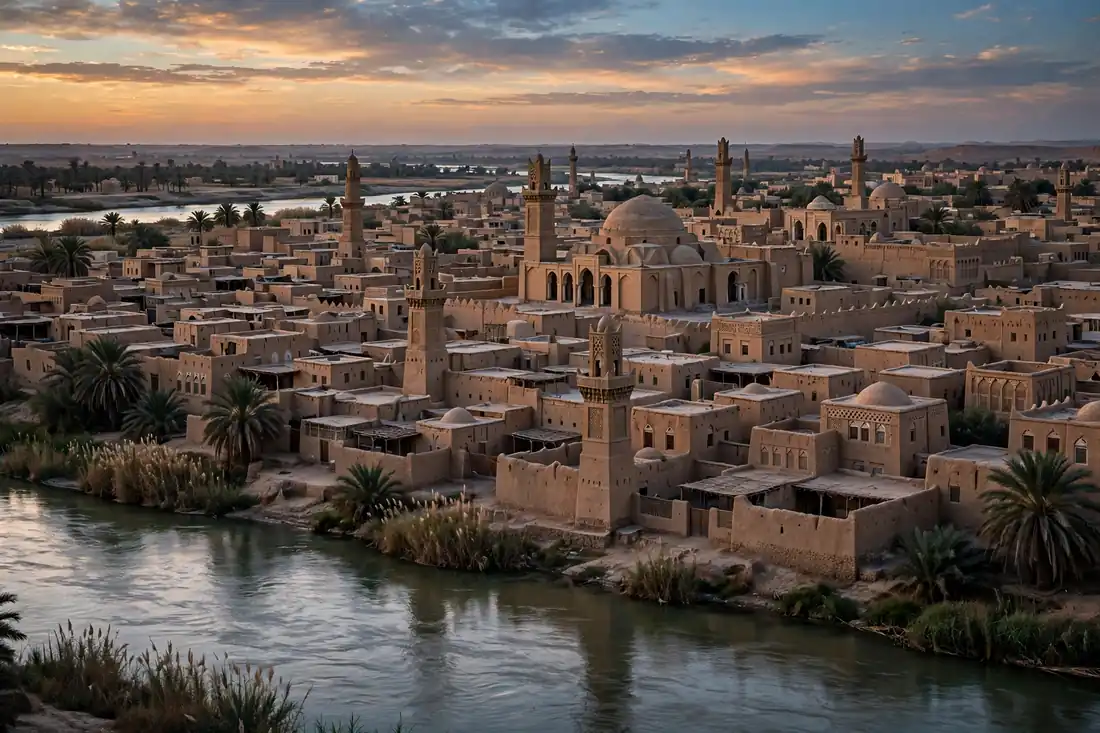
To answer the question of who Al-Lat and Al-Uzza really were, our end-times episode turns to a remarkable man: Hisham ibn al-Kalbi, born in 117 AH in Kufa, a city of the Abbasid Caliphate where scholars were deeply engaged in preserving history and lineage. His father was a famous historian and genealogist, and the son surpassed the father. He wrote around one hundred and forty books: on history, on genealogy, and on the stories of idols. He died in 204 AH, about twelve hundred years ago. Among everything he wrote, one book had the strangest fate of all: the Kitab al-Asnam, the Book of Idols, which would vanish entirely and stay lost for a thousand years.
A Scholar of Lineage and History
Ibn al-Kalbi's fame did not rest on the Book of Idols alone. His father was already a famous historian and genealogist of Kufa, and the household trade was the preservation of Arab lineage: who descended from whom, which tribe held which valley, which family guarded which shrine. The son took up the same work and surpassed his father, producing around one hundred and forty books across history, genealogy, and the lore of the old religion. Kufa in the Abbasid age was the right city for such a man - a garrison city turned center of learning, where the tribes of Arabia mixed and scholars competed to preserve what the conquests had scattered. The genealogist's craft shaped the Book of Idols too: every idol in it comes with its tribe, its place, and its keepers.
A Book That Vanished
The Kitab al-Asnam did not simply fall out of fashion; it disappeared so completely that for roughly a thousand years, no one even knew it existed. As the episode presents it, the other scholars of history seemed to hide it deliberately, and the reason given is striking: in the Abbasid era, idol worship had completely ended in the Muslim world, and there was a deliberate effort to erase it from memory, lest people become curious and turn back to it. Whether the hiding was a deliberate plan or the slow work of neglect, the effect was the same. For a thousand years, the Muslim world forgot the idols of its own past, and with them, the book that recorded them.
The Library That Did Not Have It
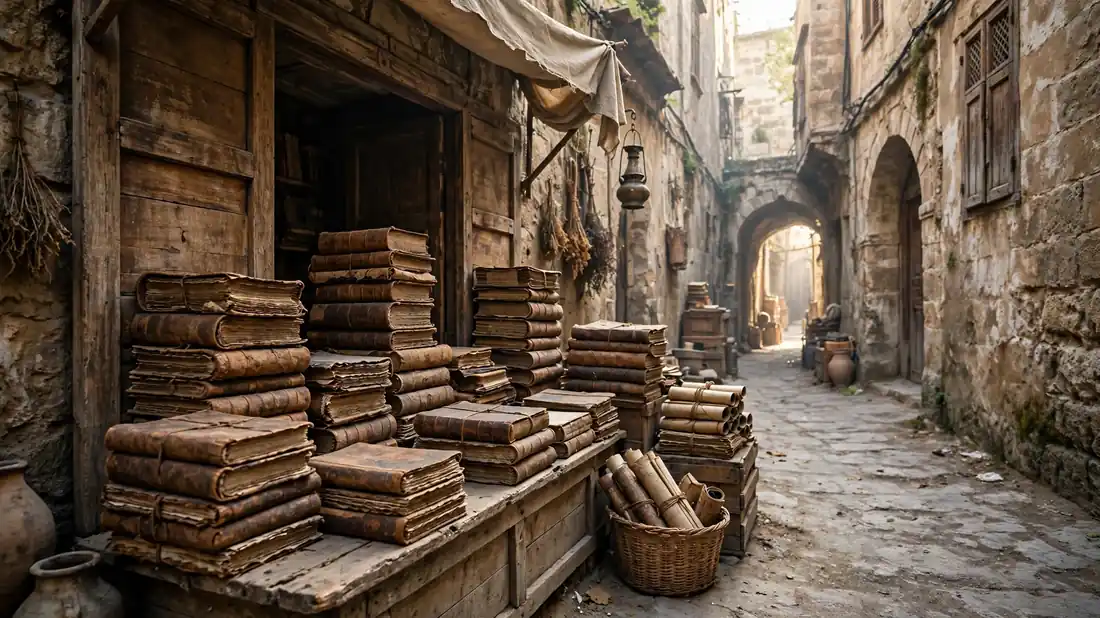
The scale of the disappearance can be measured against one fact: the library of Cordoba in Muslim Spain held some four hundred thousand books, and yet the Kitab al-Asnam was nowhere among them. That is the detail the episode holds up as proof that the disappearance was too complete to be an accident. A book of that importance, in a library of that size, in a civilization that copied and preserved everything it valued, simply was not there. The Muslim world had moved on from its idols so thoroughly that even the record of them had been set aside. The memory had been closed, and the door had stayed shut for a thousand years.
The Damascus Auction
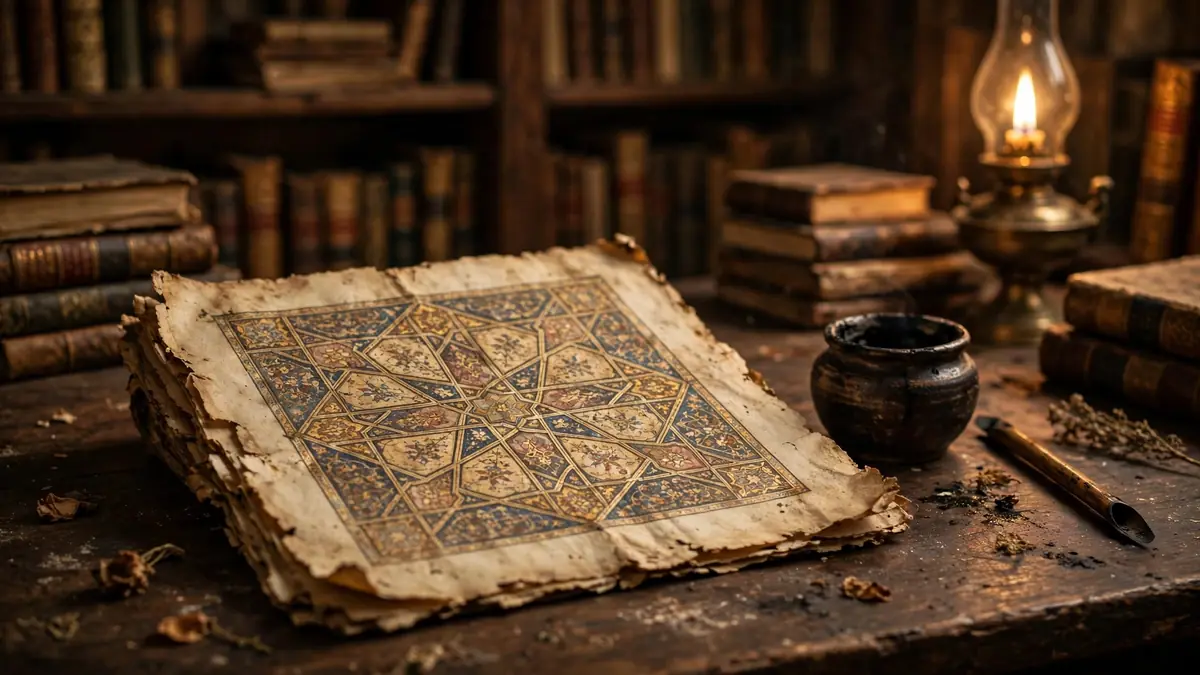
The door opened again only a few decades ago, in an astonishing way. In the early twentieth century, Ahmad Zaki Pasha, an Egyptian philologist, bought the sole surviving manuscript at an auction in Damascus. He announced his discovery at the fourteenth International Congress of Orientalists, and the text was published in 1914. After Zaki Pasha's death in 1934, the manuscript - one of many in his extensive collection - was donated to the state. One auction lot, one manuscript, and the book that had been missing for a thousand years was back in the light. It is hard to think of a more dramatic rescue of a lost work in the whole of Islamic scholarship.
From Damascus to the World
The rescued manuscript did not stay a curiosity for specialists. After Ahmad Zaki Pasha announced it at the fourteenth International Congress of Orientalists and published the Arabic text in 1914, the Book of Idols entered modern scholarship for good. An English translation with introduction and notes by Nabih Amin Faris appeared at Princeton in 1952, putting Ibn al-Kalbi's material within reach of any serious reader. It also turned out that the book had never been wholly unknown: the geographer Yaqut al-Hamawi, who died in 1229, had quoted it at length, and his quotations even contain material missing from the surviving manuscript. The thousand-year silence, it seems, was never quite total - but for all practical purposes, the book had been lost, and the twentieth century gave it back.
What the Book of Idols Contains
The Kitab al-Asnam is exactly what its name promises: a record of the gods and rites of pre-Islamic Arabia, as collected by Ibn al-Kalbi from his sources. It names the idols, the tribes that served them, the places where their shrines stood, and the families that guarded them. It tells how Al-Lat was worshipped at Taif, how Al-Uzza had her sanctuary in the valley of Nakhla, and how Dhul-Khalasa stood as the idol-house of the Daws. It even carries a narration from Abdullah ibn Abbas that Al-Uzza was really a demon, an evil family spirit that came to the acacia trees at Nakhla. The book is a guided tour of a world Islam removed, preserved by the man who knew it best.
A Composite Work, Scholars Warn
Modern scholars who have studied the manuscript urge care in reading it. The Book of Idols is considered a composite work, built up from many sources across a long period, with materials added, reworked, and sometimes repeated in contradictory form. Its reports range from well-grounded history to legend, and the two cannot always be separated. We present this as scholarly discussion, not as a ruling on the book's worth. The honest way to use the Kitab al-Asnam is the way our episode uses it: as a window into what the people of the past believed about their own idols, always read alongside the Quran and the authentic Hadith, never as a replacement for them.
The Man Behind the Book
There is a lesson in the man himself. Ibn al-Kalbi wrote around one hundred and forty books, and some of them were well known in his lifetime. Yet it was the one that vanished that history needed most: without the Kitab al-Asnam, the details of the old idol-worship would have stayed buried with it. A scholar's most important work is not always the one his own age values. Ibn al-Kalbi set down the record of a dying world, and the record survived - by a single manuscript, across a thousand years - to reach readers who would need it for reasons he could never have imagined.
Why the Record Matters Now
It matters now because the end-times narrations name the old idols again. In Sahih Muslim 2907, Aisha narrated that the Prophet said the system of night and day would not end until the people had taken to the worship of Lat and Uzza. Without the Kitab al-Asnam, those names would be only names; with it, we know who was worshipped at Taif and Nakhla, what the shrines looked like, and how the worship worked. The book does not prove the prophecy - the prophecy stands on its own chain - but it fills in the picture, so that the reader understands exactly what the return would mean. The idols of the past are the idols of the prophecy.
Forgetting Can Be Deliberate
The strangest part of the story is that the forgetting may have been deliberate. If the scholars of the Abbasid age really did set the book aside so that no one would grow curious about the idols, they were acting on a sound instinct: some kinds of knowledge are dangerous to the careless. Yet the forgetting went too far, and the record nearly died. There is a balance here that the episode draws out without naming it. A community must not forget its past so completely that it cannot recognize it when it returns - and the end-times narrations say that, in one form, the past will return.
The Record Survived for a Reason
A single manuscript survived an auction in Damascus, a publication in 1914, and twelve hundred years since its author's death, to land in front of readers studying the signs of the Hour. That survival lets us read the old reports with open eyes: who the Arabs worshipped, how their shrines worked, and what the Prophet's order to destroy them really swept away. The Book of Idols is not scripture, and its reports must be weighed with care. But as a record of the world the prophecies point back to, it is priceless. The next article in this series takes up the most dramatic of those destructions: the order to tear down Dhul-Khalasa, the Kaaba of Yemen.
✅ Guide4U Islam Checklist
- Read how the Kitab al-Asnam vanished for a thousand years
- Note Ibn al-Kalbi: 117 AH Kufa, died 204 AH
- Remember the Damascus auction and the 1914 publication
- Weigh the book's reports with scholarly care
- Keep the Quran and authentic Hadith above every history book
- Use the record to understand the prophecy, not replace it
- Ask about evil the way Hudhaifa did - to avoid it
Key Takeaways
- Ibn al-Kalbi (117-204 AH) wrote the Kitab al-Asnam, Islam's great record of pre-Islamic idols.
- The book vanished for ~1,000 years; Ahmad Zaki Pasha bought the sole manuscript at a Damascus auction and published it in 1914.
- Scholars treat it as a composite work: read it beside the Quran and authentic Hadith, never above them.
Frequently Asked Questions
Who was Ibn al-Kalbi?
Hisham ibn al-Kalbi was a historian and genealogist born in 117 AH in Kufa, in the Abbasid Caliphate. His father was a famous historian, and the son outdid him: he wrote around one hundred and forty books on history, genealogy, and the stories of idols. He died in 204 AH, about twelve hundred years ago. These biographical details come as stated in the episode's research.
How was the Book of Idols lost and found again?
It disappeared so completely that for roughly a thousand years no one even knew it existed. Then, in the early twentieth century, the Egyptian philologist Ahmad Zaki Pasha bought the sole surviving manuscript at an auction in Damascus. He published it in 1914, and after his death in 1934 the manuscript was donated to the state.
Can everything in the Book of Idols be trusted?
Modern scholars treat it as a composite work, built up from many sources over a long period, so its reports mix solid history with legend. We use it as the episode does: as a window into what the Arabs of the past believed about their own idols, read alongside the Quran and authentic Hadith - never as a rival to them.
Why study idols that died out centuries ago?
A Companion, Hudhaifa ibn al-Yaman, explained the principle in Sahih al-Bukhari 3606: while people asked the Prophet about good, he asked about evil, for fear that it might overtake him. Studying the old idols is not fascination with darkness; it is preparation - learning what to avoid before the end-times trials arrive.