
Khasf, Qadhf and Maskh: The Three Punishments the Prophet Warned Would Strike This Ummah
Quick Answer
Sunan al-Tirmidhi (no. 2212) records the Prophet warning that this nation would face three calamities: khasf — the sinking of the earth; qadhf — stones rained from the sky; and maskh — the transformation of faces. The conditions named were widespread alcohol, arranged singing, and common musical instruments. History already shows hailstorms that fell like stones, and the Quran records nations transformed into apes and swine.
A Warning About Three Calamities
The Prophet Muhammad, peace be upon him, told his followers that before the Hour arrives, this nation would face three calamities. He named them plainly: khasf, the sinking of the earth; qadhf, stones showered down from the sky; and maskh, the distortion of human faces. The narration comes from Imran ibn Husain and is recorded in Sunan al-Tirmidhi, number 2212 — though al-Tirmidhi himself graded the report gharib, a weaker grade, so it is presented here as a warning narration rather than one of the highest-grade texts. When the Companions heard it, they asked in astonishment when such things could happen. The answer came in plain words: when drinking alcohol becomes widespread, when singing women perform with full arrangement, and when musical instruments become common. This episode's research walks through that answer piece by piece, and this guide follows it — what each punishment means, what history already shows, and what the signs are actually for.
What Each Word Actually Means
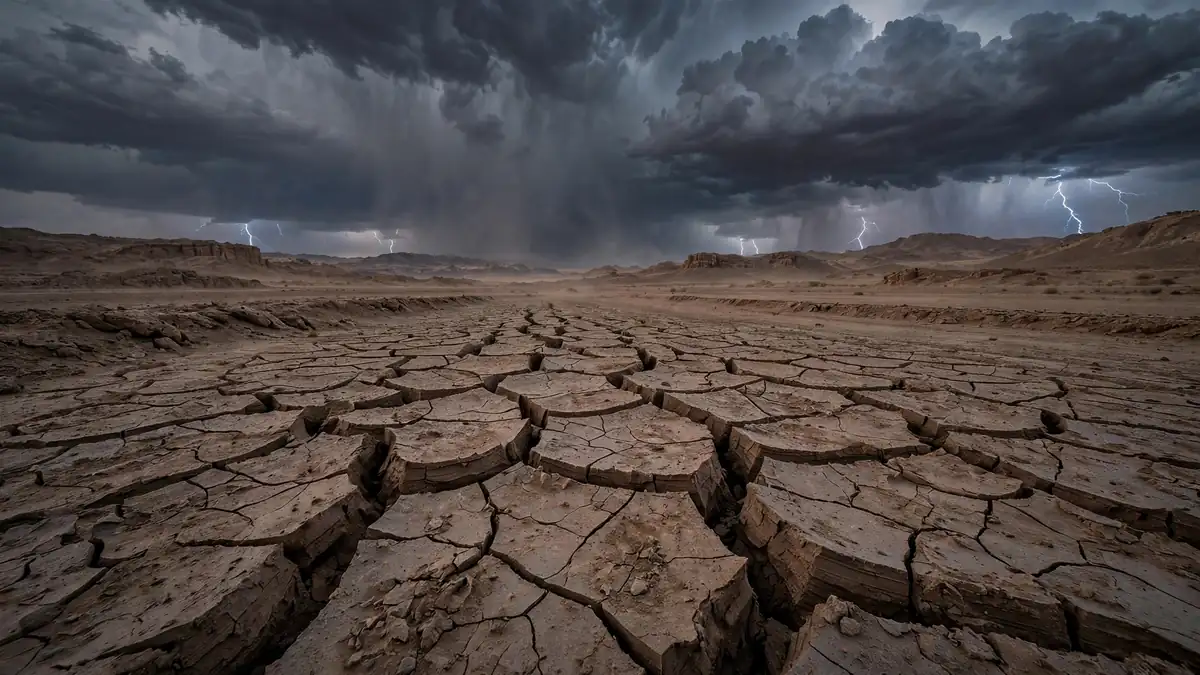
The three words need care, because each one names something precise. Khasf means the earth opening and swallowing what is on it — a sinking or collapse of the ground itself. Qadhf means being pelted: stones cast down from the sky onto the people below. Maskh means transformation: the outer form of a person changed into something lower, as a punishment. Each of these has a precedent in earlier revelation. The Quran describes nations swallowed by the earth, peoples pelted with stones, and communities transformed into apes and swine. Nothing in the hadith is a new kind of punishment. It is the return of old judgments, this time upon the final nation — and that is why the narration is read with both fear and seriousness: the pattern has appeared before, and it was never an idle threat. Reading the three together shows a pattern: the earth gives way beneath, the sky gives way above, and the face — the most honoured part of the human form — gives way within. Judgment, in this prophecy, comes from every direction at once.
The Three Conditions, Read Carefully
The hadith does not leave the punishment floating without a cause. It attaches three conditions, and each one describes a normal, visible state of society rather than a rare event. First, alcohol becomes widespread — not hidden, but open. Second, singing women perform with full arrangement — entertainment built around music, organised and mainstream. Third, musical instruments become common — not a rarity but part of everyday life. Notice what the narration does not do: it does not name a year, a place, or a ruler. It describes a culture. That matters, because it tells us how the hadith wants to be read. It is not a code to be cracked for the date of the end; it is a description of the conditions under which the end-time punishments descend.
- Alcohol drunk openly and without shame
- Music arranged, commercialised and everywhere
- Instruments as common as household furniture
Stones From the Sky: The Record of Qadhf
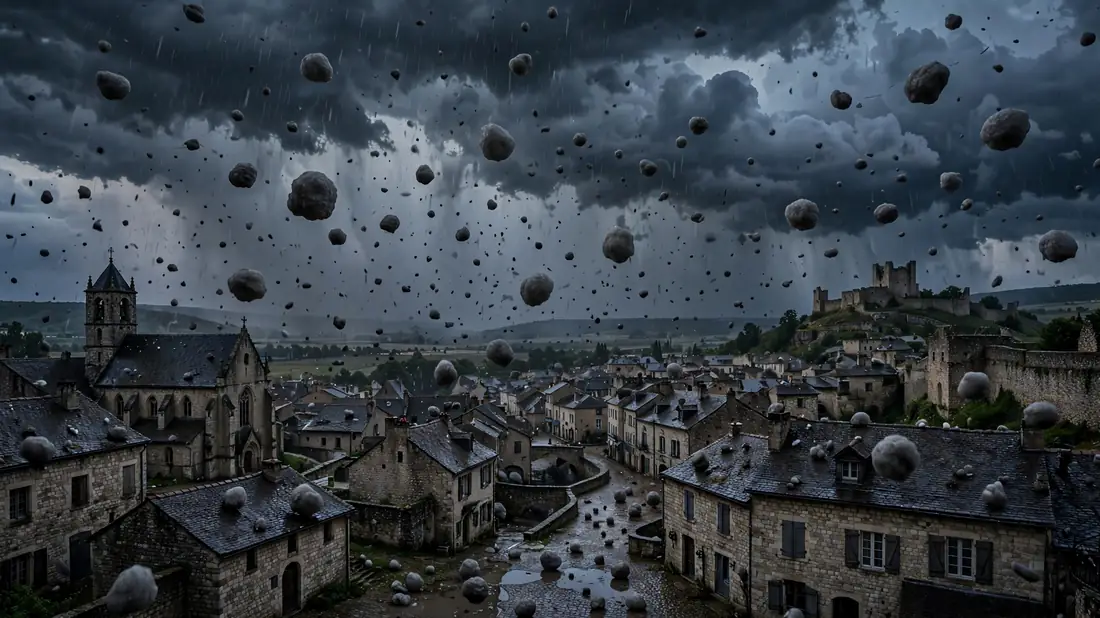
The second punishment, qadhf, already has echoes in recorded history — terrifying examples of things falling from the sky that struck like stones. On 13 April 1360, during the wars in France, a hailstorm of extraordinary violence hit the English army near Chartres; more than a thousand soldiers were killed in a single night, and historians still record it as the Black Monday Hailstorm, its hailstones described as falling like stones. On 14 April 1986, in Gopalganj district, Bangladesh, fell the heaviest authenticated hailstone on record, weighing about one kilogram; ninety-two people were killed. At Roopkund Lake in the Himalayas, hundreds of skeletons lie where researchers concluded that pilgrims were caught in a massive hailstorm. And in living memory, Pakistan saw a hailstorm that smashed solar panels across rooftops. Hail forms when cloud temperatures drop below freezing and water droplets turn to ice — but sometimes dust gets trapped inside the ice, and the hailstone technically becomes an icy stone. When large ones fall, it genuinely looks as though stones are raining from the sky. It has happened before in history. It will happen again.
When Faces Are Changed: The Warning of Maskh
The third punishment is the most haunting of the three. A narration in Sahih al-Bukhari, number 5590, describes people of this nation who will rename wine and drink it while singers sing and perform around them. They will spend the whole night in these indulgences — and in the morning, their faces will have been transformed into those of monkeys and pigs. The research behind this episode asks the obvious question: can listening to music really change a person's form? The Quran gives the principle in Surah Al-Isra, verse 59: Allah does not send His signs except to instill fear. Transformation, on this reading, is a sign sent to terrify — and to serve as a lesson to everyone who witnesses it. It is not entertainment. It is a public warning written on the faces of those who ignored every private one.
The Nations the Quran Transformed
Maskh is not a new idea in revelation. Surah Al-Ma'idah, verse 60, records the people whom Allah cursed and became angry with, and made of them apes and swine and slaves of Taghut. The same transformed people appear in Surah Al-Baqarah, verse 65 — "Be apes, despised" — where the Sabbath was broken, and in Surah Al-Araf, verse 166, with the same words. Three separate surahs, one punishment. These were not animals made into people, and they were not a metaphor. They were communities whose forms were changed as a judgment, and the Quran records them as facts of history. That is the background against which the hadith's warning about maskh must be read: the final nation is being told that an old judgment can return, upon a people who had even clearer warnings than the nations before them.
Are Today's Pigs and Monkeys the Transformed Ones?
The episode pauses on a curious set of facts before answering that question. The research behind it notes that pig DNA is reported to match human DNA by nearly ninety-five percent, and monkey DNA by about ninety-three — which is why the pig is studied for organ transplants, and why its digestive system is said to mirror the human one. One detail became symbolic: the pig cannot look toward the sky, its neck muscles too small and rigid, keeping its head bowed to the ground. But the answer to the question is still no, and it comes from the Prophet himself. Abdullah ibn Masud narrates that the Companions asked whether these monkeys and pigs were the transformed forms of previous nations. He replied that they were not: the nation Allah cursed and distorted left no progeny after its death; the animals existed before them, and when the nations were punished, their forms were merely made to resemble those animals (Sahih Muslim 2663). Natural history agrees on the separation: pigs and monkeys go back millions of years as entirely separate species. But nations have been punished by being made like them — and a similar punishment, the narration warns, can descend again.
The Mountain People
Sahih al-Bukhari carries another narration in the same chain of warnings, and it reads like a story with a moral written at the end. Some arrogant, wealthy people will declare adultery, wine, and music permissible. They will live on top of a mountain, served by many servants who take their animals out to graze morning and evening. One day a needy man will come to them with his need, and they will dismiss him with a careless promise: come back tomorrow. But overnight, Allah will overturn the mountain upon them — and many of them will be transformed into monkeys and pigs, and remain so until the Day of Judgment. And all of it, the narration says, will come from excessive singing, music, and wine. The lesson is not only about what they did. It is about how they did it: in comfort, in arrogance, and in refusal to help the one person who came to their door.
Reading the Signs Without Setting a Date
None of this gives anyone permission to set a date. The narrations describe conditions, not calendars, and the Quran keeps the final knowledge for Allah alone: "Indeed, Allah [alone] has knowledge of the Hour" (Surah Luqman 31:34). The hailstorms of history show that qadhf-like punishments are real and can return; the transformed nations of the Quran show that maskh is not a metaphor; the hadith of the mountain people shows who it falls upon — the comfortable, the arrogant, the ones who turned away the poor. The purpose of these narrations is not to let anyone predict the end. It is to make the reader look at his own conduct: at what he drinks, what he listens to, and how he treats the needy man at his door. The signs were given to change lives, not to feed curiosity.
✅ Guide4U Islam Checklist
- Memorize the three: khasf, qadhf, maskh
- Know the hadith: Tirmidhi 2212 (graded gharib)
- Recall the transformed nations: Quran 5:60, 2:65, 7:166
- Remember Muslim 2663: transformed nations left no progeny
- Study the mountain-people narration: Bukhari 5590
- Set no dates; Allah alone knows the Hour
- Check your own conduct before the signs
Key Takeaways
- The three prophesied calamities: khasf (earth sinking), qadhf (stones from the sky), maskh (faces transformed).
- The Quran records transformed nations as fact (5:60, 2:65, 7:166) — the end-times narrations repeat an old pattern.
- The signs describe conditions, never dates; their purpose is to change conduct, not feed curiosity.
Frequently Asked Questions
How authentic is the hadith about khasf, qadhf and maskh?
It is recorded in Sunan al-Tirmidhi, no. 2212, narrated from Imran ibn Husain. Al-Tirmidhi himself graded it gharib, which means its chain is weaker than the sahih narrations quoted alongside it in this guide. Scholars have cited it as a warning narration, and this guide presents it that way — a serious warning, not one of the highest-grade texts of the tradition.
Have any of these punishments already happened?
Hailstorms matching the description of qadhf have struck in recorded history — the Black Monday storm of 1360, the 1986 Bangladesh storm, the Roopkund event — and the transformed nations of the Quran are recorded as fact. But no one can say the final, full forms of these prophecies have occurred, and Islam forbids setting dates. Signs are read as conditions unfolding, not as a schedule.
Why are monkeys and pigs the forms of the transformation?
They are the forms the Quran itself names when it records nations that were transformed — apes and swine in Surah Al-Ma'idah (5:60), Al-Baqarah (2:65) and Al-Araf (7:166). The narrations of the end times repeat the pattern of the earlier revelations rather than inventing a new one.
Does this mean listening to music causes earthquakes?
No. The hadith names conditions, not a physics lecture — it describes the society in which the punishments descend, not the mechanism of the earth sinking. The episode's research does propose a speculative idea about vibrations and loose soil, but that is clearly presented as speculation, not as a prophetic statement.