
Rain Without Vegetation: What the Prophet Said About the Rains That Bring No Blessing
Quick Answer
This article explains the prophecy of rain without vegetation: the verified Anas and Abu Huraira narrations quoted in full, with the chain caveat stated openly and a misattribution in the episode's research corrected. The episode's science - acid rain, 'dead rains,' and the greenhouse mechanism - is presented as the episode's own explanation, and every reading is labeled.
The Prophecy, Stated Exactly
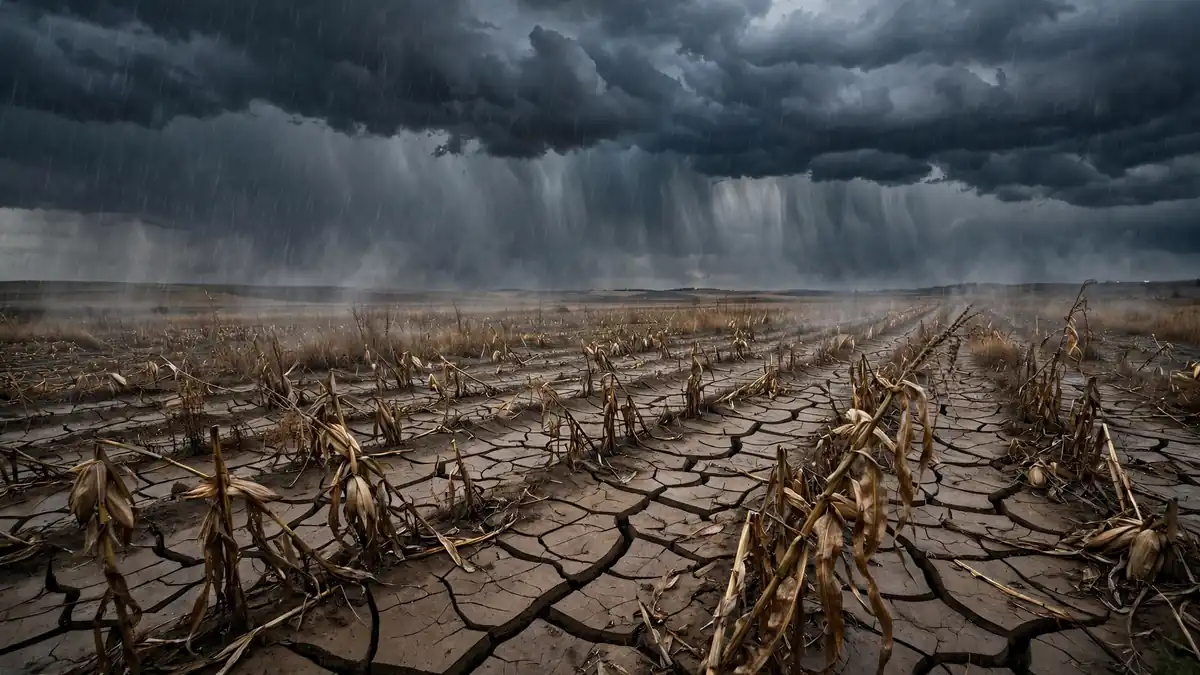
Among the minor signs of the Hour is a narration reported from Anas ibn Malik in Musnad Ahmad, number 12429, in which the Prophet (peace be upon him) said: "The Hour will not come until people are rained upon with a general rain, and the earth produces nothing." The image is simple and strange: the sky does its part, but the soil answers with nothing. In the Quran, rain is one of the great signs of divine mercy, the means by which dead land is revived and provision reaches every living thing. This narration turns that familiar pattern upside down. The rain still falls - widespread, general, reaching everyone - but the harvest never comes. We quote the wording exactly so the reader can see what it says and what it leaves unsaid.
A Grading Caveat, Stated Openly
Honesty about sources comes first. We say plainly that some editors have noted an unknown narrator in the chain of this particular report at Musnad Ahmad 12429, and we do not hide that. At the same time, al-Hakim authenticated the report, and a sound chain of the same narration appears at Musnad Ahmad 14047, transmitted by Thabit al-Bunani from Anas. This is how hadith scholarship works: a report is weighed, not worshipped, and when one chain carries a question mark, another chain can carry the weight. We repeat nothing here as stronger than it is. The prophecy's force does not depend on us polishing its credentials; it depends on what was actually said and how it was actually transmitted. That is the standard we hold through every article in this series.
What 'True Drought' Really Means
A second wording, preserved by al-Haythami in Majma al-Zawaid (5/38) and reported from Abu Huraira, sharpens the meaning. He reported that the Prophet (peace be upon him) said: "The drought is not when it does not rain; the true drought is when the sky rains and the earth produces nothing." Al-Haythami judged its narrators to be the men of the Sahih collection. The saying redefines drought itself: the real disaster is not a dry sky but a failed earth. And here we owe the reader a correction. The episode's research wrongly attached Musnad Ahmad 12429 to Abu Huraira; that number belongs to the Anas narration quoted above, while the Abu Huraira form is the Majma wording given here. We fix the misattribution openly rather than let it stand.
- Musnad Ahmad 12429 (Anas): 'people are rained upon with a general rain, and the earth produces nothing'
- Majma al-Zawaid 5/38 (Abu Huraira): 'the true drought is when the sky rains and the earth produces nothing'
- Both wordings agree: the rain comes, and nothing grows
A Rain No House Escapes
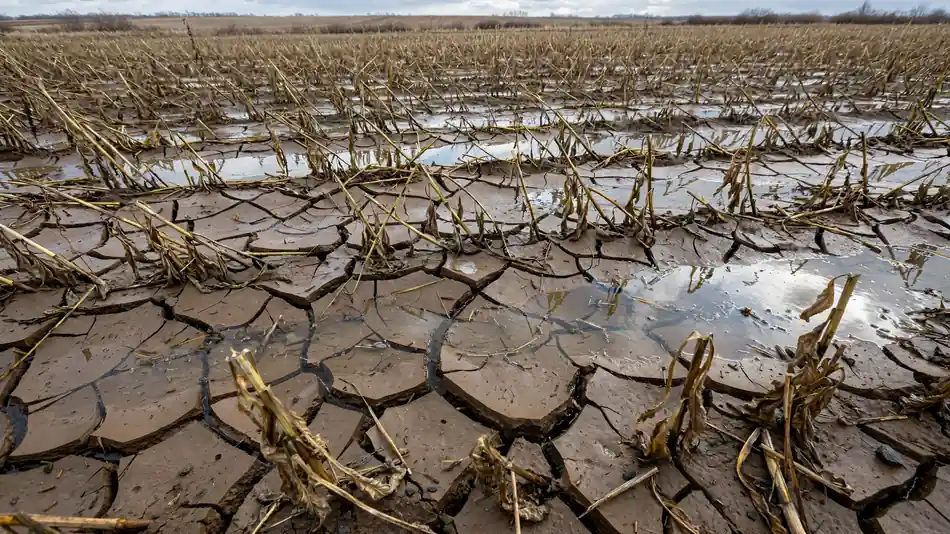
A third narration widens the picture. In Musnad Ahmad, number 7554 - numbered 7564 in the Darussalam edition - Abu Huraira reported that the Prophet (peace be upon him) said: "The Hour will not come until people are rained upon with a rain from which the houses of mud-brick give no shelter, and only the houses of hair (tents) shelter from it." Al-Albani graded its chain as authentic on the condition of Muslim, citing it in the Silsila al-Sahihah at number 3266. Read literally, the wording is paradoxical: solid mud-brick homes fail to keep it out, while flimsy tents of hair somehow do. The episode reads this as a worldwide rain that no house escapes. We quote the verified wording as it stands and label that worldwide-rain reading as the episode's interpretation, not the text's own claim.

Ordinary Rain - That Detail Matters
The episode stresses one point about the first narration that changes how the whole prophecy reads: the rain it describes is ordinary rain, not acid rain, not poison from the sky. That distinction matters because the wonder of the prophecy is not that something foul falls but that something normal fails. Rain arrives the way it always has - no warning color, no strange smell, nothing in the sky to frighten anyone - and yet the fields answer with barrenness. If the text had meant a corrupted rain, it could have said so; instead it says a general rain, the kind every farmer waits for. The episode's whole scientific discussion grows out of this reading: how can the most ordinary blessing of the sky leave the most ordinary function of the soil undone?
The Episode's Science: Acid Rain
What follows is the episode's explanation, not our claim. The episode first considers acid rain and explains its mechanism: sulphur dioxide and nitrogen oxides released by industry rise into the atmosphere, fall back with the rain, and change the soil's pH until crops wither despite the water. It is a real, documented problem, and the episode is right to name it. But on the episode's own reading, this cannot be the prophecy's rain. The narration insists on a general, ordinary rain - the kind that looks and feels like mercy - and acid rain is, by definition, a corrupted one. The episode therefore sets acid rain aside as a separate modern trial and looks for a mechanism in which normal rain falls and still nothing grows. That is the fork the episode's science takes from here.
'Dead Rains' and 'Black Rains'
The episode turns next to volcanoes. When a great eruption fills the sky with ash, the episode says, the rains that follow can come down dark and lifeless - "dead rains," "black rains" - burying fields instead of feeding them. Its central example is Mount Tambora, which erupted in 1815; the episode tells how crops failed across the affected lands and the harvest simply stopped. We repeat this account exactly as the episode presents it: an episode-cited case, not an independently verified historical claim. The point the episode draws from it is modest - that the sky can give water while the ground gives nothing - and it keeps the example inside the episode's own framing. A single volcano's ash cannot be the general rain of the narration, and the episode does not claim it is; it offers the case as a small-scale picture of the larger sign.
The Episode's Global Mechanism
For a rain that is truly general - falling everywhere at once - the episode proposes the greenhouse effect as the mechanism, and everything that follows is the episode's research, presented as such. The episode notes that heat records have been broken nearly every year from 2015 through 2025, that 2024 was the hottest year on record, and that Jacobabad and Mohenjodaro have crossed 52 degrees Celsius. Rising heat, on the episode's account, loads the atmosphere with moisture and produces worldwide rains at a scale the past never saw. The episode adds a historical parallel: the same mechanism, it says, explains the worldwide rains at the end of the last ice age, some eleven thousand years ago. We present this chain of reasoning because the episode makes it, not because we endorse it. The mechanism belongs to the episode; the narration belongs to the Prophet (peace be upon him); we keep the two separate.
What the Sign Asks of Us Now
A sign about rain and barren soil asks for a response closer than fear. The one who eats should remember who grows; the one who wastes water should consider what it means to receive a blessing that no longer feeds him. Gratitude for every harvest, care for the land and the water we are trusted with, and generosity toward those who farm under harder skies than ours - these are the present duties the prophecy lights up. The narration does not tell the believer to stockpile food or to read the weather with dread; it tells him that provision comes from above and can be withheld from above. A heart that understands that reads every green field as a favor, not a guarantee. And a sign that has not yet come is not an excuse to wait; it is a reason to live rightly while the rain still brings forth crops.
- Read every harvest as a favor from Allah, not as a guarantee
- Care for the land and water you are trusted with
- Show generosity toward those who farm under harder skies
Knowledge With Humility
The Quran closes the door that speculation tries to open. In Surah Luqman, verse 34, Allah says: "Indeed, Allah [alone] has knowledge of the Hour and sends down the rain and knows what is in the wombs. And no soul perceives what it will earn tomorrow, and no soul perceives in what land it will die." The rain that falls, the soil that answers or refuses to answer, and the Hour that will not come until all of this unfolds - all of it rests with Him. No researcher, no commentator, and no article can set the date, and this one will not try. What remains for us is belief in what was said, humility about what was not, and readiness in the present. May Allah make us among those who prepare with faith rather than those who predict with noise. The narrations ask for watchfulness, not worry: tend your provision, honor your trusts, and leave the calendar to Allah.
✅ Guide4U Islam Checklist
- Read the Anas narration in its exact wording
- Note the grading caveat on the 12429 chain
- Separate ordinary rain from acid rain
- Keep the episode's mechanism labeled as its own
- Fix the misattribution openly, as done here
- Set no dates for the Hour
Key Takeaways
- Musnad Ahmad 12429 and Majma al-Zawaid 5/38 foretell a general rain after which the earth produces nothing - 'the true drought.'
- The 12429 chain carries a noted caveat; al-Hakim authenticated the report and a sound chain exists at Musnad Ahmad 14047.
- The episode's science is presented as its own explanation; the narration promises ordinary rain, sets no date, and leaves the mechanism with Allah.
Frequently Asked Questions
Does this prophecy refer to acid rain?
No. The narration describes a general, ordinary rain - the episode's own reading agrees with this. Acid rain is a real and documented modern problem: the episode explains how sulphur dioxide and nitrogen oxides change the soil's pH and wither crops. But a corrupted rain is not what the wording describes, so on the episode's own account acid rain must be a separate trial, not this sign.
How reliable is the Musnad Ahmad 12429 narration?
We are open about this: some editors note an unknown narrator in this particular chain, so we do not present it as stronger than it is. Al-Hakim authenticated the report, and a sound chain of the same narration appears at Musnad Ahmad 14047, transmitted by Thabit al-Bunani from Anas. Presenting both the question mark and the supporting evidence is the honest way to handle it.
Has this sign already happened anywhere?
There have been partial echoes: the episode cites Mount Tambora's 1815 eruption, after which crops failed and the harvest stopped, and history knows many droughts and famines. But a general rain - falling everywhere at once and bringing forth nothing - is not what those events describe. The sign as stated looks to the future, and no one can say when or how it will unfold.
What does the 'houses of mud-brick give no shelter' narration mean?
The verified wording says a rain will come from which solid mud-brick houses give no shelter, while only tents of hair shelter from it - a paradox we quote exactly as it stands. The episode reads this as a worldwide rain that no house escapes; we label that as the episode's interpretation. The wording itself is left intact, and its full meaning rests with Allah.