
The Shoes of Hair and the Turks: The Two Peoples the Prophet Said Will Fight Before the Hour
Quick Answer
Two narrations in Sahih al-Bukhari place a confrontation with the peoples of the east - described by their hair-made shoes and shield-like faces - among the portents of the Hour. This article examines the narrations, the seventh-century meaning of the word 'Turk', and the long history of Muslim encounters with the steppe peoples, from the caliphate of Umar to the Seljuks and the Ottomans.
A Narration That Names Two Peoples
Among the signs of the Hour, some narrations describe nations and groups the Muslims would meet in battle. One narration reported in Sahih al-Bukhari, number 2927, comes from Amr bin Taghlib, who said: 'One of the portents of the Hour is that you will fight with people wearing shoes made of hair; and one of the portents of the Hour is that you will fight with broad-faced people whose faces will look like shields coated with leather.' The narration names two descriptions rather than giving one clear name, which is why students of these narrations have spent centuries asking who exactly is meant. The answer most of them reached connects the prophecy to the peoples of the eastern steppes, and the centuries that followed gave the question a concrete shape.
The Shoes of Hair
The first description speaks of people wearing shoes made of hair. Classical commentators understood this as footwear covered with hair or fur, the kind worn by peoples who lived in harsh, cold lands. For the listeners of seventh-century Arabia, this was an unusual image: sandals of leather and simple footwear were the norm in the Hijaz, and hair-covered boots pointed to a far-off people from a cold climate. The detail is physical and practical rather than symbolic. It describes how a people dressed for their environment, and it would have been memorable precisely because it was so foreign to the Prophet's audience. Nothing in the narration suggests the shoes carry a hidden meaning; they are simply a mark by which the people could be recognised.
The Turks of the Second Narration
A second narration in Sahih al-Bukhari, number 2928, reported from Abu Huraira, is even more direct: 'The Hour will not be established until you fight with the Turks; people with small eyes, red faces, and flat noses. Their faces will look like shields coated with leather. The Hour will not be established till you fight with people whose shoes are made of hair.' Here the word 'Turks' appears plainly, and the physical description matches what the Arabs knew of the peoples beyond their eastern frontier. The two narrations together place the confrontation with these peoples among the portents that would arrive before the final Hour. Taken side by side, they describe the same event from two angles: one names the clothing, the other names the people and their features.
What 'Turk' Meant in the Seventh Century
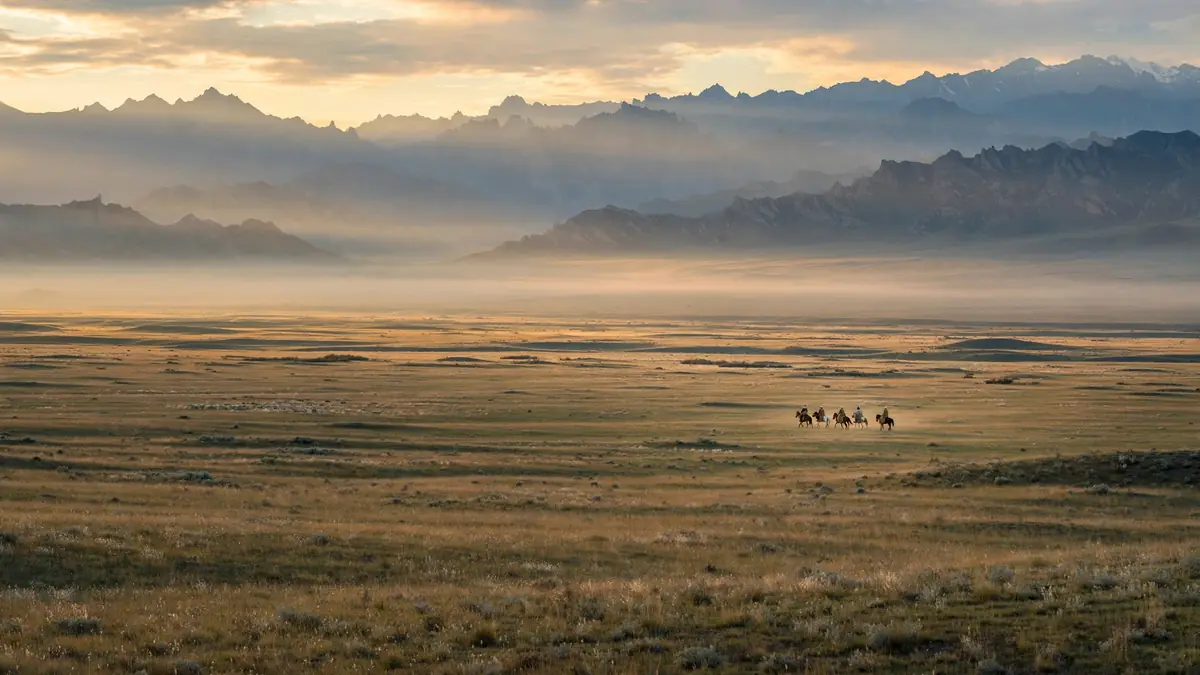
The word Turk in the Prophet's time did not mean one modern nation. It was a broad name for the nomadic peoples of the Central Asian steppe: skilled horsemen and archers who lived in felt tents, moved with their herds, and formed strong confederations under warrior leaders. The steppe stretched for thousands of miles from the borders of Persia toward China, and its peoples were known to the Arabs mainly through trade caravans and the borderlands of Persia. When the narration speaks of the Turks, it speaks of these steppe peoples as a whole, not of any one tribe or state. Keeping this broad meaning in mind is the key to reading the prophecy the way its first audience would have heard it.
The First Encounters in the Caliphate of Umar
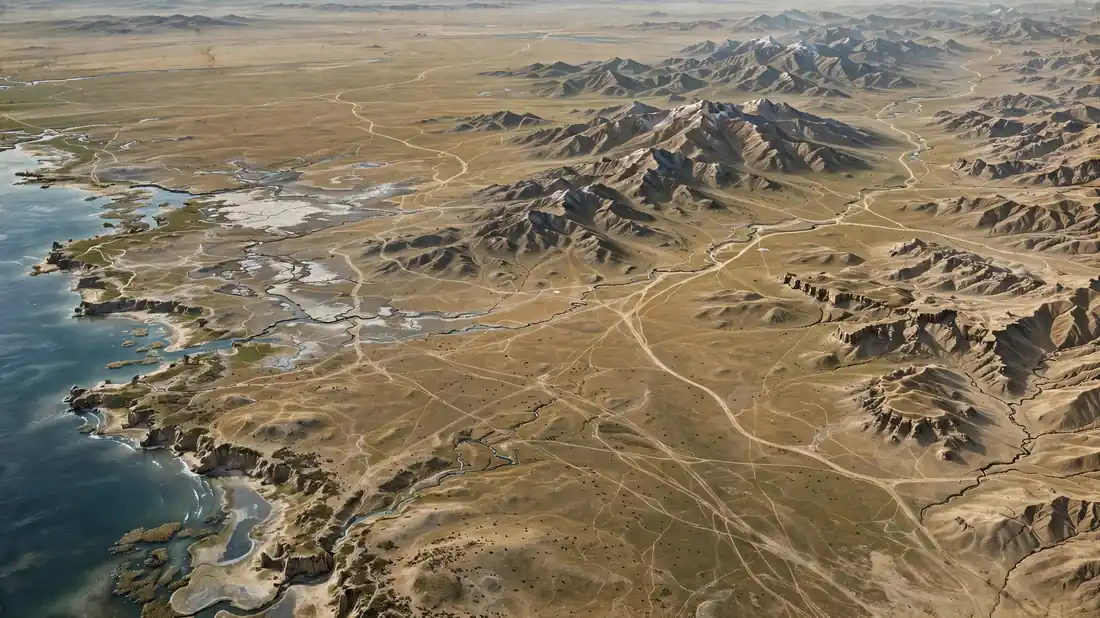
Muslim armies first met the Turkic peoples during the caliphate of Umar, when the rapid expansion of the early Muslim state brought it to the frontiers of Central Asia. As Persian lands came under Muslim rule, the border moved eastward and contact with the steppe confederations began. These early meetings were the beginning of a long relationship that would shift between conflict and alliance over the coming centuries. The prophecy's audience had only a distant awareness of these peoples; within a few generations, Muslim soldiers were standing face to face with them along the frontier, and the narration's words began to take on a lived meaning for the community that preserved them.
The Seljuks and the Battle of Manzikert
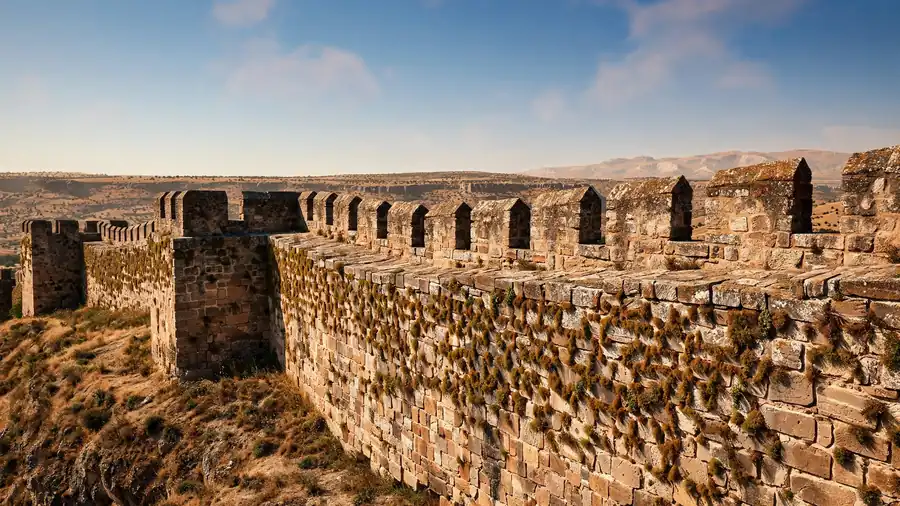
Centuries later, a Turkic people called the Seljuks rose to power in the Islamic east and became the dominant military force of the region. Under their leader Alp Arslan, they met the Byzantine army at Manzikert in 1071, in what is now eastern Turkey. The Seljuk victory was complete and reshaped the map: Anatolia, long held by the Byzantines, opened to Turkic settlement. This battle is remembered as the moment the door to Asia Minor swung open. For the episode's historical discussion, Manzikert is the hinge point where the peoples named in the prophecy became central actors in the history of the Muslim world, and from this point the arc of the story turns toward Anatolia.
Osman Ghazi and the Rise of the Ottomans
From the Turkic settlement of Anatolia came many small principalities, and from one of them rose Osman Ghazi, the founder of the Ottoman line. His small beylik grew through alliances, marriages, and conquest until it became an empire that would hold Constantinople and rule vast lands for six centuries. The Ottomans saw themselves as champions of Islam and protectors of the holy cities, and for centuries the Muslim world gathered under their banner. In the episode's telling, this is the full arc of the story: the steppe peoples of the prophecy arriving at the frontier, entering the lands of Islam, and eventually carrying its banner as one of the great Muslim powers of history, a journey from tents on the steppe to the seat of an empire.
The Episode's Own Explanation of the Description
The physical description in the narration - small eyes, red faces, flat noses, faces like shields coated with leather - has drawn comment from many writers. Our episode offers its own interpretation, presented here only as the episode's view and not as part of the hadith: it suggests that the diet of the steppe peoples, especially a heavy diet of keema, minced meat, shaped the redness of their faces, and that features like flat noses came from the harsh cold of their climate. This is the episode's reasoning, not a statement from the Prophet or from classical commentaries. We pass it on because it is part of the episode's material, but it should be read as interpretation, not as revelation, and the hadith itself needs no such explanation to stand.
Why the Prophet Named Them Twice
It is worth asking why these narrations return to the same peoples with slightly different wording. One reason is that the listeners needed to recognise them: shoes of hair for one audience, the name 'Turks' and a physical description for another. Repetition with variation is a common feature of the hadith literature on the signs of the Hour, and it serves a purpose - it fixes the image in memory. The narration does not ask anyone to seek out these battles or to wish for them. It simply places them on the timeline of events, like markers on a road, so that later generations could look back and say: this was known before it happened. That quiet confirmation is the whole point of the sign.
Where These Signs Stand Today
Scholars of the signs of the Hour generally place these confrontations among the signs that have already appeared in history. The Muslim wars with the steppe peoples, the Seljuk rise, and the Ottoman centuries are all behind us, which is why many writers treat these narrations as fulfilled in the broad sense. This view is scholarly discussion, not a matter of creed: the narrations themselves do not set dates, and no one can claim to know exactly which clash in history was meant. What can be said is that the names, the descriptions, and the direction of the prophecy all matched the peoples who came from the east, and that the match has been noted by writers across the centuries.
Preparation, Not Prediction
The lesson of these narrations is not prediction but preparation. Knowing that great powers would rise and fall before the Hour does not give anyone the ability to fix a date, and the Prophet himself said the knowledge of the Hour's timing rests with Allah alone. The value of the sign lies elsewhere: it confirms that history moves toward its appointed end, and it reminds the believer to live each day as if the end could be near. The Turks of the narration came, fought, ruled, and faded like all powers before them. The wise reader takes from this not a calendar, but a sense of urgency to set their own affairs right while there is still time.
✅ Guide4U Islam Checklist
- Read Sahih al-Bukhari 2927 and 2928 in full
- Note both descriptions: hair shoes and broad faces
- Remember 'Turk' meant all steppe peoples then
- Study the Seljuk victory at Manzikert, 1071
- Learn how Osman Ghazi founded the Ottoman line
- Keep the episode's interpretation separate from hadith
- Prepare for the Hour, never try to predict it
Key Takeaways
- Bukhari 2927 and 2928 name the Turks and the people of hair shoes among the portents.
- The word Turk covered the Central Asian steppe peoples, not one modern nation.
- History matched the prophecy; the lesson is preparation, not prediction.
Frequently Asked Questions
Which two peoples are named in these narrations?
Sahih al-Bukhari 2927 speaks of people wearing shoes made of hair and broad-faced people whose faces look like shields coated with leather. Sahih al-Bukhari 2928 names them as the Turks, describing small eyes, red faces, and flat noses, and repeats the shoes of hair. Classical understanding connects both descriptions to the peoples of the Central Asian steppe.
What did the word 'Turk' mean in the Prophet's time?
It was a broad name for the nomadic peoples of the Central Asian steppe, skilled horsemen and archers living in felt tents under warrior leaders. It did not refer to one modern nation or a single tribe, but to the steppe confederations known to the Arabs through trade and the Persian frontier.
Have these signs already happened?
Many scholars place them among the signs that have already appeared, pointing to the Muslim wars with the steppe peoples, the Seljuk victory at Manzikert in 1071, and the rise of the Ottomans. This is scholarly discussion rather than a matter of creed, and the narrations set no dates.
Should Muslims try to predict the Hour from these signs?
No. The Prophet said the knowledge of the Hour's timing rests with Allah alone. The signs are given as confirmation that history moves toward its appointed end, and their lesson is preparation: to set one's affairs right while there is still time.