
Time Will Draw Closer: What the Prophet Said About the End of Time

Quick Answer
A hadith says the Hour will not come until time contracts - a year feeling like a month, a month like a week (Jami at-Tirmidhi 2332). Scholars say the first meaning is that blessing leaves time, while the Quran shows time is flexible and cyclical, not a rigid line. Islam forbids setting any date for the Hour.
The Hour Will Not Come Until Time Draws Closer
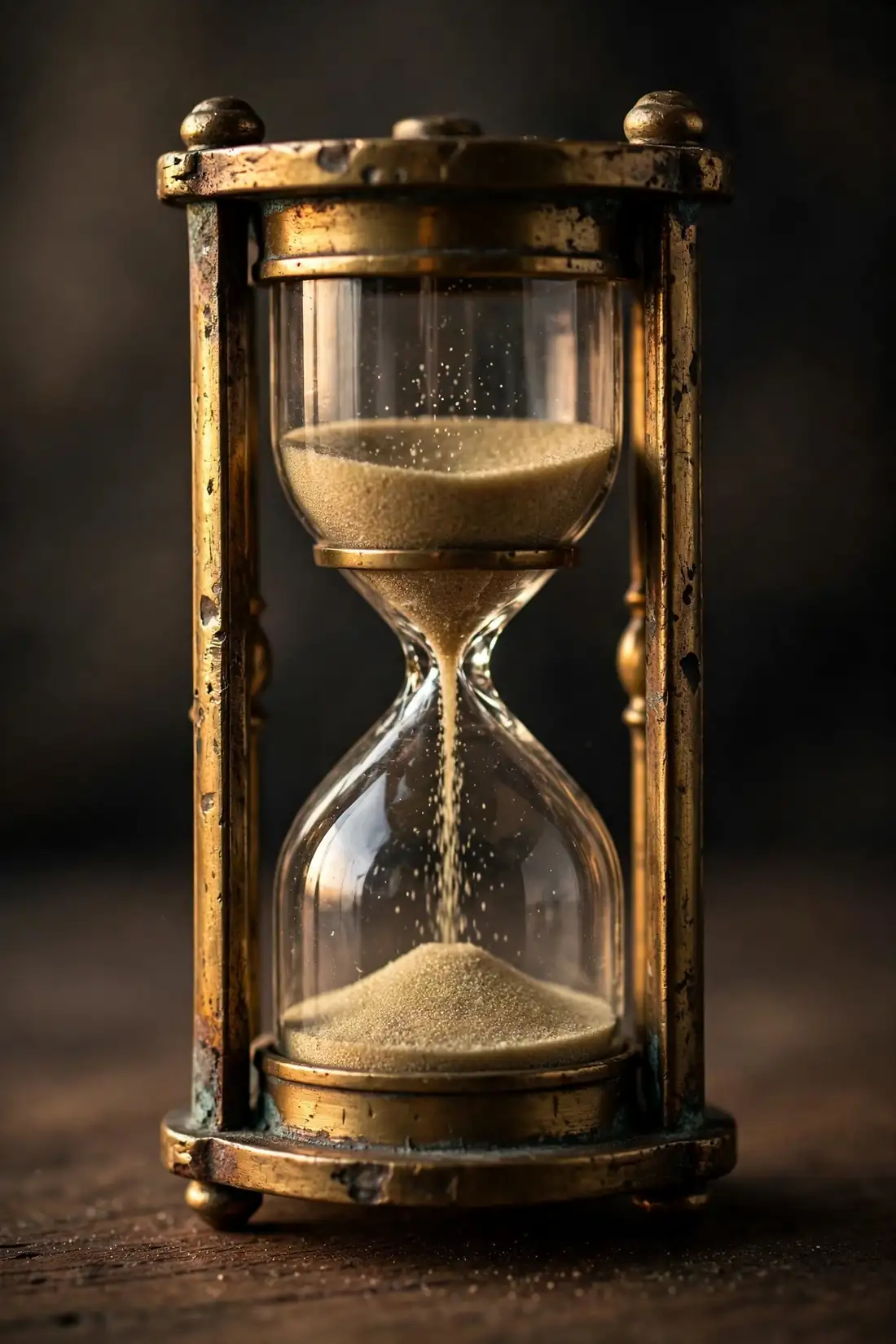
Most people alive today feel that time is moving too fast. You blink, and January is over. You look up, and a year has gone. Many Muslims hear this and remember a narration of the Prophet Muhammad (peace be upon him): the Hour will not arrive until time contracts - until a year feels like a month, a month feels like a week, a week feels like a day, a day feels like an hour, and an hour passes as quickly as a spark flaring and dying in dry straw (Jami at-Tirmidhi 2332). The hadith is not only about clocks. It is about how time feels from the inside - and there may be more to it than feeling alone.
What Scholars Say: The Blessing Leaves Time
When classical commentators explain this hadith, the first meaning they give is simple and human: blessing is lifted from time. Work fills the day, but the day seems empty. This reading fits the world we know. Phones keep us reachable around the clock, news arrives every minute, and attention is pulled in ten directions at once. Days vanish because we skim them instead of living them. Many teachers say this is the surface meaning of the narration - and it is already enough to make a person think about how they spend their hours.
The Quran Says Time Is Not a Straight Line
There is another layer worth exploring, and it starts with the Quran. We tend to imagine time as a straight line moving forward at one steady speed - mechanical time, the kind clocks give us. But the Quran describes the machinery of time differently: the sun, the moon, the day, and the night are all moving, each in its own orbit. The verse says: It is not allowable for the sun to reach the moon, nor does the night overtake the day, but each, in an orbit, is swimming (Quran 36:40, Sahih International). Everything that creates our sense of time moves in cycles and orbits - circles, not straight lines. Time was never the flat, rigid ruler our clocks pretend it is.
Three Moments When Time Bent in the Quran
The Quran does not just describe time in orbits; it shows time bending around specific people and events. The Companions of the Cave slept in their cave for three hundred years and exceeded by nine (Quran 18:25) - yet when they woke, they guessed they had slept only a day or part of a day. In the court of Prophet Sulayman, one with knowledge from the Scripture said: I will bring it to you before your glance returns to you - speaking of the throne of Bilqis, brought across a vast distance in a blink (Quran 27:40). These are not presented as everyday events. They are signs that time, in Allah's hand, is flexible - and that the rigid time we live by is not the only way time works.
The Calendar We All Live Under
Now consider the tool we use to measure time every day. The calendar hanging in homes and offices almost everywhere - Islamic countries included - is the Gregorian calendar, introduced by Pope Gregory XIII in 1582 to fix the date of Easter, because the old calendar had drifted. When it was adopted, people went to sleep on October 4 and woke up on October 15 - ten days simply removed. These are historical facts. Some contemporary writers add an interpretive claim: that we now live inside an artificial, rearranged time system rather than the natural rhythm of sun and moon, and that this is part of why modern people feel out of step with time. That reading is an interpretive framework, not a statement of hadith - but the certain part remains: the calendar we trust is a human construction, and human hands can disrupt it.
- September comes from the Latin septem (seven), yet it is our ninth month.
- October comes from octo (eight), yet it is the tenth month.
- November comes from novem (nine), yet it is the eleventh month.
- December comes from decem (ten), yet it is the twelfth month.
Could the Earth's Magnetic Field Be Part of This?
Another idea sometimes connected to the end times is the weakening of the earth's magnetic field. This is the invisible shield around our planet that turns away charged particles from the sun - without it, satellites, power grids, and communication systems could fail, and modern life would be pushed back toward the Stone Age in practical terms. Researchers have documented real, measurable weakening in parts of this shield, particularly over the South Atlantic, and the field is known to have flipped in the distant geological past. Some modern writers link this to the prophetic theme of primitive life returning before the end - but this is scholarly speculation, not Quranic fact, and it must be said plainly. The hadith about time drawing closer says nothing about magnets.
Dajjal's Days: One Like a Year, One Like a Month, One Like a Week
The strongest prophetic text about time behaving strangely at the end comes from the narration about the Dajjal. When the Companions asked how long he would remain on earth, the Prophet (peace be upon him) said: forty days - one day like a year, one day like a month, one day like a week, and the rest of the days like normal days (Sahih Muslim 2937). The Companions immediately asked the practical question: on the day that is like a year, will one day's prayers be enough? He answered: no - estimate the time and pray accordingly. That detail matters. It shows the day will genuinely feel that long. Some writers read this as the ultimate form of the theme: if calendars and even the earth's rhythms can be disrupted, then at the climax of the end times, time itself will feel broken. That reading is interpretive - but the narration it builds on is firmly authentic.
Reading the Signs the Right Way
Because these topics are so fascinating, they attract the exact mistakes the tradition warns against. The first mistake is mixing levels: treating a speculation about the magnetic field as if it were a hadith, or treating an interpretive idea about calendars as if it were settled scholarship. The second mistake is chronology-hunting - trying to pin signs to specific years or events, as if we could schedule the end. The classical scholars who studied these narrations read them as warnings and reminders, not as puzzles to be solved. A sign is meant to change your conduct, not your calendar. The hadith about time drawing closer is, above all, a description of human experience near the end - and its first and surest meaning is the one the commentators gave: time will feel drained of blessing.

The One Firm Rule: No Date-Setting
Whatever interpretation a person prefers, one rule stands firm and unmovable: Islam forbids setting a date for the Hour. The Quran says: Indeed, Allah alone has knowledge of the Hour (Quran 31:34) - and no calculation, no sign, and no teacher can override that. Anyone who claims the end will come in a specific year is claiming knowledge that the Quran reserves for Allah alone. This is not a minor detail; it is the guardrail that keeps the whole subject healthy. When you read discussions about the magnetic field, the calendar, or the Dajjal's days, hold them against this rule. If a claim pushes you toward panic or toward a date, set it aside. The point of the signs was never to let anyone mark a day on the wall.
What to Do With the Time You Have
That is the practical heart of the matter. If time is drawing closer - whether you read that as lost blessing, disrupted rhythms, or both - then the response is not fear, it is stewardship. The Prophet's tradition teaches that every day is a trust: prayer on time, remembrance of Allah in the gaps, honesty in work, and kindness to the people around you. None of this requires a special ruling; it is the plain, agreed-upon core of the religion. You do not need to solve the mysteries of the calendar or the magnetic field to act on this hadith. You only need to notice how fast your own days are going, and to put something of lasting worth into them while they are still yours.
✅ Guide4U Islam Checklist
- Read the Tirmidhi 2332 narration in its own words
- Separate hadith facts from modern interpretations
- Hold every claim against the no-date-setting rule
- Notice how fast your own days are going
- Put one lasting good deed into today
Key Takeaways
- Time drawing closer is a real hadith (Tirmidhi 2332) - its surest meaning is lost blessing in time.
- Calendar and magnetic-field theories are interpretations, never prophetic facts.
- No one may set a date for the Hour - respond with stewardship, not panic.
Frequently Asked Questions
Does 'time drawing closer' mean the Hour is very near?
No - and that is exactly what this sign does NOT say. The hadith describes a condition of the last times, but it gives no date and no distance. Islam strictly forbids date-setting for the Hour (Quran 31:34), because its knowledge belongs to Allah alone. Signs like this are meant to sharpen your conduct, not to let anyone predict the year.
Is the earth's magnetic field really weakening?
Researchers have documented measurable weakening in parts of the field, especially over the South Atlantic - that is mainstream science. But linking it to the end times is scholarly speculation, not a prophetic statement. Treat it as interesting science discussion, not as a sign you can build faith claims on.
Why do I feel like weeks fly by now?
The most direct reading of the hadith is the loss of blessing in time: constant distraction and attention pulled in every direction make days feel empty and months vanish. Many teachers say the practical fix is to protect your hours - scheduled prayer, remembrance, and focused work - rather than scrolling the day away.
How should I respond to these end-times topics in daily life?
Value your time as a trust: pray on time, remember Allah in small moments, keep your dealings honest, and avoid the two traps - speculating beyond what is known, and setting dates. The signs were given to change lives, not to feed curiosity.